
Utah’s Corinne a ‘Hell on Wheels’ townIJ

Photo courtesy Ogden Union Station ArchivesThis picture shows Corinne in about 1869.
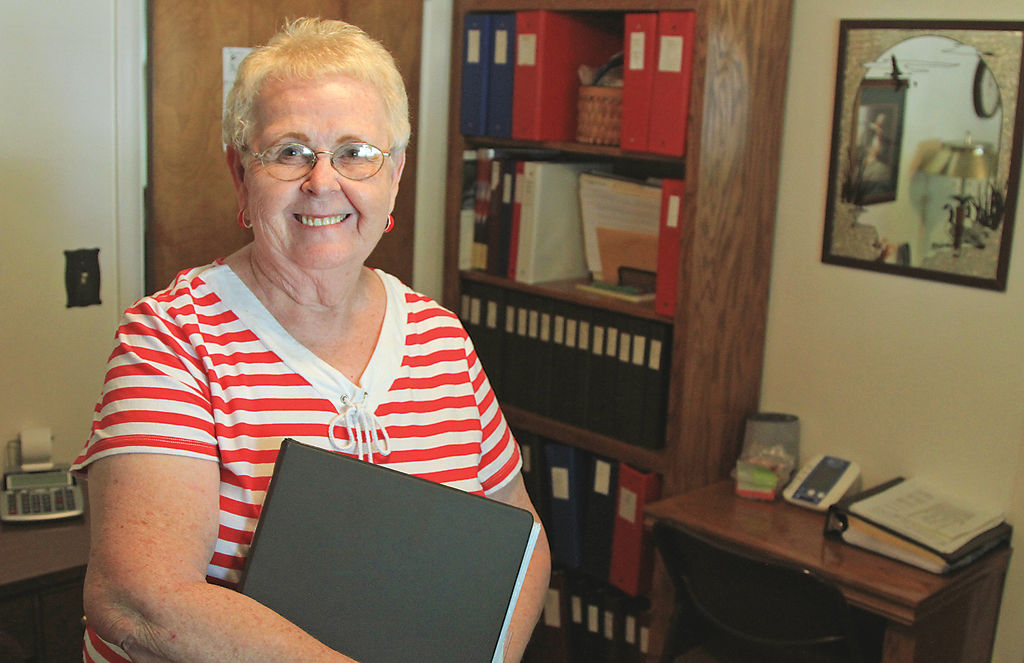
REYNAlDO lEAl/Standard-Examinerlocal historian Marian Danielson stands in front of her library of information on historical buildings and people in Corinne.
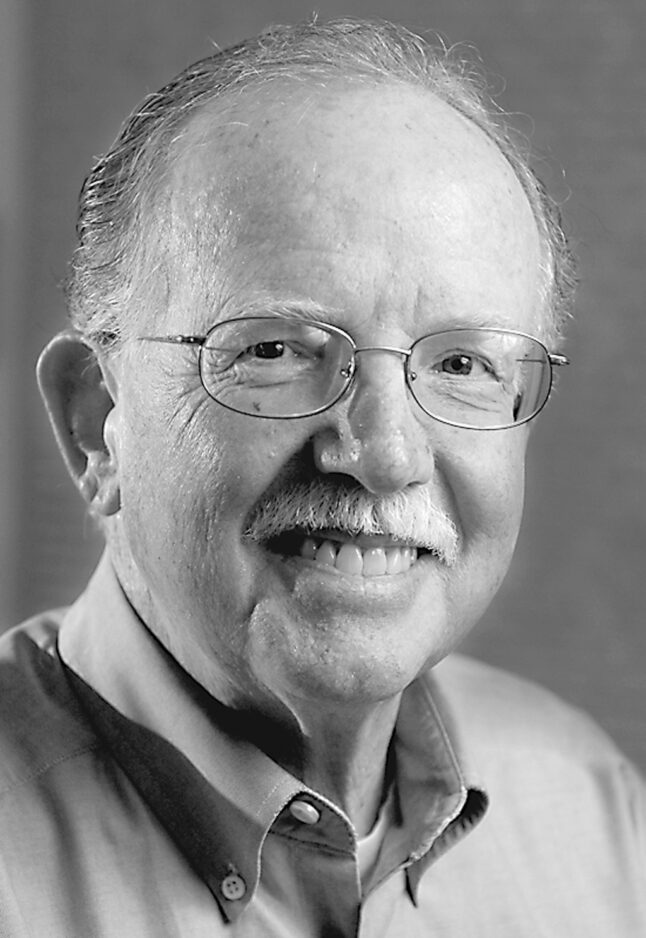
Dick Kreck, author of "Hell On Wheels: Wicked TOwns along the Union Pacific Railroad"
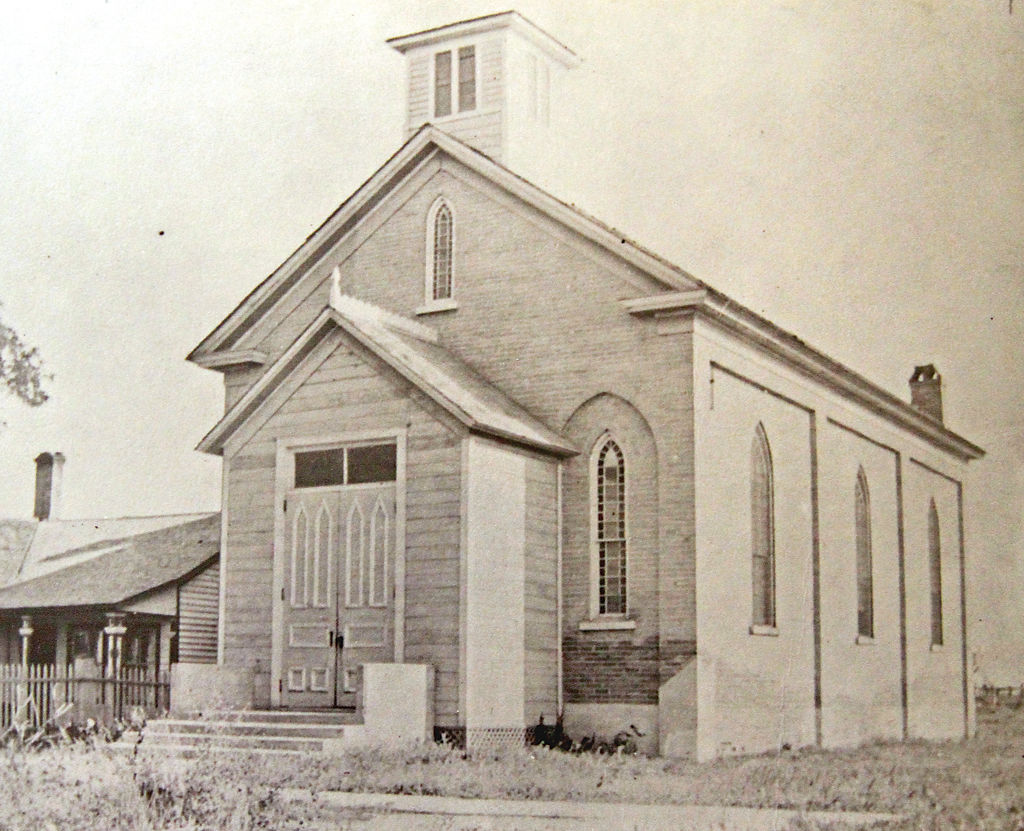
REYNAlDO lEAl/Standard-ExaminerThe old Methodist Church, built in 1870, is now the Corinne city museum.

Historical photo photographed byREYNAlDO lEAl/Standard-ExaminerHolmes Grocery was a mainstay in Corinne for many years.
REYNAlDO lEAl/Standard-ExaminerToday, the old Holmes Grocery is a workspace for locals.

The Holmes Grocery store building in Carinne, Thursday, July 25, 2013. (REYNALDO LEAL/Standard-Examiner)
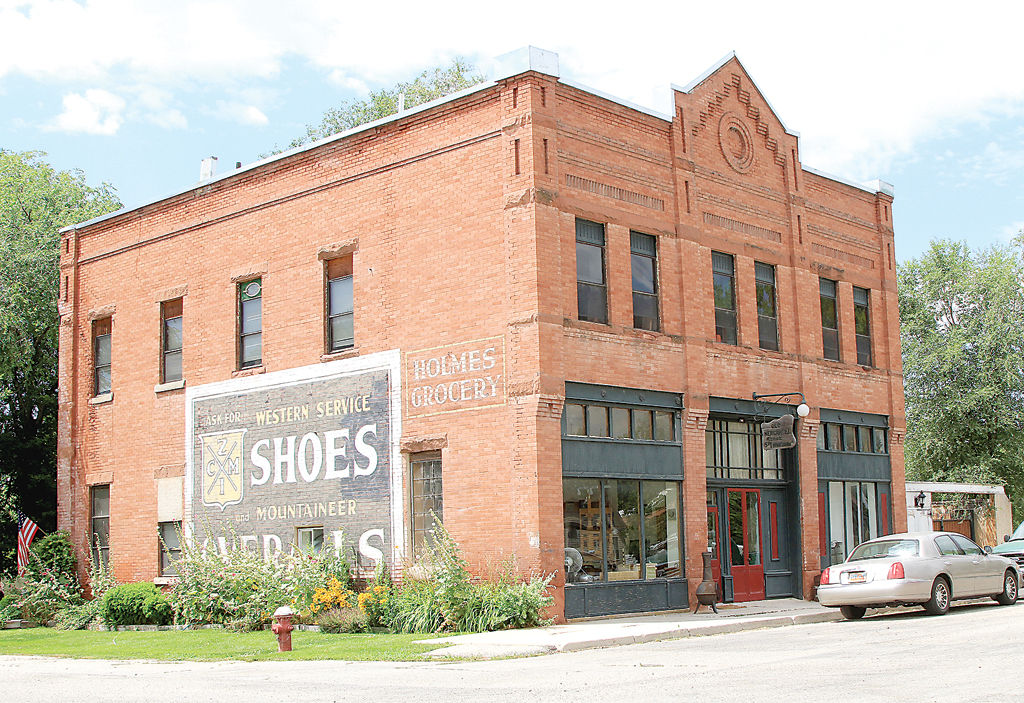
The Holmes Grocery store building is now a workspace for locals in Carinne, Thursday, July 25, 2013. (REYNALDO LEAL/Standard-Examiner)
Tammie Christensen likes to watch the television show “Hell on Wheels.” The AMC series is a drama based on the wild towns along the tracks during the building of the first transcontinental railroad.
“It’s kind of neat to see the tent cities, and how they were crazy — there were just no rules,” she said.
Christensen is especially interested in the show because she lives in Corinne — one of those “Hell on Wheels” towns founded almost 150 years ago. She’s grown up with stories of a main street lined by saloons, a part of town where dozens of prostitutes worked, and a rumor that Brigham Young cursed the evil town so it would never prosper.
The television show helps her visualize what Corinne may have been like in its early days, she says — something that’s not easy to do in today’s quiet community.
Dick Kreck tried to enjoy “Hell on Wheels.”
“I watched the first episode-and-a-half, and there were so many inaccuracies in there that I got tired of yelling at the television,” he said.
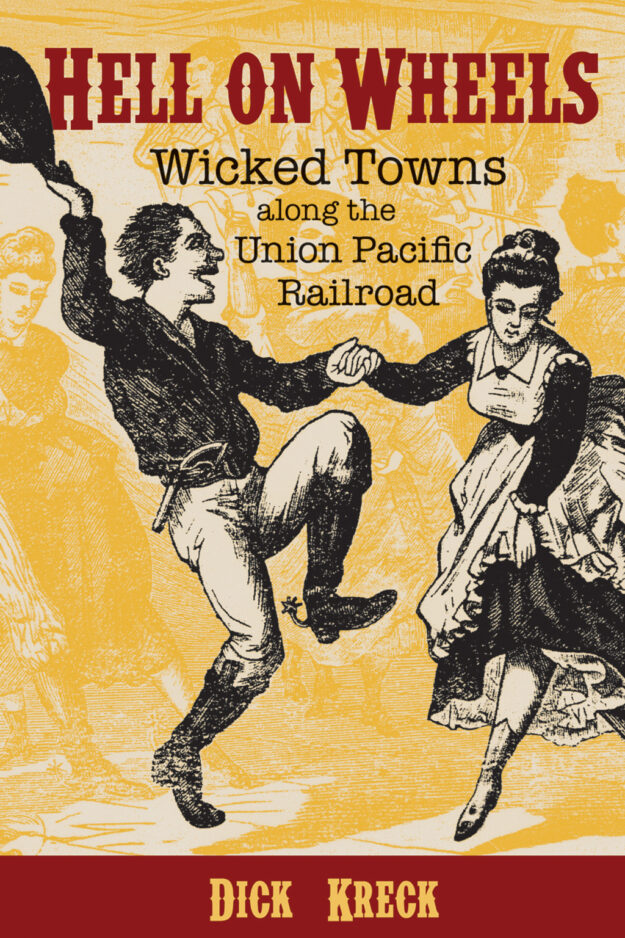
Kreck is the author of the new book “Hell on Wheels: Wicked Towns Along the Union Pacific Railroad” (Fulcrum Publishing, $16.95), which includes chapters on Utah’s Corinne and Promontory. He disagrees with the television show’s portrayal of some of the historic railroad builders, but agrees that the towns were wild.
“Those towns were terrible places. With 6,000 guys working on the railroad and nowhere to spend their money, towns just popped up,” he said. “They mostly consisted of saloons and whorehouses and casinos.”
When the railroad moved another 100 miles down the track, the hastily erected buildings and tents were taken down and packed on the cars, and moved to the new end of the tracks — that’s where the expression “hell on wheels” started, Kreck explained.
“A lot of those people went from town to town, some on legitimate business, but most were gamblers,” he said, adding there were a lot of cheats and con men as well. “Laramie (Wyo.) was pretty typical of those towns. There was practically a shooting a day, and people robbing each other every day and night. Finally, Laramie’s citizens got tired of it, and took three guys out and hanged them.”
When the railroad first reached Corinne, Kreck says in his book, there were 19 saloons, two dance halls and 80 prostitutes.
In a way, Corinne was the ultimate hell-on-wheels town — it was the last big stop before the Union Pacific and Central Pacific railroads joined at Promontory Summit about 25 miles away.
Some of the rough men and wild women, who normally moved on, may have stayed in Corinne for a while after the railroad was completed.
“People were wondering what to do, and where to go,” said Richard Sadler, a history professor at Weber State University.
Marian Danielson strongly disagrees with the characterization of Corinne as a hell-on-wheels town, and gets aggravated by accounts that paint the town as more wild than her research shows.
“They didn’t have a boot hill, they didn’t have a hanging tree, and they didn’t have gunfights down the middle of the street,” she said. “So we weren’t what you call a really, really bad town with a lot of unpleasant things going on.”
Danielson, a Corinne resident, has made a hobby of collecting town history for 30 years. Her information comes from newspapers of the time, and city minutes, which she has transcribed and organized by topic — 5,000 pages.
“They talked about the jail being empty, and lawyers not having anything to do,” she said, adding that she can document only four murders, compared to daily shootings in other towns, from 1869 to 1874. “It was mostly drunkenness, and fistfights.”
Kreck agrees that Corinne wasn’t the wildest town on the tracks, because a lot of the railroad workers had been let go as work wound down.
Danielson and Sadler say that Corinne was also different because the founders were businessmen, with dreams of a big, civilized city.
Gentile city
The Utah Territory was dominated by members of The Church of Jesus Christ of Latter-day Saints, led by Brigham Young. Young supported the building of the railroad, but at the same time worried about the influx and influence of “gentiles” — people who don’t belong to the church.
“Brigham was telling the people that they needed to not be buying goods from outside of the territory,” said Sadler, noting that this was when Young organized the Zions Cooperative Mercantile Institution (ZCMI) department stores. “He’s even more vociferous at this time, warning women about wearing goods from outside of the territory — they don’t need the kind of pantaloons and petticoats the railroad’s going to bring.”
Young may have believed Mormons trading only with Mormons could preserve church members’ way of life, but non-Mormons just saw themselves being cut out of the economy.
“Their businesses went completely down, so they either had to move or had to start a fresh town,” said Danielson, who is LDS, but tries to keep religious spin out of her histories.
A group of gentile businessmen planned a new town on the banks of the Bear River, where there was plenty of water for drinking, and for transporting goods by boat. With the coming of the railroad, and its proximity to trails leading to mines in Idaho and Montana, Corinne was bound for success.
“They bragged about it being the only non-Mormon town in Utah,” said Kreck.
And they had bigger plans than just economic gain — they wanted to change the balance of power.
“A lot of these people want to even try to push Corinne to become the capital of Utah,” said Sadler. “The Corinne people believe that they’re going to be, really, God’s gift to Utah.”
Boom town
The tents that housed businesses the first summer were replaced by fall of 1869, according to Danielson.
“They built their own adobes,” she said. “They knew they had to get into something warmer by winter.”
Corinne grew quickly, with the population reaching around 1,500 in the early 1870s. That year’s census shows grocers, several liquor dealers and brewers, brickyard and sawmill workers, a couple of shoemakers, a painter, salesmen, plenty of hotel workers and restaurant waiters, laundry workers, a glass blower, a jeweler and watchmaker’s apprentice, physicians, a schoolteacher, a photographer, barbers and dressmakers, a banker, telegraph operators, carpenters, a newspaper editor and printers, a marshal and more.
Danielson has identified two lots in town where prostitutes owned land, and has hunches about another 15 to 20 white and Chinese women listed in the 1870 census with “no occupation.” She can also show where Presbyterian, Episcopal and Methodist churches were built; the Methodist church, built in 1870, is said to be the oldest non-LDS church built in Utah.
The city opened a “free school,” funded by taxes, believed to be the first school in Utah not affiliated with a church. The citizens also funded an opera house, where nationally known actors and lecturers performed, Danielson said.
“It’s a very metropolitan kind of place that most people are beginning to call ‘the burg on the Bear,’ ” said Sadler — adding that citizens expected it to someday rival Chicago.
Transportation of people and goods were key to the city’s success. In addition to the railroad, Corinne had a thriving freight business, with wagons carrying supplies north to the mines, and returning with ore to be processed in the city’s smelter. Locals even had a steamship built, called the “City of Corinne,” that could carry ore from mines south of the Great Salt Lake, as well as taking passengers to and from Salt Lake City.
Cutting off Corinne
Corinne looked like a thriving city.
“I think for a time it was very viable, and people felt like it could happen,” said Sadler.
But Brigham Young realized he could minimize the threat posed by Corinne by persuading railroad officials to move major operations to a town mostly populated by members of the LDS Church.
“That’s why Brigham Young gave the land for Union Station, and the junction, to Ogden,” Sadler said. “He was willing to compromise and make a deal with the devil — the railroad — and deal with it here.”
In 1871, Young and his associates built the Utah Northern Railroad, with service from Ogden to Idaho and Montana, putting an end to much of Corinne’s freighting business.
“I think for a decade Corinne struggles,” Sadler said.
The Lucin Cut-Off, a more level path for train travel, was built in 1904 by the Southern Pacific. The tracks, which included a trestle across the Great Salt Lake, connected western Box Elder County to Ogden, eliminating the need to pass through Corinne and Promontory.
Corinne built up really fast, Christensen said. “And it diminished just about as fast and became a ghost town when they shut down the railroad,” she added. “The people left and went to Ogden.”
Then and now
Corinne’s population dipped to about 230 in 1910, and is now around 700, according to census data.
It’s no longer a “gentile city.” There’s an LDS meetinghouse, with services for two wards. Members of other faiths drive to churches in other cities. The old Methodist church, one of the few original town buildings, is a museum.
“Maybe Brigham Young won after all, because the Mormons moved in and farmed the area, and Corinne was subsumed by the hayfields,” said Sadler.
There used to be a few banks in town for the bustling businesses. Now there isn’t one. The Corinne Elementary School no longer operates.
“They closed it up because there aren’t enough kids, so they go to Bear River,” said resident Cindy Guzman. The kids started attending Century Elementary in Bear River City in the fall of 2006, and Box Elder School District uses the former Corinne Elementary building as a county-wide preschool for children with learning delays.
There are still a few businesses in town. The Bear River Valley Co-op is a combination farm store, deli and convenience store, and tire shop. There’s also a gas station anda cafe, and Western artist Kelly Donovan has a studio in town.
Tony Martinez, of Perry, chose to move his countertop business and a craft store to Corinne.
“It’s a good place to have businesses,” he said. “Some other places are so high on taxes. … It’s nice and quiet, and some people call it sheep country, but it’s getting busier and busier.”
There’s a small industrial park up the road, he says, with swimming pool, bearing and food businesses. There’s also a Procter & Gamble plant a few miles away. Both Procter & Gamble and a Walmart have distribution centers in the Corinne area, bringing freighting jobs back to town.
The city’s wild days are gone. Residents say there aren’t any dance halls, they’re not aware of any prostitution, and there’s only one bar.
“It can get wild,” Martinez said of Mim’s. “I’ve seen a horse go through there.”
Guzman, owner of Mim’s Bar & Grill, says a cowboy did ride into the bar back around 2004.
“I asked him, ‘Why did you ride a horse in here?’ and he said it was a bet — a girl bet him,” she said. “I barred him for a month, and he said he was sorry.”
Nothing like that’s happened since, she said.
Danielson says Corinne’s a quiet little town, where the people all know each other.
“I think some people like that there’s not the hubbub of city life,” she said.
Christensen agrees.
“I absolutely love it,” she said. “I wouldn’t live anywhere else.”