
Same food, new look for Cafe Rio chain
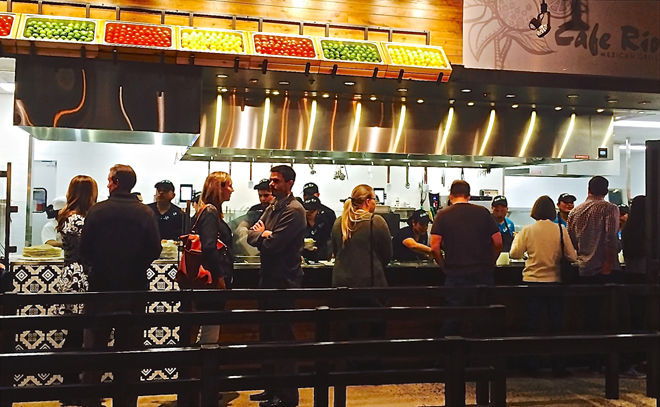
The new Cafe Rio design has the same assembly-line concept for ordering, but the kitchen is even more open so customers can see their food being made. Contributed
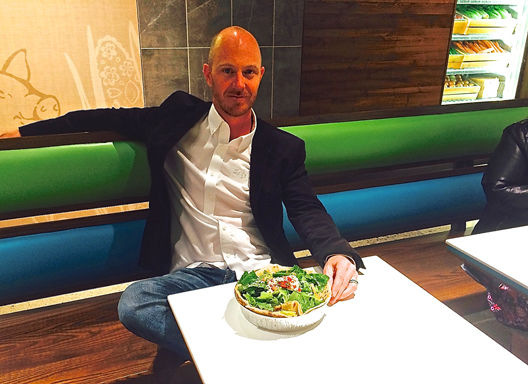
Cafe Rio's chief marketing officer Ben Craner shows off one of the scoot-able white tables and bench seating as part of the restaurant' sleek new design. Contributed
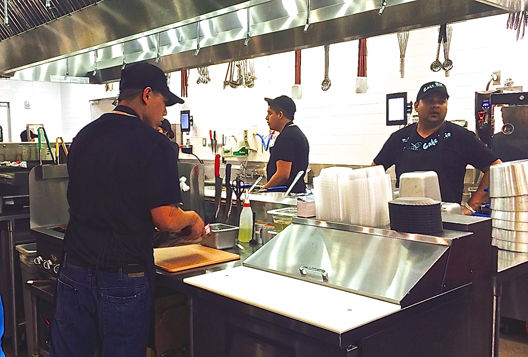
In the new Cafe Rio design, the kitchen walls are a stark white, to make it the centerpiece of the restaurant. Contributed
An iconic Utah restaurant chain is getting a new look. When Café Rio recently opened its newest location in Cottonwood Heights, customers walked in to a more sleek, sophisticated interior. The existing Cafe Rio locations, including those in the Top of Utah, will eventually be remodeled to the new design.
The fresh-Mex assembly-line concept is still the same, where you watch your meal as it’s being built to your specifications. (“Black beans or pinto?”)
But the folksy, mismatched painted tables and chairs have been replaced with pure white tables for giving a crisp, clean look. The ceiling height was raised so customers can better see into the kitchen and watch as the cooks chop tomatoes, squeeze limes, grill meat, and roll out tortillas. But they probably won’t see enough to figure out the secrets to the barbacoa pork recipe.
A spacious self-service drink area runs along the far wall, to avoid customer traffic jams.
The switch to a new design “evolved slowly,” said chief marketing officer Ben Craner, who worked with a California design firm with specific goals in mind.
“The atmosphere didn’t add anything to the actual experience,” said Craner. “We wanted to make sure people knew and understood that their food is made from scratch. And we wanted to make sure the overall atmosphere benefits the dining experience.”
With a goal of making the kitchen the centerpiece of the restaurant, the ceiling height was raised and the walls are stark white, with stainless steel appliances.
“We want all the color and contrast to go to the kitchen, and when you walk in and have 15 different colors of tables and chairs, the person doesn’t know where to look, Craner said. “The new design also allows more interaction between our customers and our team, and we think they’ll enjoy the overall experience even more.”
The chain surveyed customers, who said they wanted the ability to scoot tables together for a large family or group. With the old design, the wooden tables are permanently attached to the floor and can’t be moved. Some customers wanted a counter with stools and communal tables for solo diners. So the new design incorporated several different seating options, “to make it more efficient and more friendly,” said Craner.
There are picnic-style tables with attached benches that can accommodate a family of six.
There’s also a counter with stools, and long bench seats with tables that can be easily slid together or apart. There are also free-standing tables and moveable chairs.
The tabletops are white, “because our food is beautiful, and when you put in on a crazy multi-color table, it takes away from the actual beauty of our plate,” Craner said.
The new design may be tweaked before as it’s incorporated into the nine stores opening soon in Colorado, Arizona, Washington, D.C., Washington state and Maryland, said Craner. After that, the 80 current locations will eventually be remodeled into the new look.
“We are going to do focus groups and ask people what they like and don’t like, because we want to iron out all the kinks before we go ahead,” said Craner. “Our concept stays the same. We just want to elevate the perception of quality.”
The original Café Rio was founded in St. George in 1997 by Steve Stanley, a chef from Austin, Texas, and wife Tricia Stanley. The hand-made tortillas and from-scratch sauces were a step up from Mexican fast food, but you didn’t have to wait for a server to take your order, or pay a tip as you would in a regular restaurant.
The Stanleys had opened six Utah locations by 2004, when they sold to Bob Nilsen, former president of Burger King Corp. and now Cafe Rio’s chairman of the board.
Since then, Café Rio had expanded to 11 states, and is working to keep its brand fresh amid the other fast-casual Mexican chains such as Chipotle, Qdoba, Costa Vida, Freebirds, and Barbacoa. One of the more recent Cafe Rio openings was in North Ogden last August.
Copycat recipes abound on the Internet for company’s sweet pork barbacoa, cilantro lime rice, creamy tomatillo dressing and other menu items. But these are only educated guesses, not the actual recipe, said Craner.
Employees make the food from scratch daily at each location from a closely guarded recipe book, according to the company’s chief executive officer Dave Gagnon. They sign an agreement not to divulge the recipes, “And every night, the book goes in the safe,” he added.
Certain menu items are more popular in different areas of the country, said Gagnon. In Utah, sweet pork salads and burritos are the top sellers. “In the East, we sell more chicken than pork, and more pinto than black beans, and more burritos versus salads.”
In Utah, the top-selling menu item is a sweet pork burrito, enchilada style, with medium sauce and black beans, said Craner. “And if they get a salad, it’s sweet pork, with black beans and creamy tomatillo dressing.”
Some customers, especially those in California, have requested more heat, said Craner. But instead of changing the initial recipes, the restaurants have a rack of various hot sauces, so people can spice up their meal to their liking.
Valerie Phillips is an award-winning food writer who can be contacted at www.chewandchat.com.