
Read a book aloud and ‘light up’ your child’s brain
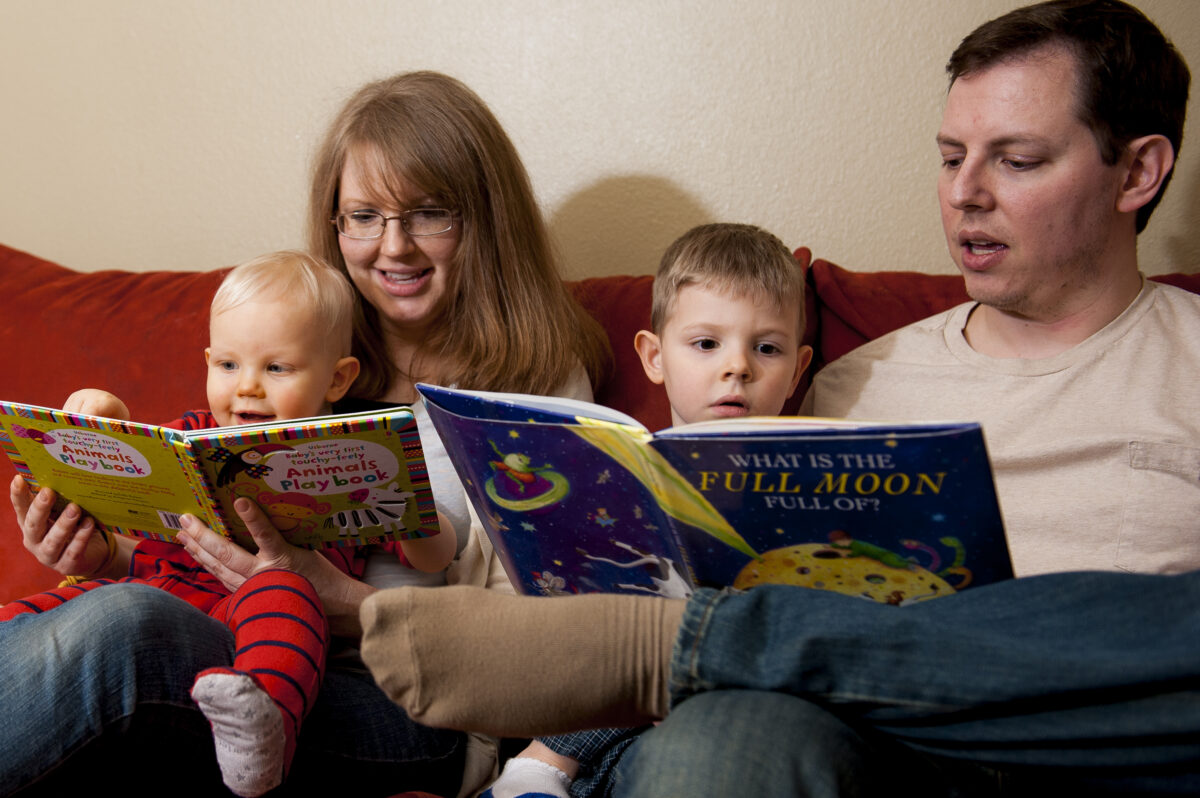
Deborah Smith and Russ Cullison read aloud to their children Sam, 1, and Rand, 4, before they put them down for bed in their home in Washington Terrace on February 27, 2015.
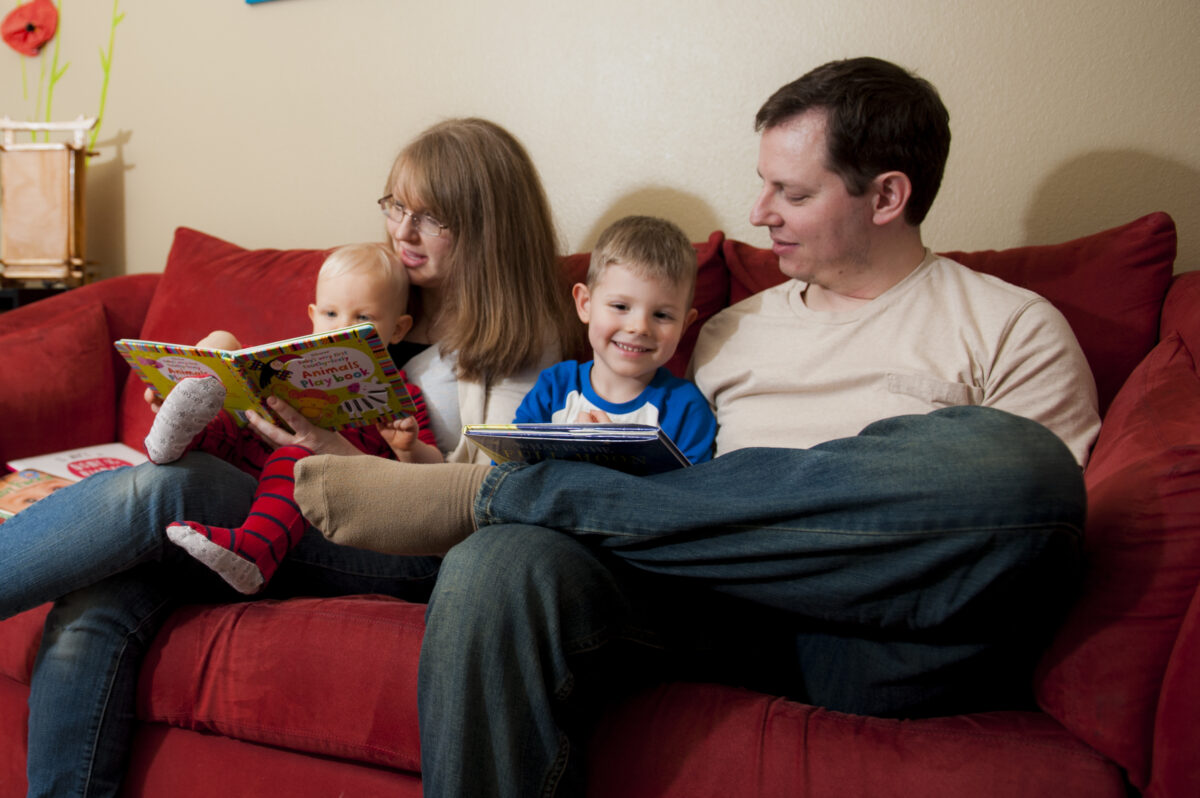
Deborah Smith and Russ Cullison read aloud to their children Sam, 1, and Rand, 4, before they put them down for bed in their home in Washington Terrace on February 27, 2015.
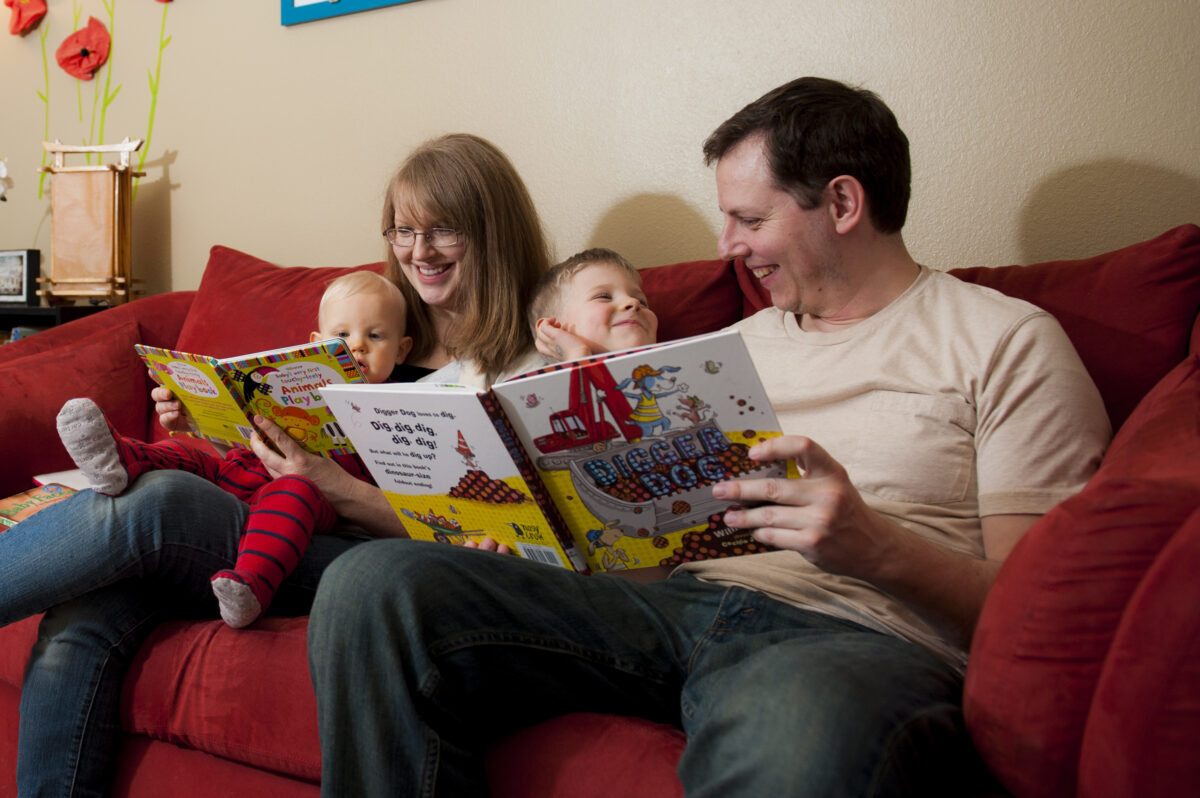
Deborah Smith and Russ Cullison read aloud to their children Sam, 1, and Rand, 4, before they put them down for bed in their home in Washington Terrace on February 27, 2015.
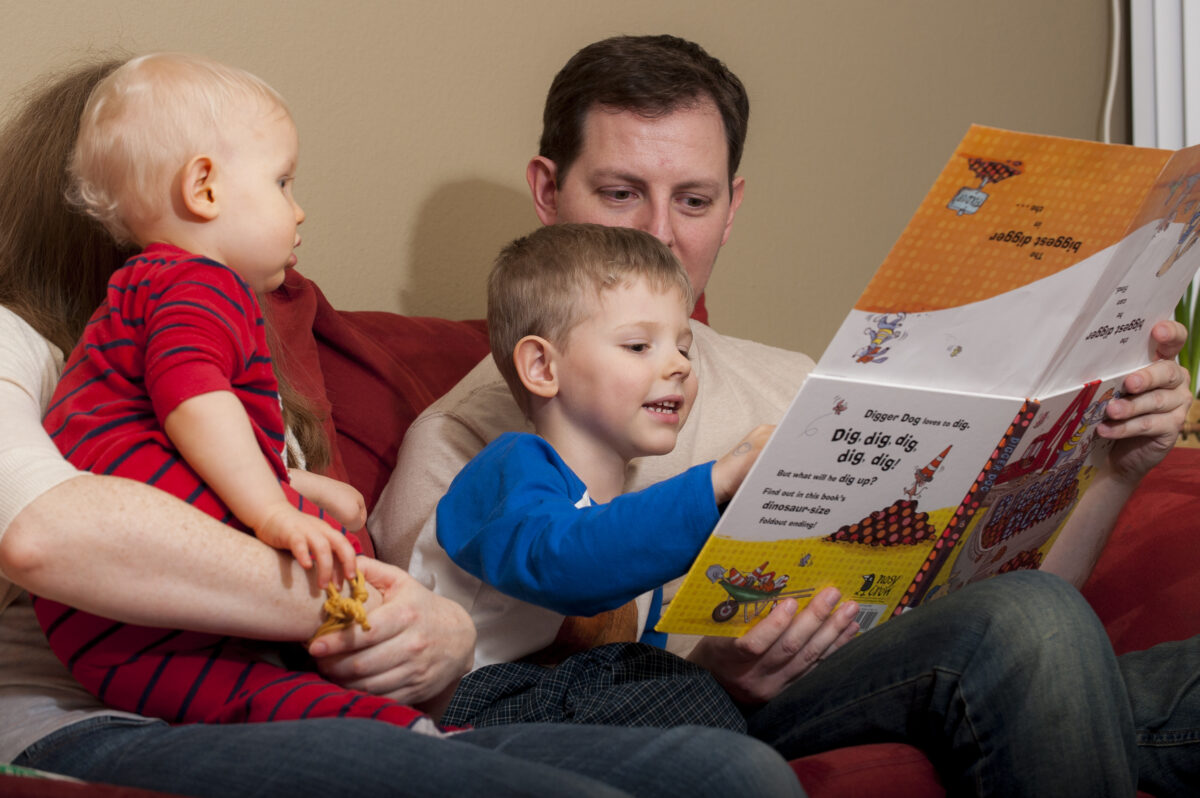
Rand Cullison, 4, has his favorite book, "Digger Dog," read to him by his father Russ Cullison as Deborah Smith and Sam Cullison, 1, look on in their Washington Terrace home in Washington Terrace on February 27, 2015. Russ says he tries to read to his children at least 15 minutes every night before bedtime.
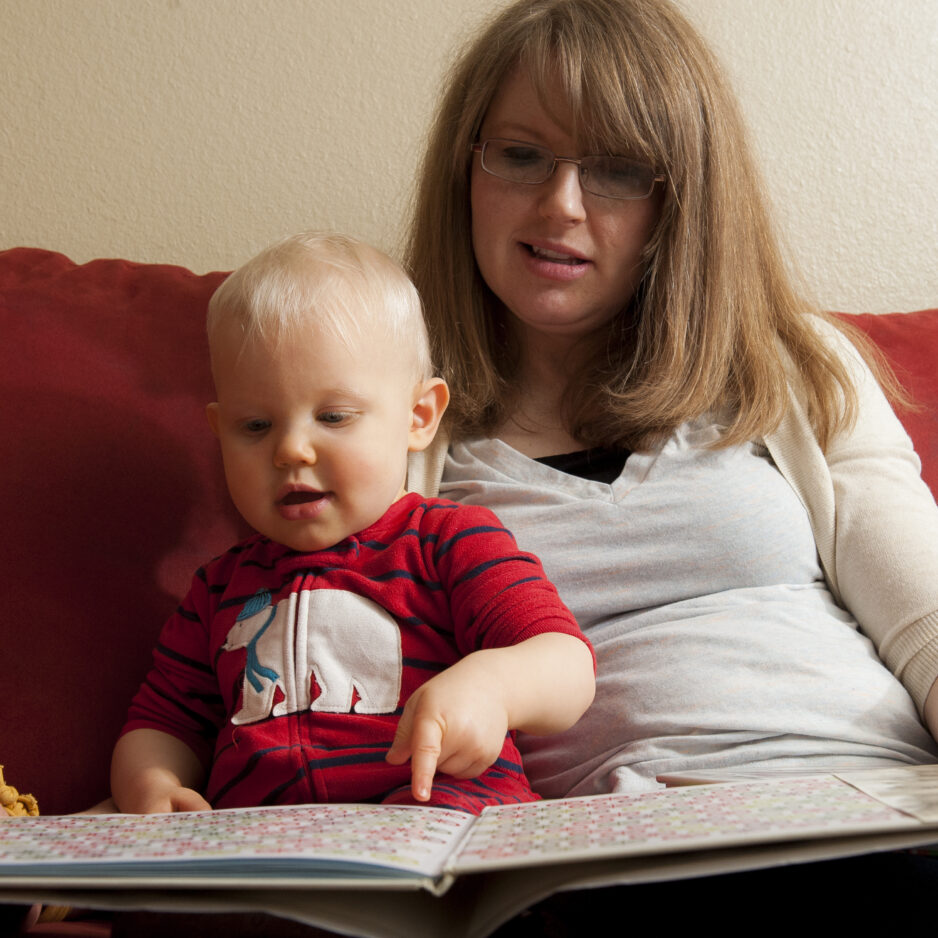
Deborah Smith reads the book "And the Train Goes ..." to her son Sam Cullison, 1, before his bedtime in their Washington Terrace home in Washington Terrace on February 27, 2015. Deborah says she tries to read to her children at least 15 minutes every night before bedtime.
Bedtime isn’t the only time that Jane, age 22 months, enjoys hearing stories read aloud.
“We have books in every room,” says her mother Sandy Clufff, of South Ogden, so no matter where the toddler is, it’s, “Hey, let’s look at this dinosaur book; hey, let’s look at this animal book.”
Reading aloud helps Jane learn letters and sounds, Cluff says, not to mention establishing a good foundation and love of learning.
“Just spending the time together and having that interaction, being engaged in something together,” is another advantage, she adds.
The joys and benefits of reading aloud are being celebrated during March’s Read Aloud Month, so designated by a national nonprofit organization that stresses the importance of reading in the lives of children from birth to age 5.
Parents have a key responsibility to “light up” their child’s brain during this crucial period of development, says Bob Robbins, co-founder of Read Aloud 15 Minutes, in a phone interview from Alden, Michigan.
“If you wait, it’s too late — this is a fleeting opportunity,” Robbins says.
Yet almost half of all children in this age group are not being read aloud to, the spokesman says, whether it’s because parents say they don’t have the time, they lack access to reading materials or they were never read to themselves as children and thus never think to do it.
“We’re trying to break through to the parents who don’t understand the impact they can have,” Robbins says.
Power of pages
The goal of Read Aloud 15 Minutes is to make reading to young children for 15 minutes daily a new standard in child care, as routine as feeding and diapering and brushing teeth.
Parents are a child’s first teacher, Robbins says, and research shows kids who are read to are more ready to learn when they start kindergarten and will do better throughout their entire school careers.
“What happens in those early stages is very much predictive of future success,” he says. One study found, for instance, that children who are not reading at grade level by the end of first grade only have a 12 percent chance of reading at grade level at the end of fourth grade.
“Parents don’t realize just how much power they have by reading aloud to kids,” says Cristi Jacobsen, coordinator of Davis Reads and media specialist at East Layton Elementary School. She adds, “If they knew how important it was for the child’s future, they would all do it.”
Youngsters who are read to learn vocabulary and sentence structure, Jacobsen says, plus, “It teaches them to question, and to wonder.”
Letitia Teneau-Sword, a kindergarten teacher at the Weber State University Charter Academy in Ogden, agrees that development of critical thinking skills is an outcome of reading. “What do you think Little Red Riding Hood’s going to do next?” a parent might ask a child while reading a classic fairytale, or, “Why do you think she’s called Little Red Riding Hood?”
Love for learning
Books can be a springboard for other activities to foster a child’s curiosity about the word, says Deborah Smith, who enjoys reading to sons Rand, 4, and Sam, 1, and is youth services program coordinator at the Weber County Library in Ogden.
If a child loves a book about outer space, then take him to visit the planetarium or go outdoors and look at the night sky, Smith says. In that way, “they develop positive associations with learning,” she explains.
There is no age too young to start reading to a child, says Teneau-Sword, who used nursing time with her own kids as a time to read simple nursery rhymes.
Stories for little ones can progress from simple labeling books with pictures — ball, duck, horse — to more complex tales using full sentences, she says.
Going beyond the words on the page, youngsters also learn important information about how reading works, like how to hold a book, or turn the pages, or read words from left to right, and top to bottom, Teneau-Sword says.
Above all, remember to focus on the joy of reading, Teneau-Sword says, rather than the just the mechanics. Reading just to pass a skill level or a test is much different than reading a book like “Charlotte’s Web” simply because “you really care about that little pig,” she says.
Calming influence
Bedtime stories are a ritual a few times a week for Katrina Dominguez of Ogden and her five children, ranging in age from 4 to 1-year-old twins.
“My kids like it and it’s good for them,” says Dominguez. Although she tries to read to all five little ones at once, she admits that sometimes, “The babies take off and play.”
Andrea Kotter says that in a world loaded with digital devices, computers, video games and movies, books help her four children stay grounded.
“They get so wired with the electronics and reading kind of calms them down,” says the South Jordan mother, who is soon moving to Ogden.
As a parent, Kotter says she enjoys seeing how her children react to books: “They start to memorize them, and know what’s coming,” she says.
Children love storytimes because they get the chance to spend one-on-one time with a parent or caregiver and “they adore that,” Smith, at the Weber County Library, says.
For the adults, Teneau-Sword says, “(Reading is) an opportunity to slow down; it’s an opportunity to be in close proximity to that child, so you’re snuggling on the couch or the bed.”
It’s also a chance for a parent to share a story with the kids that he or she loved as a child, she says, and, “Hopefully, they’ll love it too.”
Never too old
Although Read Aloud Month targets reading to ages up to 5, don’t stop there, the experts add. As she got older, Smith remembers her father reading classics like “The Scarlet Ibis” and “Casey at the Bat.” Or for Teneau-Sword, there were such novels as “Alice in Wonderland,” “Treasure Island” and “A Christmas Carol,” read by her mother.
Keep reading “as long as they’ll let you, which is surprisingly long,” Teneau-Sword says. “Kids love to be read to, even big kids.”
Contact reporter Becky Cairns at 801-625-4276 or bcairns@standard.net. Follow her on Twitter at @bccairns or like her on Facebook at www.facebook.com/SEbeckycairns.