
Hurry hard to Ogden – A fan’s guide to the 2026 World Men’s Curling Championship
-
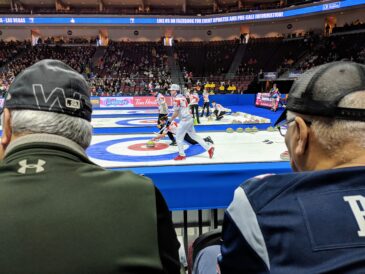
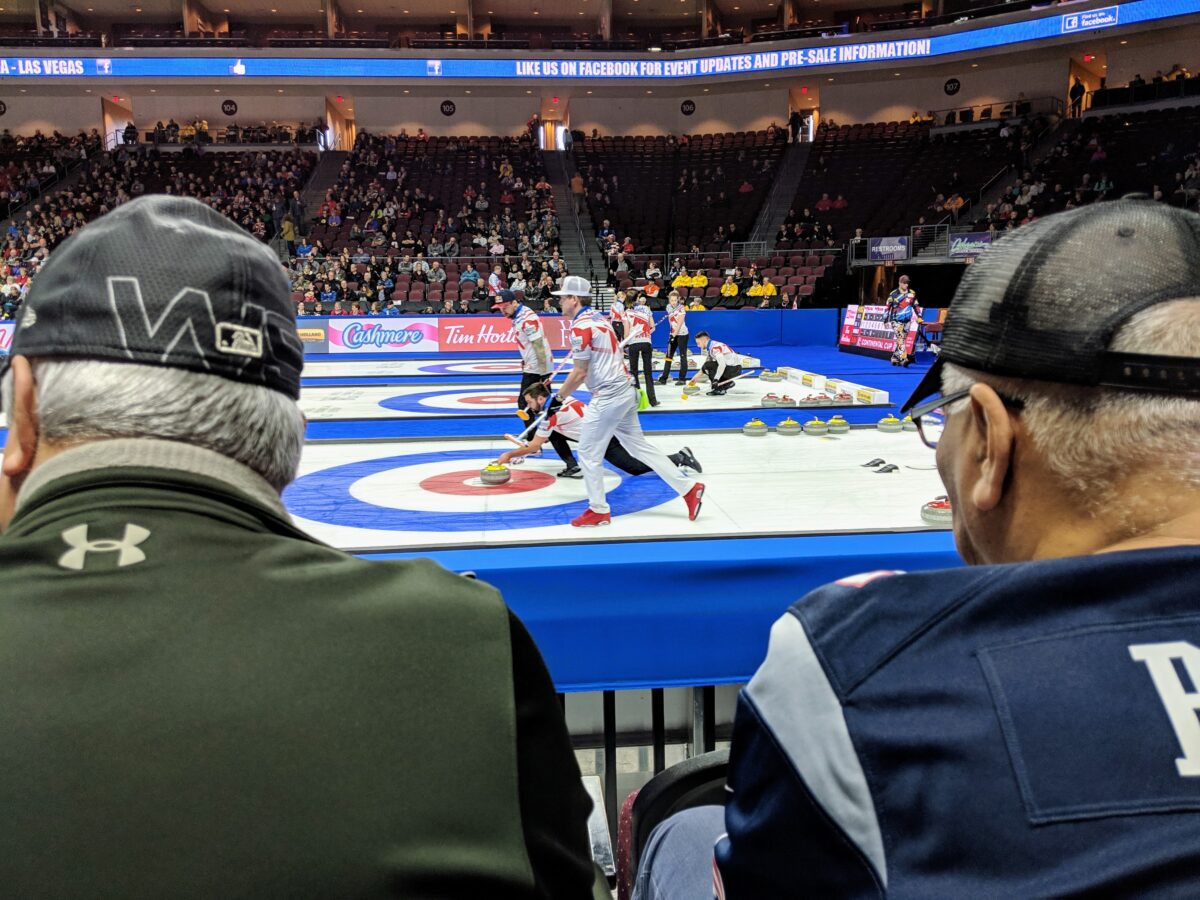
- Curling fans watch John Landsteiner of Team Shuster deliver a curling stone as part of Team North America at the 2019 Continental Cup at the Orleans Arena in Las Vegas, Nev., on Jan. 20, 2019. (Ryan Olson, Standard-Examiner)
-
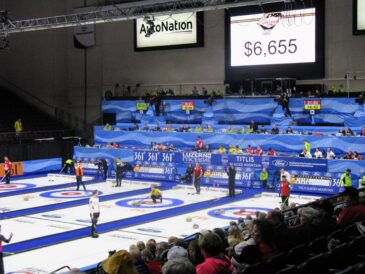
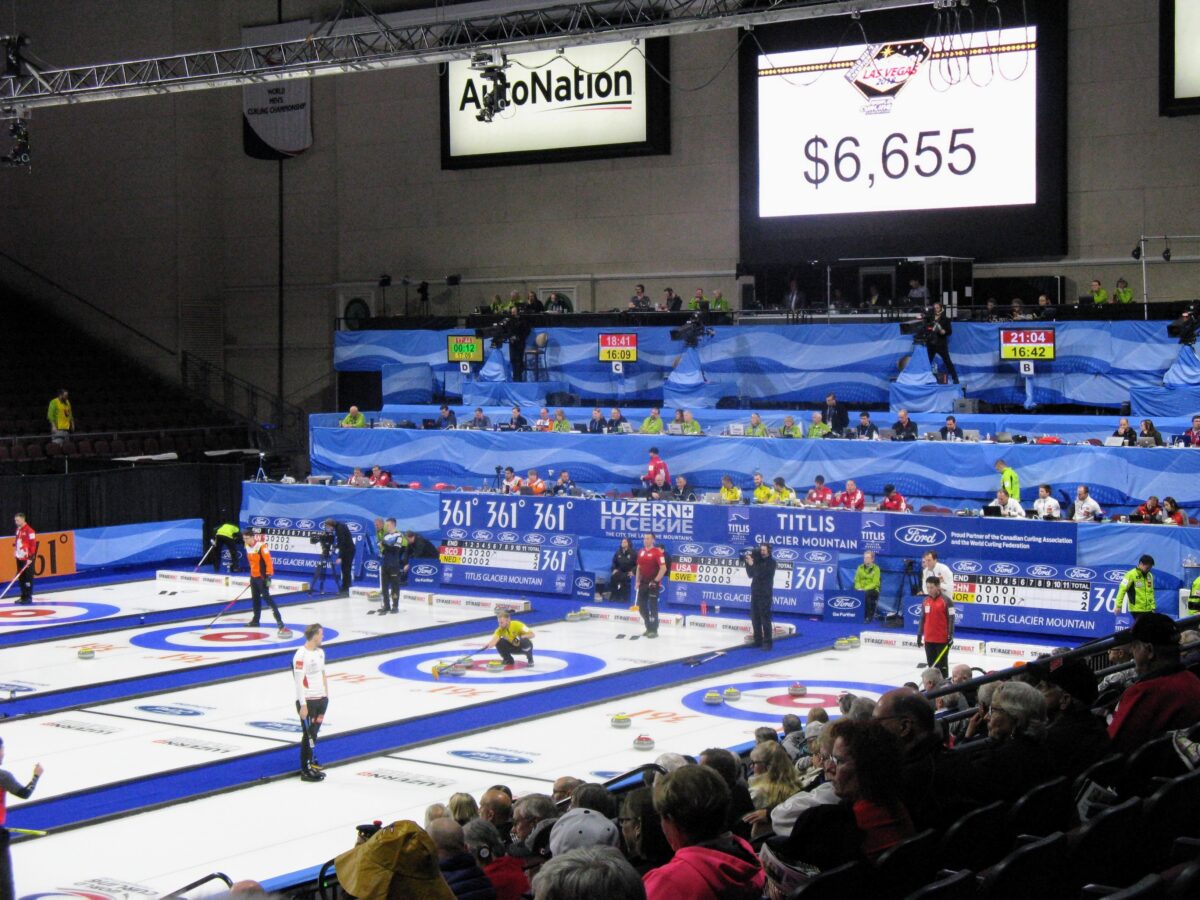
- Teams compete during the 2018 World Men’s Curling Championship at the Orleans Arena in Las Vegas, Nev., on April 3, 2018. (Ryan Olson, Standard-Examiner)
-
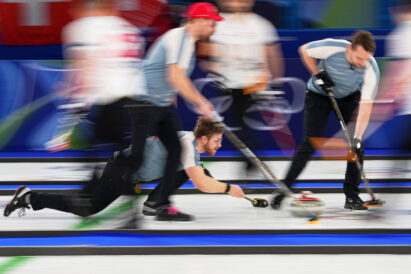
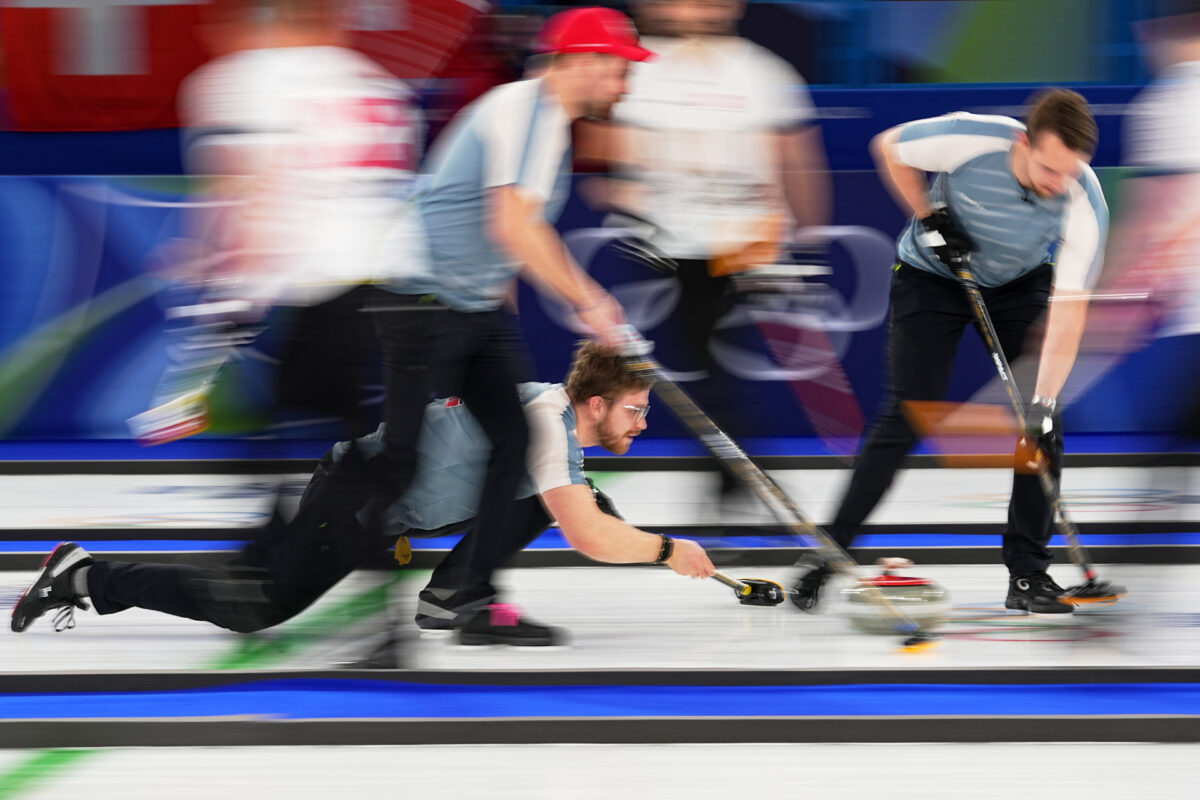
- Norway’s Bendik Ramsfjell, center, competes during a men’s curling bronze medal match between Norway and Switzerland, at the 2026 Winter Olympics, in Cortina d’Ampezzo, Italy, Friday, Feb. 20, 2026.
-
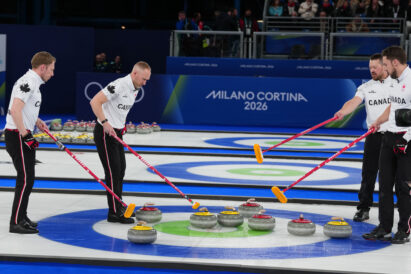
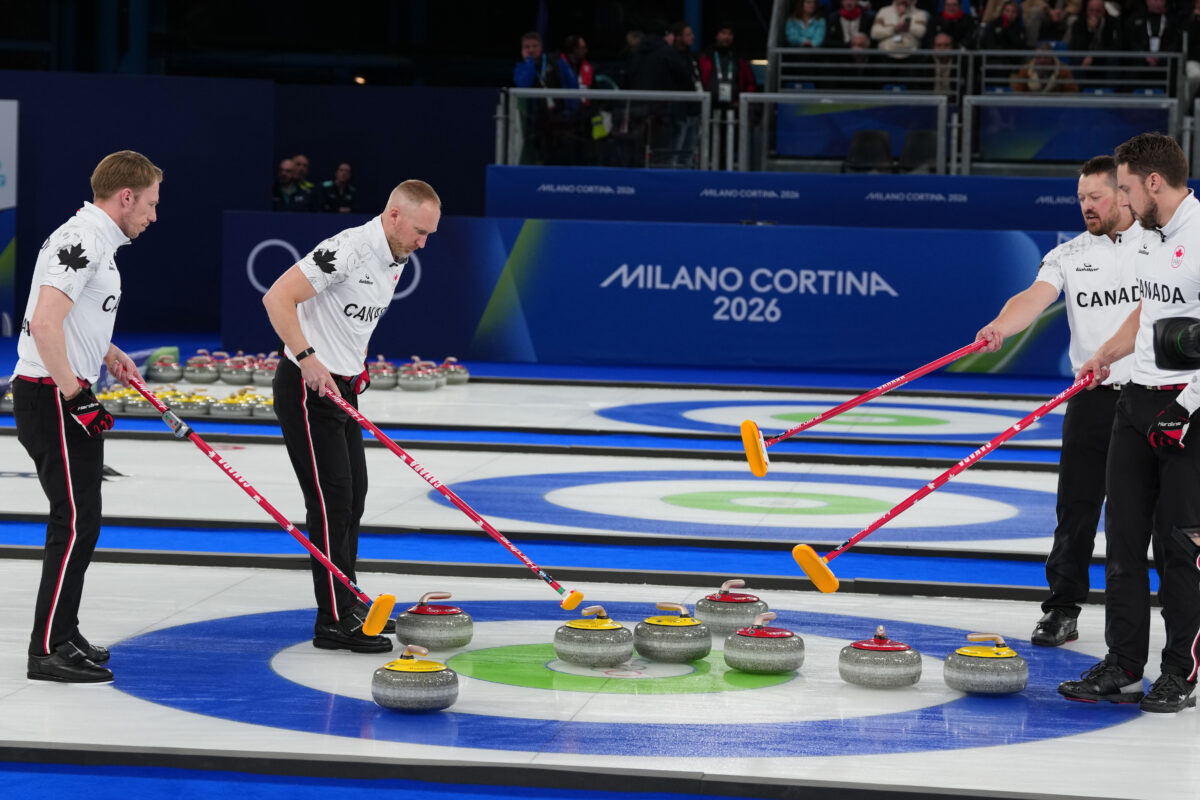
- Canada’s Brett Gallant, Brad Jacobs, Marc Kennedy, Tyler Tardi compete during a men’s curling gold medal match between Britain and Canada, at the 2026 Winter Olympics, in Cortina d’Ampezzo, Italy, Saturday, Feb. 21, 2026.
Ryan Olson, Standard-Examiner
Curling fans watch John Landsteiner of Team Shuster deliver a curling stone as part of Team North America at the 2019 Continental Cup at the Orleans Arena in Las Vegas, Nev., on Jan. 20, 2019. (Ryan Olson, Standard-Examiner)
The world is coming to Ogden from March 27 to April 4 as teams from 13 nations compete at the 2026 World Men’s Curling Championship at The Ice Sheet at Weber County Sports Complex.
If countless hours of curling caught your eye during the Milan Olympics or in years past, this upcoming championship will give you an opportunity to see Olympic gold medalists and other top curlers up close with a full slate of daily round-robin games until the playoffs begin on Thursday, April 2.
While readers may have gotten the hang of some elements of “the roaring game” with the Olympic broadcasts, attending games in person is a little different. There are usually four games happening on the ice at the same time. Also, attendees don’t usually have the benefit of clearly hearing the players discuss shots or TV announcers explaining it all (unless there are headsets for sale in the arena).
Don’t worry if things seem a bit confusing.
We’ve put together this fan’s guide to help newer fans attending a world championship in person. This guide is based on this writer’s experience of curling for 10 years, attending the 2018 World Men’s Curling Championship in Las Vegas and volunteering at the 2019 Continental Cup in Las Vegas (an all-star men’s and women’s competition).
Ryan Olson, Standard-Examiner
Teams compete during the 2018 World Men's Curling Championship at the Orleans Arena in Las Vegas, Nev., on April 3, 2018. (Ryan Olson, Standard-Examiner)
We’ve also sought input from enthusiastic fans and curlers from the r/curling subreddit for their tips.
Check out the sidebar for basics, including the schedule, ticket info and the fan festivals on opening and closing weekends. Visit Ogden has more event and visitor information at worldcurlingogden.com.
You’ve got the hammer. Let’s rock.
Getting there
The Ice Sheet is on the campus of Weber State University, across from the Dee Events Center with ample nearby parking. The arena is about 1,200 feet away from the Dee Events Center station for the Ogden Express bus rapid transit route, or OGX.
OGX offers free and frequent bus trips to the arena from Ogden Central Station via downtown (where many hotels are located). While the OGX schedule covers nearly all of the games, it does end early on Sunday.
Fatima Shbair, Associated Press
Norway's Bendik Ramsfjell, center, competes during a men's curling bronze medal match between Norway and Switzerland, at the 2026 Winter Olympics, in Cortina d'Ampezzo, Italy, Friday, Feb. 20, 2026.
Travelers from points south can take the FrontRunner regional rail to Ogden Central Station. Be mindful of timing as 7 p.m. games may still be in action when you need to leave for the last southbound train. There is also no FrontRunner service on Sunday.
Where to sit
“I’d actually try to get seats as high up as possible in the lower bowl as you can see more of the house. Sitting on the boards in either the home or away end means you’ll only be close for half of the ends.”
— funakifan
You have a lot of options when finding the optimal seat during a curling event. Sitting at center ice works, but it’s away from the houses — the circles on each end of the curling sheet. Sitting higher up anywhere along the side of the sheet does offer a better view of the entire field of play.
If you want to sit close to the ice, it might be good to sit near one end of the sheet. You can get a great look at the action at one set of houses. Reddit user loislolane wrote that they prefer sitting near the ends as it is easier to see different shot angles in the house and the curl of the rocks as they travel down the ice. However, as Reddit user funakifan points out, your view of the other side of the ice won’t be as good.
Ultimately, you can often explore the arena during a game to see which view works best for you. Seating is general admission so it’s not uncommon for spectators to change seats (provided the arena isn’t full and it doesn’t cause a disruption).
What to look for
Misper Apawu, Associated Press
Canada's Brett Gallant, Brad Jacobs, Marc Kennedy, Tyler Tardi compete during a men's curling gold medal match between Britain and Canada, at the 2026 Winter Olympics, in Cortina d'Ampezzo, Italy, Saturday, Feb. 21, 2026.
“It is easy to get overwhelmed by the action on four sheets. Pick one game as the primary game you will concentrate on.”
— Dinsdale55
While things can seem relatively sedate when watching curling on TV, you get a different view watching games in person. There are up to four games happening at the same time with a lot of people moving in different directions.
To avoid getting overwhelmed, Reddit user Dinsdale55’s advice to focus on one primary game is solid. If you want to keep track of the other games, keep an eye on how many rocks remain to be played on any given sheet. If there are only a few rocks remaining, it can be worthwhile to check out the situation on the other sheet.
If you arrive early, you will likely see each team practice before the game. Practice concludes with players throwing stones to get as close to the button — the center of the house. This draw shot challenge is used to see which team has the hammer at the start of the game. These shots are also used as a tiebreaker when determining playoff teams.
During games, it can be interesting to see how the skip calls each shot. Watch the person throwing the rock push out from the hack — the black starting blocks on the ice. See if the release was smooth and toward the skip’s broom. As those that followed “Boopgate” during the Olympics might already know, the delivering player must release the stone before the hog line (and not touch it after that point).
As the stone travels down the ice, you can see if it needs to be swept. As you watch more rocks, you can start to get a sense of how fast they are moving. You can also use a stopwatch or app to time the stones between the hog lines to determine a rock’s speed.
You can also estimate how much a rock is curling by using tee line in the house as a ruler. Each house has 4-, 8- and 12-foot circles. See where the skip’s broom is usually positioned on the tee line and estimate the lateral distance from that point to where the stone stopped.
Statisticians score each shot to determine a player’s accuracy. A shot is assessed a number from a perfect shot 4 to a miss 0. These numbers are added up and averaged to provide the shooting percentages that you might see on TV and elsewhere.
Game basics
Games are 10 ends long, although a losing team can concede the game early.
During an end, each team alternates throwing their stone to the playing end. After the last shot — the hammer — both teams must agree on who scored. The team with the stone closest to the center of the house gets a point for that first rock and an additional point for each of their stones until they hit the first opponent’s rock or run out of rocks in the rings.
At the start of the next end, whichever team scored last throws first. That means the team that didn’t score has the hammer advantage.
Teams have 38 minutes of “thinking time,” which starts when the team gets control of the ice and stops when a player begins delivering a stone. Each team also gets one 60-second timeout, plus coach travel time.
If the game is tied, an extra end will be played. This extra end has its own thinking time and timeout.
Six teams will make the playoffs. The top two teams have a bye to the semifinals. Teams ranked third to sixth will play qualification games where the winners advance to the semis.
The winners of the semifinals advance to the gold medal game on April 4, while the semifinal losers play for bronze.
Ask questions
“If the people around you look like they’ve watched (or played) curling before, don’t be afraid to ask them questions. There is nothing a curler loves more than to explain curling to a newbie.”
— meamemg
“…or to non-newbies too!”
— Boomfxx
When you watch curling in person, there’s usually no TV commentator to explain what’s going on. Thankfully, many curling fans are happy to answer questions or discuss other aspects of the game.
Reddit user Boomfxx writes that “finding someone to decipher all the broom tapping and hand gestures” helps people understand the game strategy and “increases the excitement of watching to see if they actually execute the shot they were trying to make.”
If you have a question, it never hurts to politely ask while being mindful of others. There should also be “Curling Guru” volunteers moving through the arena during games to help answer questions.
Cheering teams on
“etiquette – cheer for makes, not misses”
— wickedpixel1221
“No, cheer any way you want! Cheer for misses, make noise, bring the atmosphere! It’s a home game for Team USA, so make it a home-ice advantage!”
— jockorama99
As you can see, there are some differences of opinion regarding cheering. Many curling teams have said they generally appreciate any energy and enthusiasm from fans, even if the crowd celebrates a bad shot that benefited the other team.
The encouragement to cheer successful shots and not for misses stems from “The Spirit of Curling” — the guiding principle for all levels of the sport calling for “good sportsmanship, kindly feeling and honourable conduct.”
While many curlers strive to honor the Spirit of Curling, it’s understandable for general fans to simply cheer as they see fit. Still, heckling or otherwise distracting players is probably not a good idea.
There will likely be fans rooting for different nations, and it can be fun to strike up a friendly conversation. Team Scotland usually travels well and Sweden’s Team Edin has some diehard aficionados that will likely be in attendance.
Reddit user CanadaSports1983 notes “The players are super approachable.”
That’s generally true — many curlers compete to win, but they are also playing for the love of the game and their fans. It’s key to be considerate of the teams and their time off the ice — many are focused on the competition until it’s over.
Off the ice
Attending a world championship is a marathon, not a sprint, for both curlers and fans. While there may be food options in the arena, there should be ample time between games to check out nearby dining options.
Being close to Weber State University means that there is a smorgasbord of eateries within walking or short driving distance of the Ice Sheet. In addition to fast food, pizza, subs and breakfast cafes, there are a number of international options including Greek, Chinese, Korean hot pot/BBQ and more. There is also the Smith’s Food and Drug and CVS Pharmacy nearby for food staples and medical essentials.
Curling is a social sport, so don’t hesitate to take advantage of opportunities to meet other fans including at the weekend fan festivals. Collecting and trading pins is a fun hobby and there will be a pin vendor on hand during the weekends.
Being at a curling world championship and watching some of the best teams in the world face off against each other can be an exciting time. The Spirit of Curling notes that “a shot well executed is a delight to see… .” As the action unfolds in Ogden over 10 days, may your curling spectating experience be full of delights.
Ryan Olson is lead designer for the Daily Herald and Standard-Examiner. He is also a part-time curling instructor for event organizers, the Utah Olympic Legacy Foundation, but he was not involved in the event aside from teaching schoolchildren. Ryan can be reached at rolson@standard.net or on Bluesky at bsky.app/profile/quesoguapo.com.