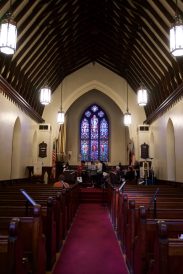
Landscapes along the Mormon Trail exhibition opens at Church History Museum
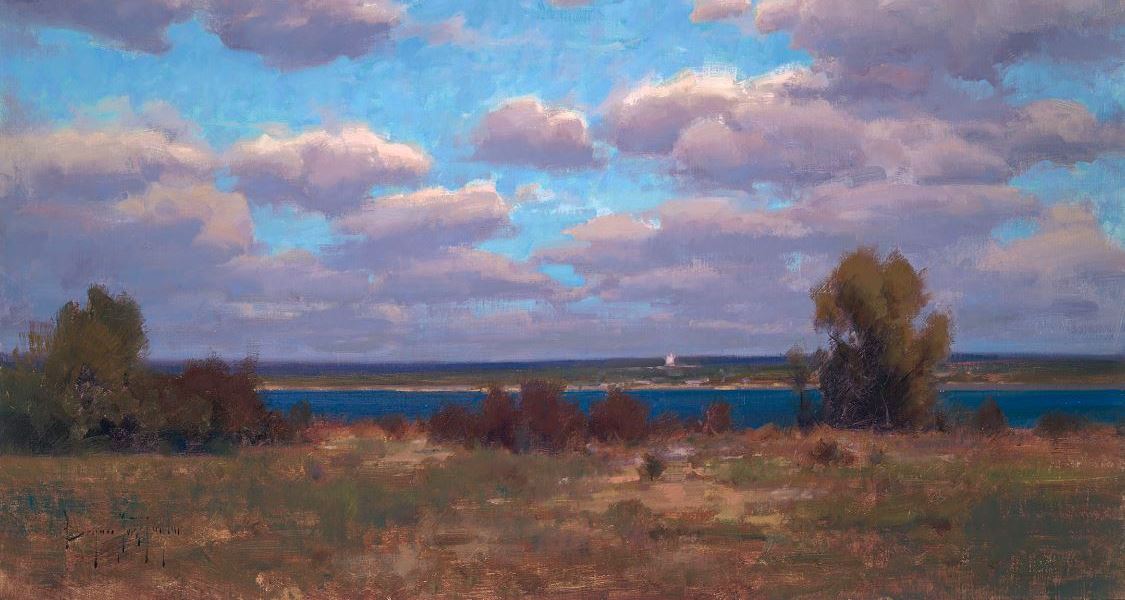
This painting by Bryan Mark Taylor is titled Devil's Gate. The work is an attraction at a new artistic exhibition opening at the Church History Museum featuring contemporary glimpses of landscapes found along the Mormon Trail.
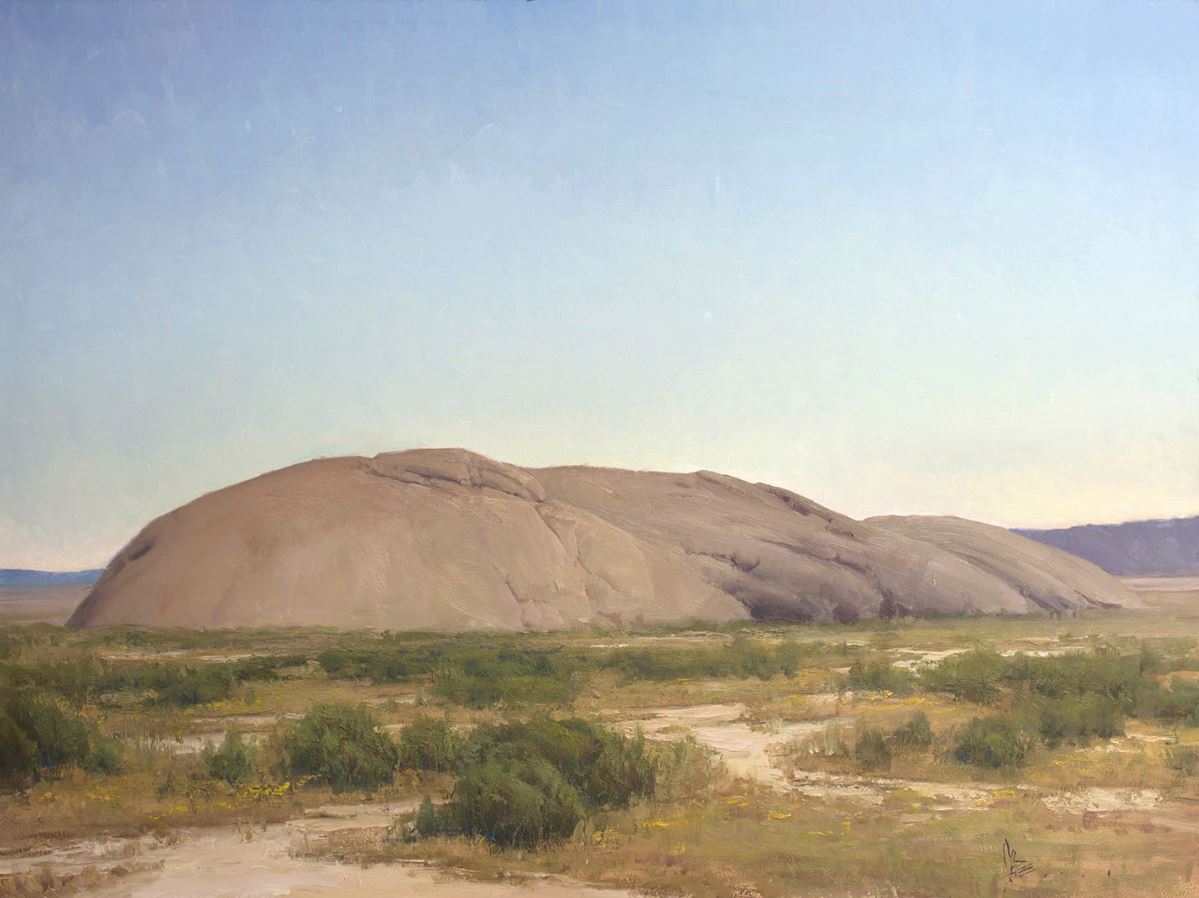
This painting by Josh Clare is titled Keep Thou My Feet. The work is an attraction at a new artistic exhibition opening at the Church History Museum featuring contemporary glimpses of landscapes found along the Mormon Trail.
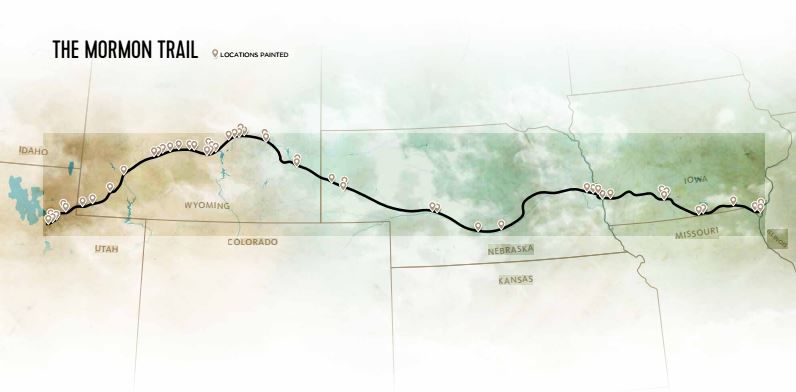
This view of pages inside "Saints at Devil's Gate" shows locations along the Mormon Trail documented through original paintings by three contemporary artists.
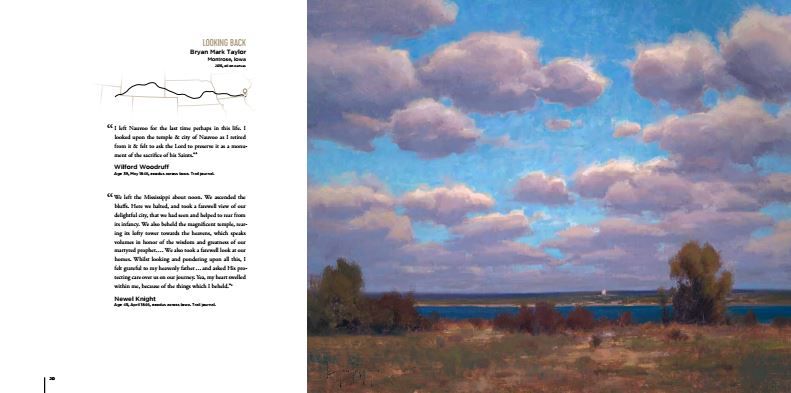
This photo of an inside page of "Saints at Devil's Gate" shows how the book depicts where on the Mormon Trail each painting originates. The publication also features quotes from Mormon pioneers that were documented in journals about their experiences at or near those locations.
SALT LAKE CITY — A new exhibition opening this weekend at the Church History Museum of The Church of Jesus Christ of Latter-day Saints explores the pioneer journey along the Mormon Trail.
Saints at Devil’s Gate: Landscapes along the Mormon Trail exhibition features 52 recently painted plein air landscapes and some preparatory sketches by Latter-day Saint artists John Burton, Josh Clare and Bryan Mark Taylor who started the project five years ago, according to information released by the museum. The paintings all depict current scenes found on the land along the Mormon Trail.
“Many times on the trail, we felt like we were on very hallowed ground,” said Burton, one of the featured artists at a news conference for the exhibition opening.
Burton said he and the other artists visited the sites every season of the year in an effort to give a comprehensive look at what pioneer travelers may have faced in their varied journeys. He said the artists worked to find interesting angles to what sometimes was mundane.
“The pioneers did not take the most scenic route,” he said. “They took the flat route with water and wood.”
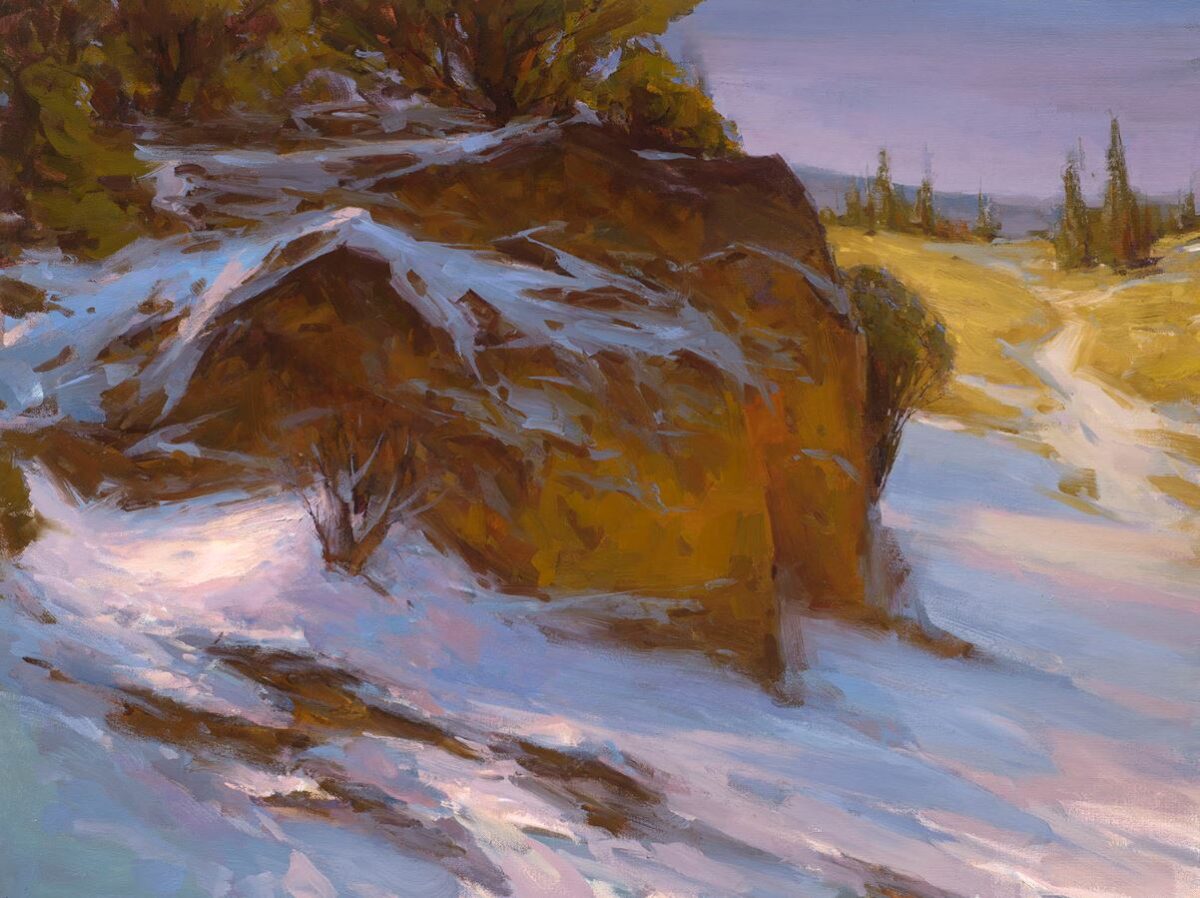
Photo supplied/ Church History Museum
This painting by John Burton is titled The Path to Immortal. The work is an attraction at a new artistic exhibition opening at the Church History Museum featuring contemporary glimpses of landscapes found along the Mormon Trail.
Burton said the paintings in the exhibition have a soft touch. “Our show is more of a whisper than a scream,” he said. “You have an opportunity to react just like they did.”
In connection with the opening of the exhibition, the Church Historian’s Press has announced the release of a companion book titled “Saints at Devil’s Gate: Landscapes along the Mormon Trail.”
The book, written by Laura Allred Hurtado and Bryon C. Andreasen, showcases paintings from the exhibition, paired with quotations from pioneers who traveled the trail. The book also may be purchased for $24.95 at the museum or after Tuesday, Nov. 22, at store.lds.org.
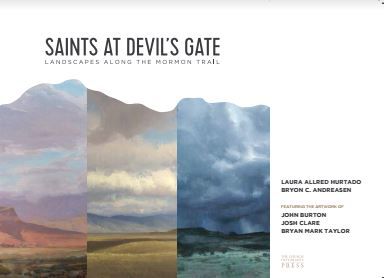
Photo supplied/ Church History Museum
This photo shows the outside of the publication “Saints at Devil’s Gate” now available for purchase at the Church History Museum or after Tuesday, Nov. 22, at store.lds.org.
“We felt like we are known well enough in our careers that people might buy the book who are not affiliated with the church,” Burton said.
Burton has traveled and painted around the world and is an award-winning oil painter, according to his biography.
Also now available is an online exhibit featuring images and details of the artwork on display, along with the pioneer accounts.
Visit history.lds.org to see the online version.
The Mormon Trail is the 1,300-mile route from Nauvoo, Illinois, to Salt Lake City that some 70,000 Latter-day Saint pioneers traveled between 1846 and 1868 on their journey to new homes in the West, said the news release from the museum.
“Burton, Clare, and Taylor approached the subject of the Mormon trail with a mix of professional practice and religious tribute,” said Museum Curator Laura Allred Hurtado. “As they described their vision, words such as devotion, consecration, and conversion often emerged and they seemed to look at the land with what art historian David Morgan calls a ‘sacred gaze.'”
Hurtado said the artists preserved the hint of the Mormon pioneers that still exists in the locations where they traveled. “In the dust and in the streams, there was this memory of the pioneers who had walked the trail,” she said.
The artists said the opportunity to document the historic trail their ancestors had traveled created a shared sense of awe and wonder at what they called the “near-mythical American West.”
“The artists’ work explored 19th-century modes of thought regarding the landscape as picturesque and sublime in ways that often mirrored the sentiments of Mormon pioneers as they crossed the plains,” Hurtado said.
The paintings in the exhibition are organized geographically, moving westward along the trail. “This geographic organization creates an experience for the viewer that mirrors a journey,” Hurtado said.
Each painting is paired with an excerpt from a pioneer trail journal or reminiscence.
Some of these accounts are harrowing, but not all pioneers’ experiences were tragic, said the news release.
Journal entries also capture the mundane and practical toiling of daily life, said the release. Many accounts describe the trek west as a great adventure filled with amazement, wonder, and beauty, it said.
“Most of these accounts point to the transformative nature of the experience and attest to the forming and shaping of testimonies and collective identities as Latter-day Saints moved along the dusty trail, whether on the plains of Nebraska, while crossing the Missouri River, or in the winding hills of Emigration Canyon,” said the news release.
“It’s a shame these landscapes are now fly-over country, that so many travelers today race past them without a thoughtful pause,” said Bryon C. Andreasen, the historian who researched historical accounts for “Saints at Devil’s Gate.”
“If these paintings kindle in some a desire to slow down and take in the landscape, to exercise historical imagination while infusing the views with fresh, personal meaning, the exhibition will have been a success.”
“These artists are noted for their remarkable ability to paint beautiful and elegant works, filled with natural light and brilliant color. Their graceful and sensitive views of the Mormon Trail appeal to all viewers, those who seek meaning and enlightenment in the historical background of the trail as well as those who seek beauty in art and nature.”
The Church History Museum is located at 45 N West Temple in Salt Lake City. Hours of operation are daily from 9 a.m. to 9 p.m.
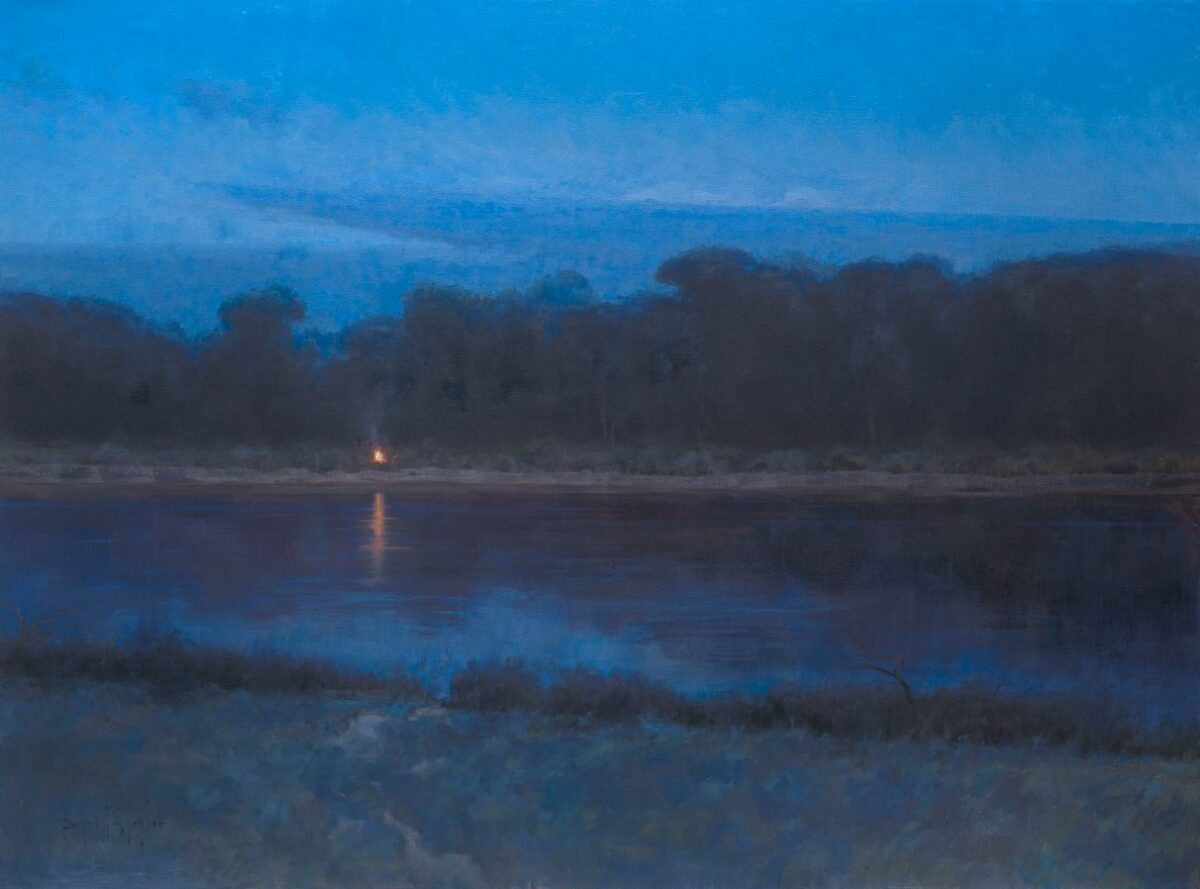
Photo supplied/ Church History Museum
This painting by Bryan Mark Taylor is titled Campfire on the Missouri. The work is an attraction at a new artistic exhibition opening at the Church History Museum featuring contemporary glimpses of landscapes found along the Mormon Trail.
You can reach reporter JaNae Francis at 801-625-4228. Follow her on Twitter at @JaNaeFrancisSE or like her on Facebook.
Faith