Three years in, Church-led initiative for women and children reaches 52 million people
-
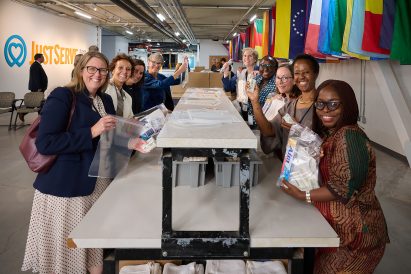
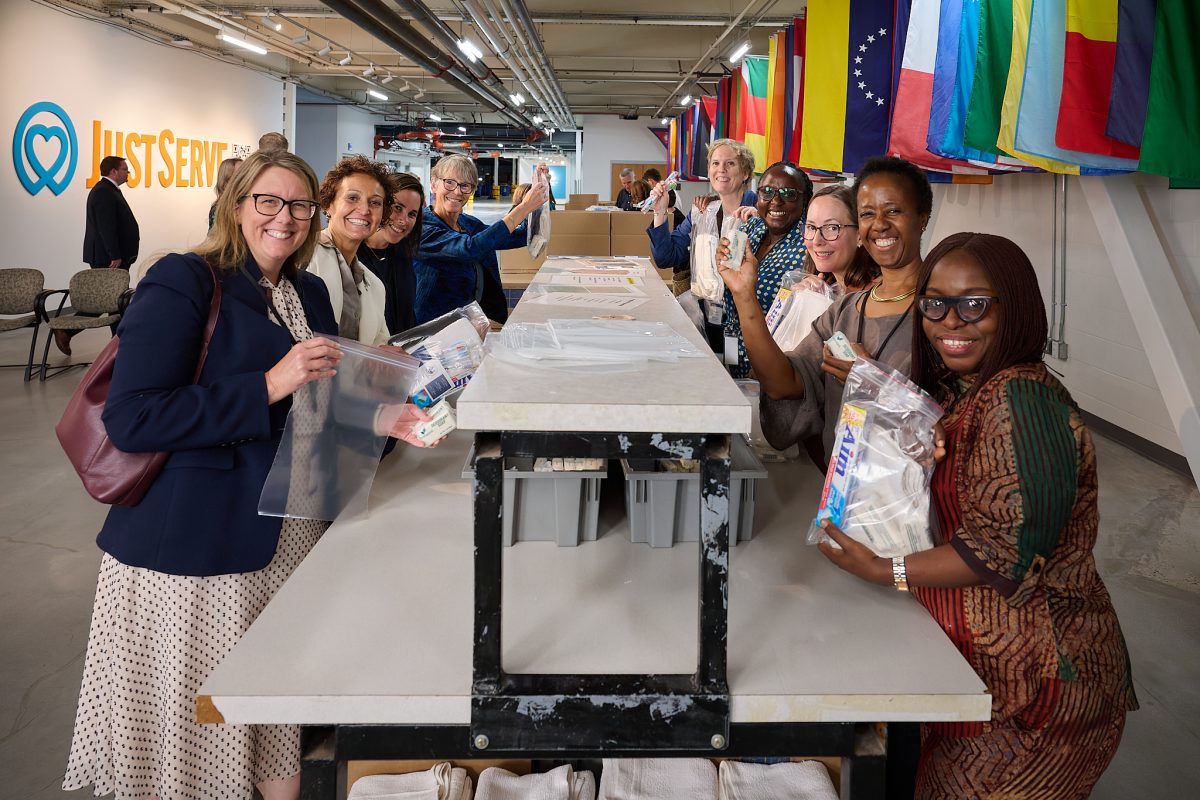
- Representatives from global humanitarian organizations assemble hygiene kits at the Humanitarian Center of The Church of Jesus Christ of Latter-day Saints in Salt Lake City, Utah, on Thursday, August 6, 2026. The visit is part of a two-day gathering focused on supporting women and children worldwide. (Courtesy Intellectual Reserve)
-
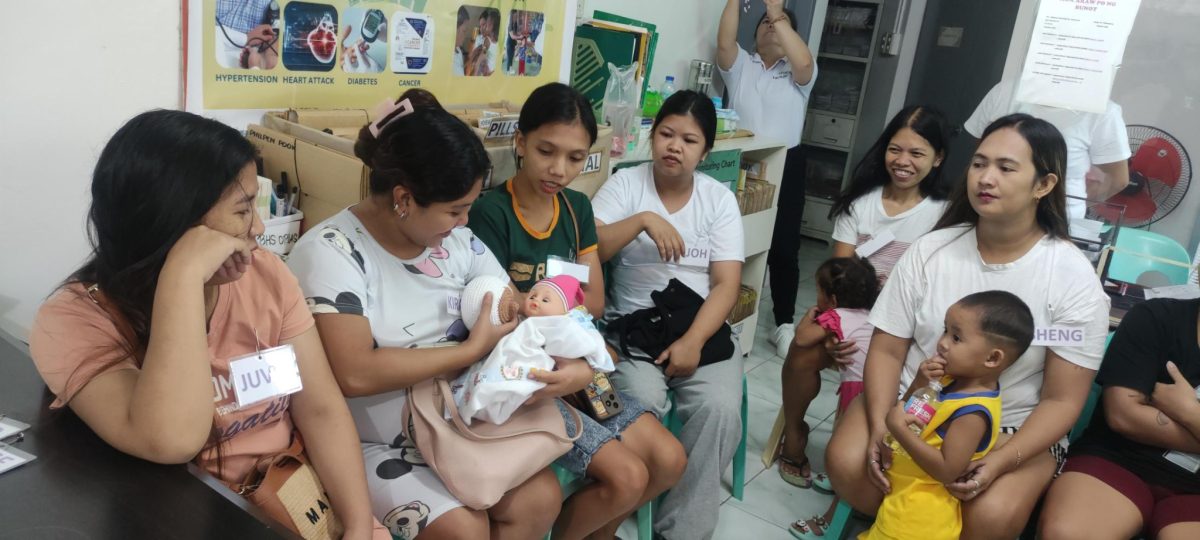
- A mother demonstrates a proper breastfeeding position during a barangay mother-to-mother support group session in Quezon, Philippines. (Photo Vitamin Angels Philippines)
Leaders from The Church of Jesus Christ of Latter-day Saints and seven humanitarian organizations gathered at Church headquarters on August 6 and 7, 2026, to review the first three years of a global initiative that has improved the well-being of 52 million women and children in communities across Africa and Asia.
During the event, Church leaders announced a funding commitment of more than US$65 million, bringing the faith’s total investment in the initiative to more than $184 million over its first three years. Participants also reviewed results from projects in 12 countries (Bangladesh, Cambodia, Democratic Republic of Congo, Ghana, Kenya, Mali, Nepal, Nigeria, Philippines, Senegal, Sierra Leone and Zambia).
“As we work together to improve health, nutrition, education and opportunity, we create brighter futures for individuals, families and communities,” said Relief Society General President Camille N. Johnson. “I am grateful for the compassion, expertise, and dedication of those involved in this initiative and inspired by the results of this collective effort to care for women and children. Through collaboration and faith, we are helping build greater hope, resilience and opportunity for generations to come.”
The initiative brings together seven humanitarian organizations (CARE, Catholic Relief Services, Helen Keller Intl, The Hunger Project, iDE, Save the Children and Vitamin Angels) organized into four collaborative groups. They combine their expertise in maternal and child health, nutrition, agriculture, clean water and sanitation to strengthen communities worldwide.
“As followers of Jesus Christ, we seek to care for others as He would,” said W. Christopher Waddell, Presiding Bishop of The Church of Jesus Christ of Latter-day Saints. “When we care for women and children, we bless families, strengthen communities and help build a more hopeful future. The progress made through this initiative is a reminder of what can happen when people and organizations unite in efforts to care for those in need.”
Behind the initiative’s global reach are individuals and families whose lives have been changed through locally led programs. In rural Bangladesh, Hira Chunni Panna established a community nutrition center that now serves nearly 200 women and children. The center provides nutrition products and education to families who previously had limited access to care. “Access to formal health services is limited in our area,” Panna said. “But my door is always open.”
Similar stories are unfolding across the 12 countries where projects operate. In the Philippines, a 26-year-old mother named Marjorie gained nutrition knowledge through a local support group. She now understands the importance of practices such as deworming and plans to share what she has learned with other families in her community. “Now it’s clear to me,” she said. “I’ll apply what I’ve learned to care for myself and my family, and I want to share it with my friends too.”
In Nepal, Kamalawoti Paasi helped her young daughter recover from severe malnutrition while improving her family’s health through home gardening and nutrition training. Today, she grows nutrient-rich vegetables at home and hopes to sell surplus crops to support her family’s future.
In northern Ghana, midwife Leila Salifu used neonatal resuscitation skills gained through project-supported training to save the life of a newborn who was born unresponsive. “Before the training, I would have felt uncertain in that situation,” she said. “But this time, I knew exactly what to do.”
Another Ghanaian health worker, Christiana Atuko, relied on a project-supported motor-tricycle ambulance equipped with oxygen to transport and stabilize a newborn during a medical emergency. “In emergencies, every minute matters,” she said. “It gives our mothers and newborns a real chance.”
The initiative has also strengthened disability-inclusive health care. In rural Ghana, Community Health Officer Awae Ian Mboba identified a tongue-tie in a six-week-old infant and referred the child for treatment after receiving project-supported training in disability-inclusive care. The timely intervention helped reduce the risk of feeding difficulties and speech delays, and the child is now thriving.
Participants said stories like these illustrate the power of local solutions supported through global collaboration.
“One of the most significant lessons from the first three years of this initiative is that we can accomplish more by working together than we can individually,” said Blaine R. Maxfield, managing director of the Church’s Welfare and Self-Reliance Services. “By bringing different areas of expertise together around shared goals, we have been able to strengthen local systems, expand impact and learn from one another along the way.”
Caring for women and children is part of the Church’s broader global effort to care for those in need. Through humanitarian projects, emergency response, food security, education, health care and self-reliance initiatives, the Church joins with trusted collaborators around the world to strengthen individuals, families and communities.
“We are grateful for those who bring expertise, compassion and a shared desire to do good,” Bishop Waddell added. “We are encouraged by the lasting difference this work is making in the lives of millions around the world.”