COMER: Are we binding up wounds, ignoring them or stepping on them?
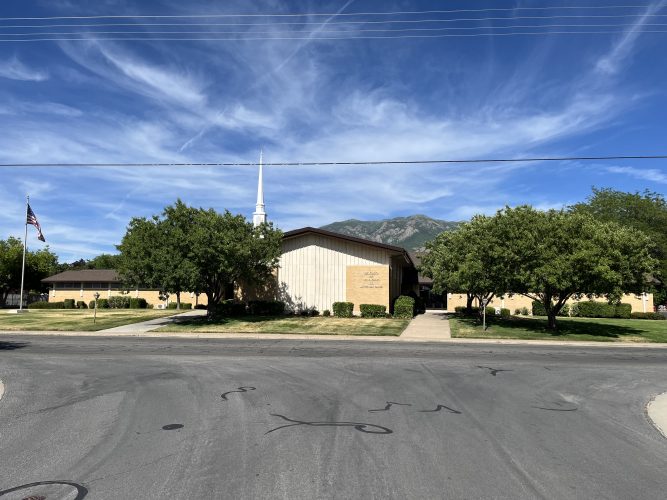
Ryan Comer, Standard-Examiner
A meetinghouse for The Church of Jesus Christ of Latter-day Saints in Layton, Utah, on Thursday, June 18, 2026Last weekend, Elder K. Brett Nattress, a General Authority Seventy in The Church of Jesus Christ of Latter-day Saints, came to my stake for a stake conference.
There were three meetings: a late Saturday afternoon leadership meeting, a Saturday evening adult meeting and a Sunday morning general meeting.
In that leadership meeting, Elder Nattress talked about the stripling warriors from the Book of Mormon. He pointed out that all of them survived, but all of them suffered “many wounds.”
To me, the lesson being shared was that as we go throughout life, we are all going to take on damage. None of us is going to skate through life perfectly. We will all suffer “many wounds” – physically, emotionally and spiritually. But we can take heart because the stripling warriors all survived. Likewise, we too can survive the “many wounds” we take on in all their diverse forms.
It’s obviously an inspiring lesson that should motivate us all to have more faith despite our challenges, but I had another thought as I was listening to Elder Nattress.
I don’t think these warriors were just left to magically heal and get better on their own. Rather, I imagine they all helped each other, binding up each other’s wounds, providing whatever they had in terms of medical assistance.
We actually know this happened because in Alma 57:24, it says:
“And it came to pass that after the Lamanites had fled, I immediately gave orders that my men who had been wounded should be taken from among the dead, and caused that their wounds should be dressed.”
We don’t actually know what constitutes “many wounds,” but we get a clue as to how serious they were from verse 25, which says that 200 of the 2,060 “had fainted because of the loss of blood.”
Without more clarity, I find myself wondering just how serious some of these wounds were.
Did some warriors suffer injuries that they were never able to fully heal from? Did some suffer injuries that permanently disabled them? Did some warriors have to have limbs amputated? How close to death were some of them?
The thing about “many wounds” is that because it’s so vague, it can mean a lot of things, and our mind is left to fill in what that might have looked like. But it just seems obvious to me that there must have been some extremely serious injuries that would have required a lot of care if all of the stripling warriors were able to survive. But they did, so we can assume that care was provided.
What care are we providing to people who have suffered “many wounds?” Are we actively helping to treat them, or are we letting them bleed out? Are we through certain actions or inactions actually stepping on the wounds and making them worse?
I would hope that nobody would look at someone who was bleeding out from a wound and say, ‘Well, I would really like to help, but I’ve got this place to go to or this thing to do, so, good luck with that.” Certainly, any good person would be mortified at the idea of actively making such a wound worse by stepping on it. But how often do we treat people like that in real life?
Several years ago, President Henry B. Eyring shared some wisdom he received about helping others during general conference. He said “more than once,” he was told by someone, “‘Hal, when you meet someone, treat them as if they were in serious trouble, and you will be right more than half the time.'” He continued, “Not only was he right, but I have learned over the years that he was too low in his estimate.”
There are three elements to that quote that stand out to me.
- The man who told President Eyring this said “more than half the time,” which is obviously a considerably high number.
- President Eyring said that his experiences taught him that estimate was “too low.”
- The man who told President Eyring this evidently repeated it.
The quote appeared to draw some laughs from the congregation, but it should have drew gasps because we should all shudder at the sheer gravity of the thought that so many people are suffering and in serious trouble. Do we really act like it?
When my wife passed away seven and a half years ago, I remember talking to someone who now happens to be a top leader in the church. I remember him sitting with me the day after Shannon died and telling me that there would be initial support from people, but that over time, it would fade.
It made sense, because it seemed like just human nature and the way things are, and it’s pretty much worked exactly how he predicted it would.
I wonder, though. Why does it have to be that way? Do we think people just get over whatever traumatizing thing happens to them? Do we think if we do something initially then that will just make things better forever? We know that defies reason. So why is that the reality? Imagine today that you lost your spouse. How would you feel? Do you feel like that pain would just go away over time? Do you think all you would need is a couple weeks or so of people ministering to you and then you’d be all good? I guarantee there is not one person who loves their spouse who would say that. So why do we treat people that way?
And this is only referring to diminished support, to say nothing of unfortunate things that have been said and done.
Furthermore, if that’s the attitude toward someone who has lost a spouse, what is the likely attitude toward people suffering in ways perceived as less serious, perhaps less obvious?
To be clear, there have been some really great examples of Christlike ministering in the years since my wife passed. Those people know who they are, they know what they’ve done and I am grateful for them. This isn’t a call for greater attention on me personally, but an expression of personal lived experience – foretold by a current top church leader – to highlight an urgent need.
And I also must point out that I am far from a perfect example. Too often, I’m reminded by my conscience of how I can and should have been better, and what I should do in the future.
Elder Nattress wasn’t lying or exaggerating. Everybody suffers “many wounds.”
President Eyring wasn’t lying or exaggerating. The number of people in “serious trouble” is more than just “more than half.”
If we want people around us to survive spiritually, we have to do more to help.
Contact Ryan Comer at rcomer@standard.net.