
Disease that killed Lockhart lurks, remains unpreventable
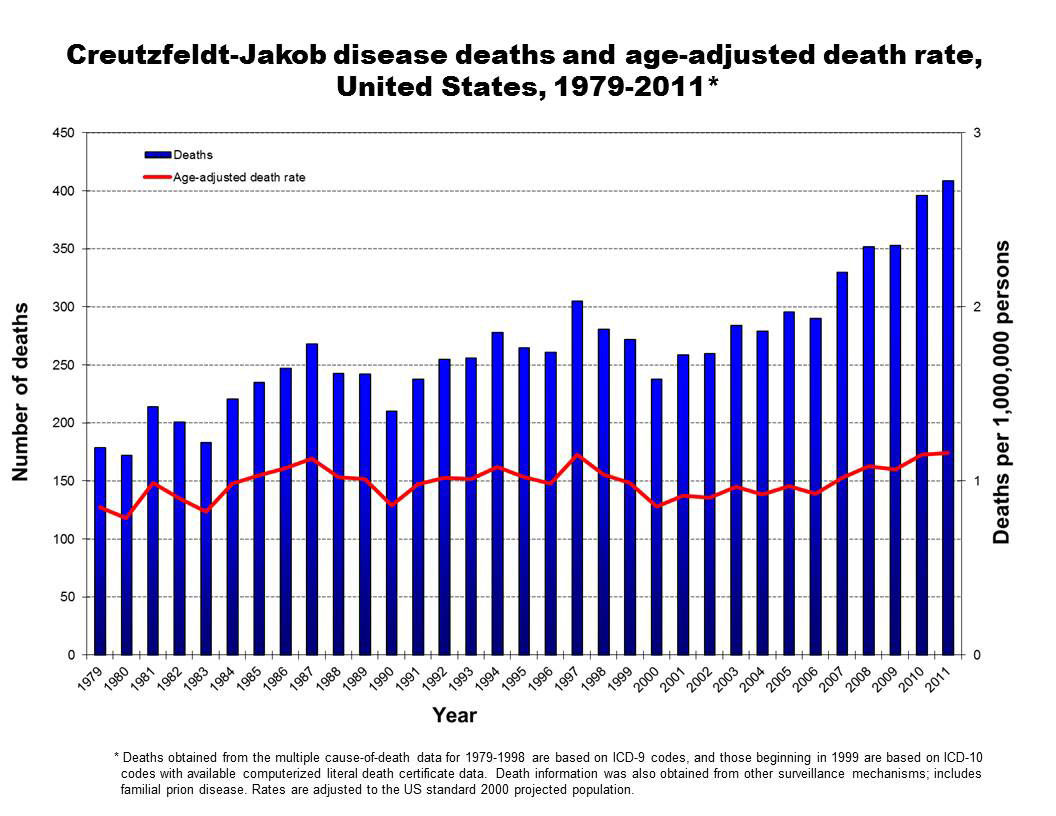
Classic CJD is a human prion disease. It is a neurodegenerative disorder with characteristic clinical and diagnostic features. This disease is rapidly progressive and always fatal. Infection with this disease leads to death usually within 1 year of onset of illness. Important Note: Classic CJD is not related to "mad cow" disease. Classic CJD also is distinct from "variant CJD", another prion disease that is related to BSE.
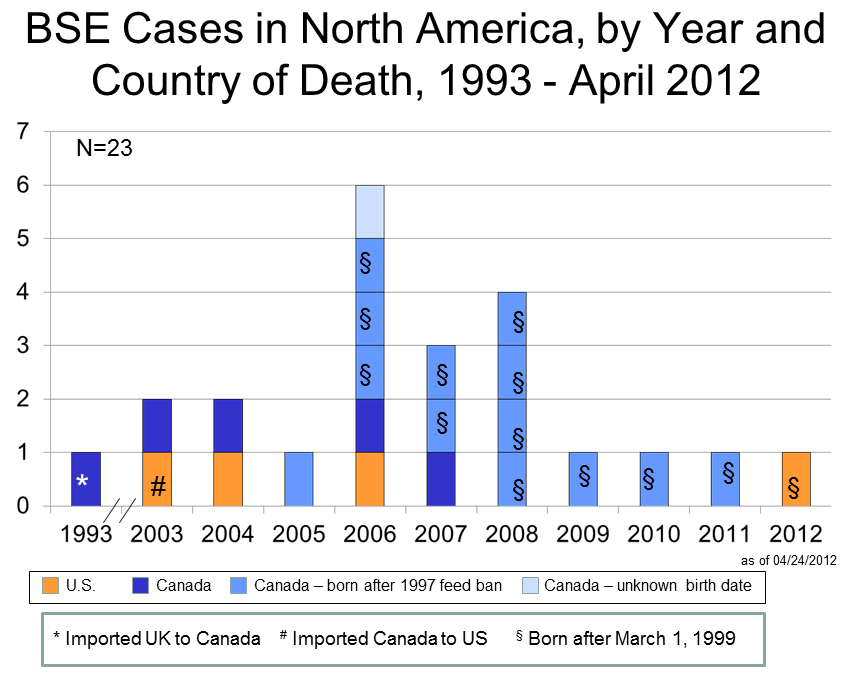
BSE (bovine spongiform encephalopathy), also known as mad cow disease, is a progressive neurological disorder of cattle that results from infection by an unusual transmissible agent called a prion.
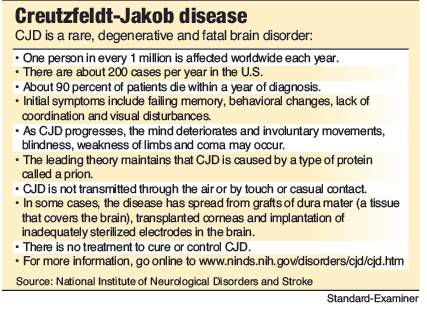
Creutzfeldt-Jakob disease
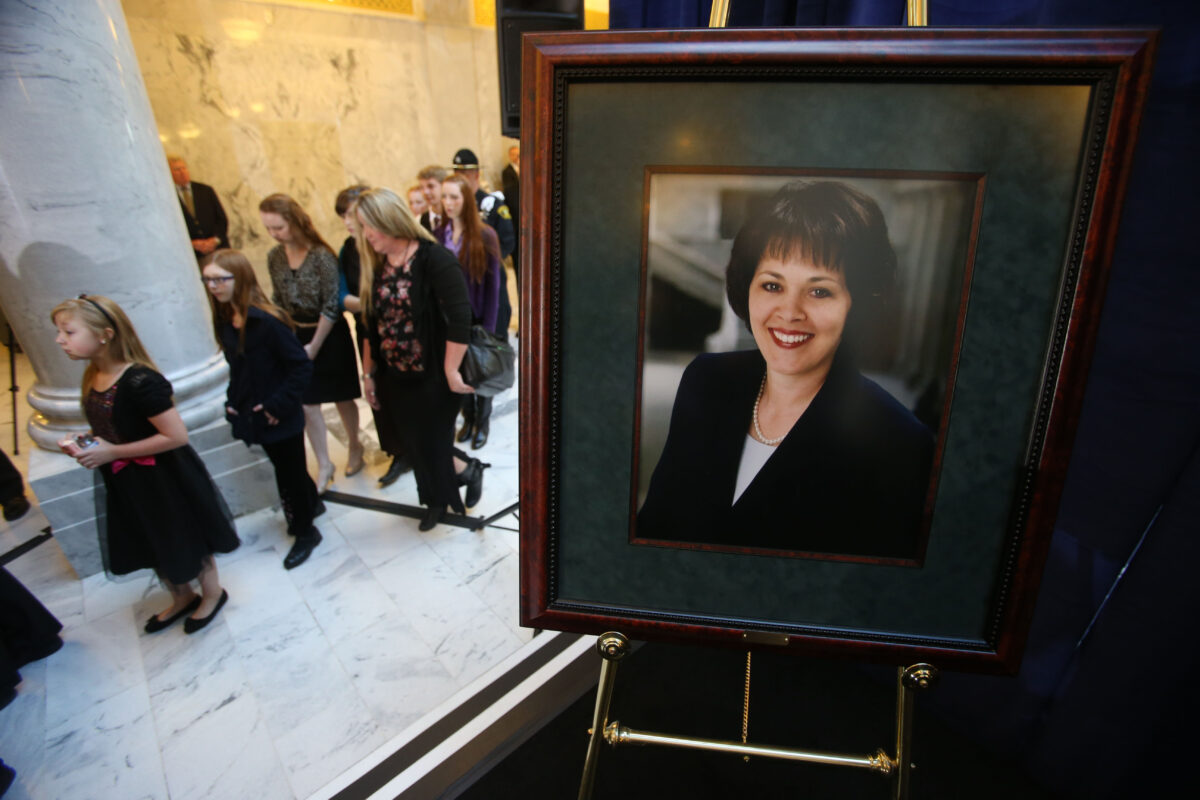
Lockhart family members enter the public memorial service for former Speaker of the House Rebecca Lockhart in the Capitol Rotunda in Salt Lake City on Thursday, Jan. 22, 2015. Utah leaders gathered Thursday morning at the state Capitol to remember the first female speaker of the Utah House of Representatives, who died Saturday at age 46 from a rare brain disease. (AP Photo/Laura Seitz, Pool)
OGDEN — Judy Fenstermaker says her uncle died of the same disease that took the life of former Utah House Speaker Becky Lockhart earlier this month.
“He died of the human variant of mad cow and so did Becky Lockhart. It’s a horrible, horrifying disease,” Fenstermaker, of Ogden, said. “It can sit in your brain for 10 years before it activates and when it activates it absolutely eats holes in your brain.”
Fenstermaker also said she worked in the health care industry for 15 years, specializing in end-of-life care. There, she saw the disease infect several people.
“We buried several people from this disease,” she said. “We buried an 18-year-old at the Ogden City Cemetery and another young girl at the Lindquist Cemetery in Layton. I don’t think it’s as rare as people are being told.”
There are two officially identified types of Creutzfeldt-Jakob disease, classic and variant. The Centers for Disease Control distinguishes those from so-called mad cow disease, although the disease course of all three is similar.
Creutzfeldt-Jakob disease is a prion disease, meaning it comes from misfolding of proteins in the brain, said Dr. Jennifer Juhl Majersik, a neurologist and associate professor at the University of Utah, who also treated Lockhart for the disease. The disease is fatal and there is no treatment, cure or prevention. Symptoms include trouble talking, walking and thinking, uncontrolled movements, hallucinations, coma and eventually death.
“Surveillance methods are not perfect, as not all cases are captured in the U.S.,” she said. “However, we think the disease occurs in about one in one million people and this number has remained stable over the years. Personally, I have diagnosed CJD five to six times. It’s always tragic. There is on average one case per year in Utah, though some years have none and some have two to three.”
She said the CJD-like diseases have three main types: sporadic (classic), familial or acquired. Majersik said 85 percent of cases are sporadic, 10 to 15 percent are familial (inherited) or acquired, meaning it came from surgeries and from cross species contamination from eating meat from animals infected with prion disease.
Majersik said based on Lockhart’s imaging, testing and clinical course and on her discussions with the Prion Surveillance Center director, she strongly suspects the former Utah House speaker had sporadic CJD, the kind that spontaneously arises without known cause. However, the Prion Surveillance Center will make that final determination by tissue analysis.
Fenstermaker said her uncle had to have an autopsy to confirm his diagnosis.
“We do not test our beef the way we should in this country,” said Fenstermaker. “Japan tests every cow. We don’t and the government could care less.”
Creekstone Farms, headquartered in Kansas, has attempted to test all of its beef for mad cow disease. In 2004, however, the U.S. Department of Agriculture refused to sell the farm enough tests for all of its cows, according to legaltimes.com. The USDA stated testing every cow would undermine the agency’s official position that random testing was adequate enough to ensure safety. Furthermore, testing doesn’t ensure food safety because the disease is hard to detect in young animals. The USDA currently tests about 1 percent of all cattle slaughtered in the U.S. The cost to test each animal would be approximately $20.
The Mayo Clinic reports that humans can become infected with a variant form of CJD by eating meat contaminated by infectious prions. However, that risk is extremely low. Variant CJD occurs in both animals and humans. When it appears in cattle, it is referred to as mad cow disease, or BSE (bovine spongiform encephalopathy).
“None of the CJD cases in the U.S. have been traced to the U.S. beef supply,” said Majersik.
The Prion Surveillance Center states variant CJD was first reported in the UK in 1996. A total of 229 cases have been reported worldwide, of which 177 have been observed in the UK, 27 in France and fewer cases in other countries. Four cases have been reported in the U.S., all of which appear to be exposed to prion disease in foreign countries. However, in the U.S., the possibility that chronic wasting disease, the prion disease of elk and deer, be transmitted to humans needs to be carefully monitored.
Fenstermaker also said she is very bothered by the fact that Stericycle, a North Salt Lake hospital waste incinerator, was accused of burning prions from human and animal tissue.
“That is very scary to me,” she said. “You can’t kill prions. When you die from this disease you have to have a closed casket funeral. So where did all the ashes go from this stuff being burned? Into the air and onto the ground. My aunt started going around the country giving talks about this disease after my uncle died, but the federal government told her to stop because she was scaring people.”
Majersik said regarding transmission from surgeries, it has very rarely occurred from corneal transplants and brain surgeries, particularly prior to knowledge about how to handle equipment used in those surgeries.
In 2006, McKay-Dee Hospital in Ogden performed surgery on an elderly man who had CJD. However, at the time of the surgery, hospital staff was unaware of his disease. Surgical equipment was sterilized according to usual protocol. When a person has a prion disease, equipment has to have additional cleaning. After the man’s autopsy confirmed his diagnosis, the hospital informed 155 surgery patients they may have had exposure to the disease, even though the chances were small. There have been no reports of anyone contracting the disease.
Health

Ask Dr. Steve: Pride and mental health — Why LGBTQ+ wellbeing matters year-round
Ask Dr. Steve: School’s out for summer — Now what?: Helping kids thrive (not just survive) the unstructured months ahead