Surviving the “happiest” time of year: Managing holiday stress key to enjoying the season


A family checks out the Union Station display at Christmas Village in Ogden.

Finley Kropf, 3, looks over her present from Santa Claus, performed by Ed Brightenburg, Saturday, Dec. 3, 2016, during a private family Christmas party at Mountain View Elementary School in Brigham City. Brightenburg has spent the past 25 years performing as the jolly figure.

Darth Vader looms over the display room from the top of a Star Wars-themed Christmas tree during the Weber School Foundation's Christmas Tree Jubilee Tuesday, Nov. 24, 2015, at the Ogden Eccles Conference Center. The tree titled "May the FORCE be with you this Christmas" was donated by the Wyatt Ferlin's family and decorated by Kirstin Ferlin and Mya Hosley.
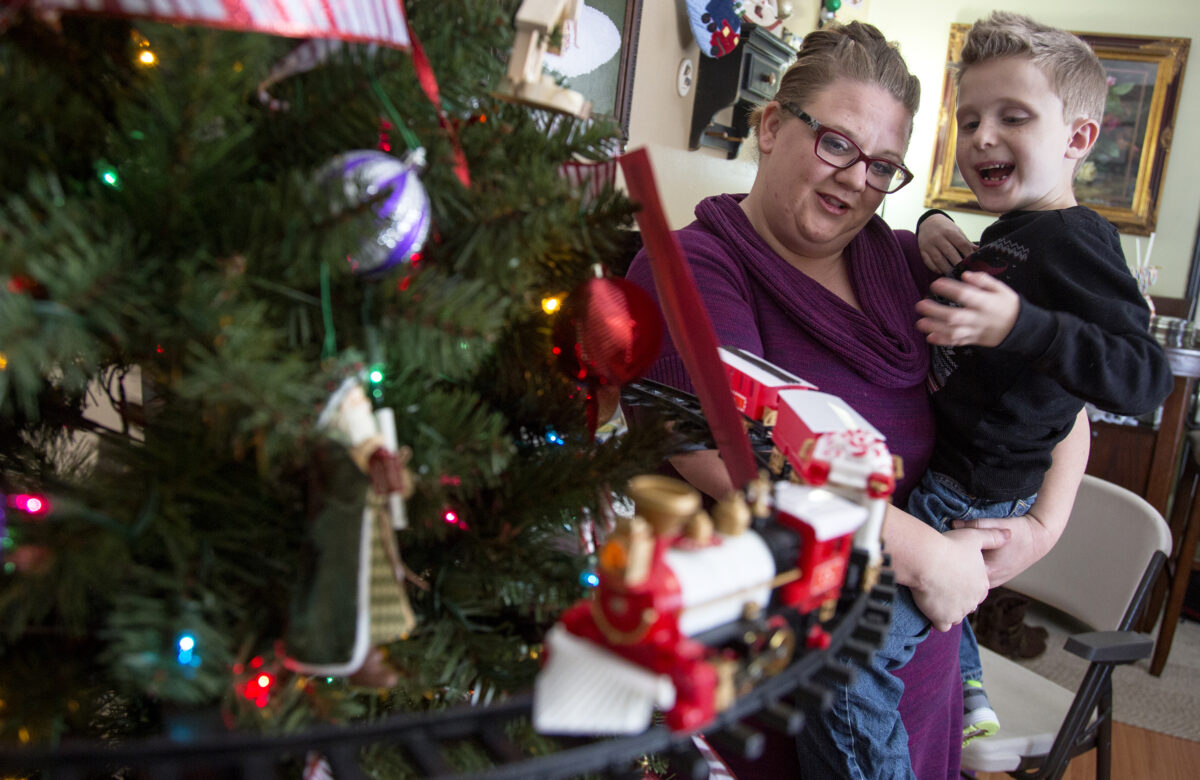
Carina and Merrick Kinser watch a train circle their Christmas tree at their Roy home on Wednesday, Dec. 23, 2015. Merrick, 7, has a rare genetic disease that limits his development and shortens his life span. In April, his family threw him an early Christmas party in case he didn't make it through the year.

The Chapman family watches the Christmas lights change colors at the Roy City Municipal Center on Tuesday, Dec. 23, 2014.
-

- Depressed young red haired woman on christmas holiday
-

-
A family checks out the Union Station display at Christmas Village in Ogden.
-

-
Finley Kropf, 3, looks over her present from Santa Claus, performed by Ed Brightenburg, Saturday, Dec. 3, 2016, during a private family Christmas party at Mountain View Elementary School in Brigham City. Brightenburg has spent the past 25 years performing as the jolly figure.
-

-
Darth Vader looms over the display room from the top of a Star Wars-themed Christmas tree during the Weber School Foundation’s Christmas Tree Jubilee Tuesday, Nov. 24, 2015, at the Ogden Eccles Conference Center. The tree titled “May the FORCE be with you this Christmas” was donated by the Wyatt Ferlin’s family and decorated by Kirstin Ferlin and Mya Hosley.
-

-
Carina and Merrick Kinser watch a train circle their Christmas tree at their Roy home on Wednesday, Dec. 23, 2015. Merrick, 7, has a rare genetic disease that limits his development and shortens his life span. In April, his family threw him an early Christmas party in case he didn’t make it through the year.
-

-
The Chapman family watches the Christmas lights change colors at the Roy City Municipal Center on Tuesday, Dec. 23, 2014.
The music on the radio proudly proclaims that this is the “most wonderful time of the year” and it’s the “happiest season of all!” Everyone should be all smiles and joy throughout December, right?
But then you start worrying about whether you can find the right gifts for everyone on your list and the decorations have to be put up and there are parties to plan and cooking to do and shopping trips to make — and don’t even start on the dread that comes when you go to check your credit card balance.
So is it the happiest season … or the most stressful?
For most of us, there are probably elements of both.
But this is not a surprise to health professionals across the country, many of whom have come up with suggestions about how to manage the challenges of the holidays to enable us to enjoy the good times more.
Here are five recommendations from the American Heart Association, for example:
1. Stress Less
Give yourself space — and grace. Try:
- Not saying “yes” to all that is asked of you.
- Making realistic holiday plans and to-do lists and learning what you can “let go.”
- Breathing deeply and slowly before starting each new task.
- Refreshing your coziest spot at home — with a soft chair, warm throw blanket, fire logs or candle and a place to rest your head.
- Setting aside time for a book you’ve been meaning to read or show you’ve wanted to watch.
2. Put your mind to it.
Be present — no matter what you are doing. Try:
- Noticing the details that make up one of your favorite places.
- Stretching to reach a falling leaf and crumbling it in your hand.
- Giving someone your complete attention.
- Gazing at the stars or looking for shapes in the clouds.
3. Connect with others.
Harness the power of being with people. Try:
- Teaming up with a family member or friend to grocery shop or cook.
- Scheduling a lunch date or a walk outdoors with someone new.
- Sharing a favorite food or recipe with a friend or co-worker.
- Retelling a favorite memory at a gathering or in a holiday greeting.
- Working with a friend to help with chores like raking leaves or shoveling snow.
- Having fun in nature like apple picking or building a snowman.
4. Give thanks.
Note blessings big or small. Try:
- Listing objects that comfort you. Think about your morning coffee, a favorite meal, a pair of snuggly socks or a warm, chunky scarf.
- Smiling as the winter sun shines on your face.
- Jotting down all the things that went right today.
- Savoring the abundance of food at a local market — and taking a bite of a perfect apple.
- Thanking someone for making your life better.
5. Rest to be your best
Replenish both your body and mind. Try:
- Sticking to a regular sleep schedule of seven to nine hours a night.
- Renewing your stamina with exercise, yoga or a good stretch.
- Closing your eyes for a few minutes during the day.
- Scheduling “me” time to relax with a hot bath or cup of tea.
- Snoozing one afternoon, for no good reason.
Source: http://heart.org
The National Alliance on Mental Illness (NAMI) also has it’s own list of five ideas that emphasize the value of mental health during the holiday season:
1. Accept Imperfection
We live in a busy world where time isn’t always our friend. What’s attainable for one person could be near impossible for another. Do what works for you, keeping your mental wellness in mind. What good are the holidays if you don’t have the energy to enjoy them? Make a list, check it twice and decide if there’s anything you can remove.
2. Don’t Lose Sight of What Really Counts
What “really counts” will be different from person to person — whether that means spending time with family and friends, spending some much-needed downtime at home or focusing on the year ahead. Be present in those moments.
3. Be Kind
This includes being kind to others as well as yourself. While this should be a year-round behavior, it never hurts to be reminded! We never know what any one person is going through. Receiving and giving kindness is beneficial to all involved, so don’t hold back.
4. Find Time to Decompress
Back-to-back events, shopping, keeping up with household chores and work demands can be tiring. Make sure you are taking the time to recharge and use your best coping skills. Exercise, nutrition, sleep and familiar routines can be our best friends during these busier times. Of course, these are not the only ways to practice self-care: pay attention to those practices that make you feel grounded and your best.
5. Ask For — and Accept — Help
If you notice that you’re overwhelmed or find yourself dreading any upcoming responsibilities that you’ve agreed to, ask for support. If someone offers to take a task off your list of to-do list, allow yourself to graciously accept if it gives you any feeling of relief. Sometimes, we take on too much and find ourselves regretting our decisions. Asking for help or accepting help doesn’t make you weak — it shows you are mindful of your limitations. You shouldn’t feel guilty for accepting someone else’s kindness. It gives those around you permission to do the same if they find themselves in a similar predicament in the future.
Source: http://nami.org
NAMI closed its post on dealing with holiday stress by saying, “Take care of yourself this holiday season. Find the joy in your surroundings, wherever they may be, and remember: You are not alone.”
It’s a valuable to remember that by taking care of ourselves, we can make the holiday season a happier and healthier one for both us and those we care about.