Kaysville doctor survives ‘widowmaker’ with ‘miraculous’ response, recovery
-
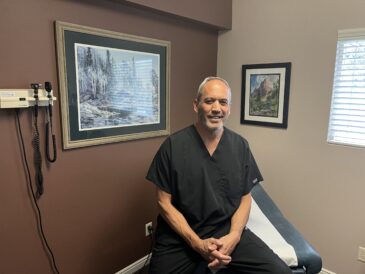
- Dr. Layne Kamalu sits inside a room at the Kaysville Clinic in Kaysville, Utah, on Thursday, April 2, 2026.
-
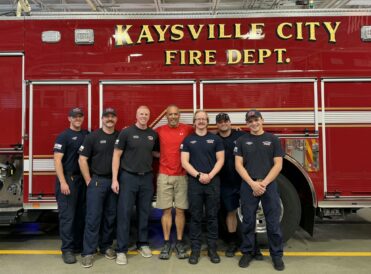
- Dr. Layne Kamalu of the Kaysville Clinic, center, stands with members of the Kaysville Fire Department in a photo posted to the Kaysville Fire Department’s Facebook page on Wednesday, March 25, 2026.
Ryan Comer, Standard-Examiner
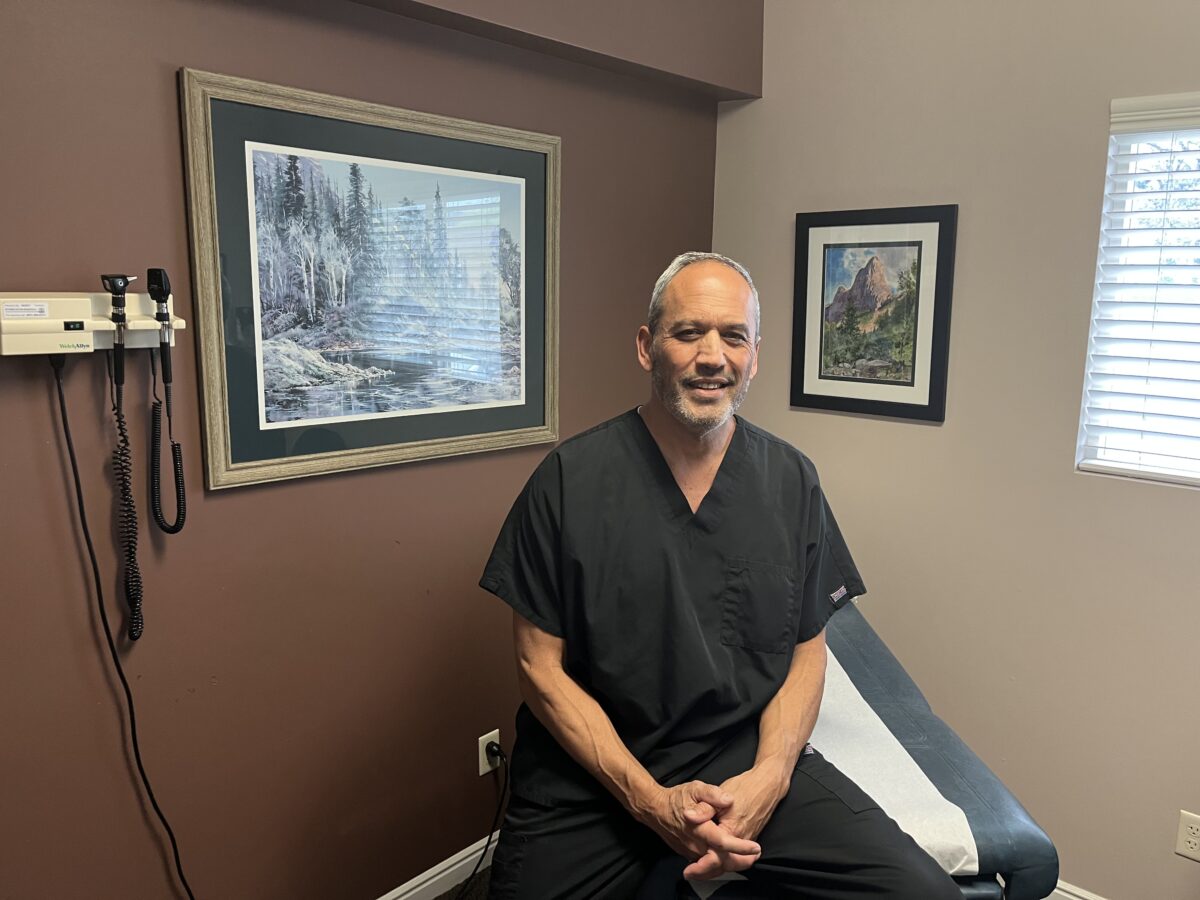
Dr. Layne Kamalu sits inside a room at the Kaysville Clinic in Kaysville, Utah, on Thursday, April 2, 2026.
Dr. Layne Kamalu released a deep sigh.
“You never know when your time is up,” he then said. “You just never know. So make sure you tell those people you love that you love them. You never know when you might not see them again.”
Kamalu’s time isn’t up yet thanks to a medical response that the word fortuitous doesn’t seem to do justice to.
Kamalu, 63, has no recollection of what happened to him on the morning of March 9. Everything he recounts about what transpired is based off what those who were around him have said and what he knows he would have been doing that morning.
It was a Monday, and Kamalu was in his office at the Kaysville Clinic after showing up at the usual time of 9 o’clock. He had just seen his first patient and was about to see another.
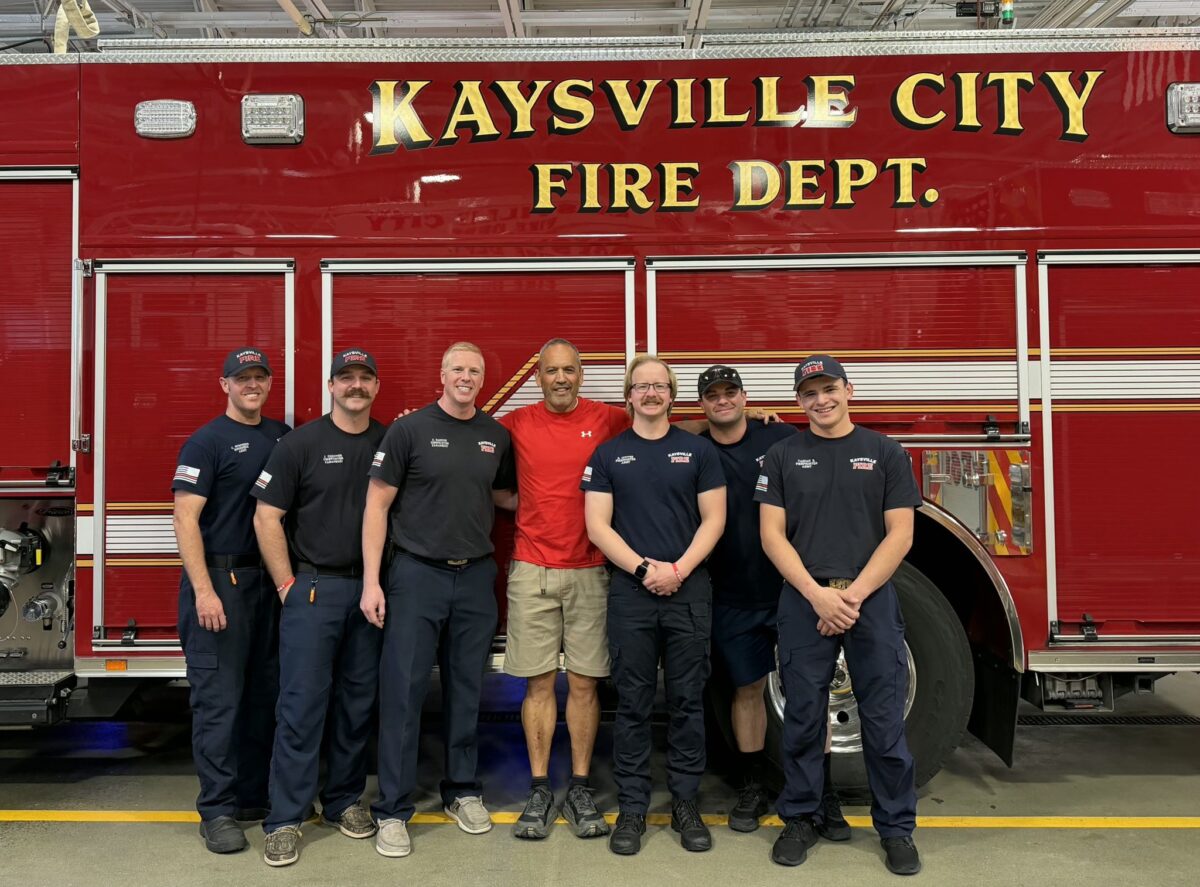
Photo supplied, Kaysville Fire Department
Dr. Layne Kamalu of the Kaysville Clinic, center, stands with members of the Kaysville Fire Department in a photo posted to the Kaysville Fire Department's Facebook page on Wednesday, March 25, 2026.
He was in his office with the door closed when one of his medical assistants said she spoke with him from behind the door. She thought he sounded different, but he answered her.
Then came what Kamalu said was “very loud, weird snoring” being heard from the room.
Kamalu was unresponsive to his name being called.
The door was opened, and it was discovered that Kamalu had fallen against the door. The door was shoved open and one of Kamalu’s assistants squeezed through and tried to pull him away from it.
Kamalu said he was in ventricular fibrillation, which he said is “basically when your left ventricle is just like a bag of worms, so it’s not beating properly.”
Not beating properly means not circulating blood and no pulse.
“And so if you’re not circulating blood, you’re going to go down,” he said.
Kamalu’s staff started performing CPR on him to keep his blood circulating and, according to a Facebook post from the Kaysville Fire Department, paramedics from the department, located just across the street from Kamalu’s office, arrived within 90 seconds of being dispatched. They shocked him four times to restore his pulse, intubated him and started more advanced life support.
“Speed is of the essence when you have something like that happen,” Kamalu said.
Kamalu had done a strength training workout that morning. He does weight training a couple times a week and said prior to the heart attack he was in some of the best shape of his life. He said he does intense workouts all the time with no problem.
“I had no inkling that there was anything ready to happen,” he said. “And that’s just the way it goes sometimes. Heart attacks can happen suddenly, and when it involves a large vessel that serves a big part of your heart, that can just take you down immediately. That’s called a widowmaker.”
That’s what Kamalu said he had.
Widowmakers, Kamalu explained, involve the left anterior descending, or LAD, which is one of the main trunks that serves most of the heart.
“And so if you take that out, you’re not going to be doing well.”
Such heart attacks can happen anytime, Kamalu said.
“But if it happens some place where nobody notices it, you’re gone,” he said. “Because a lot of heart attacks, you’ll feel chest pain and shortness of breath and you’ll be still functional. You can say, ‘Hey, I think I might be having a heart attack,’ and you call the ambulance or you have someone take you to the emergency department. And that’s usually in a smaller vessel when that happens.
“But if you have a massive heart attack in a large vessel, you don’t have the ability to function.”
Kamalu was taken to an emergency department where an EKG was done and he was sent to the cath lab to find where the blockage was and have a stent put in.
“Modern technology is great,” he said, referring to the cath lab. “This wasn’t possible years ago.”
Kamalu was in an induced coma for two days after the stent was put in and blood flow was restored as part of a protocol he explained was necessary to rest the brain and the heart for 36 to 48 hours.
That Saturday, less than a week after the heart attack occurred, Kamalu was discharged.
Kamalu called the circumstances miraculous. Not just because he was able to survive, but because he has apparent normal heart function and could walk out of the hospital under his own power.
“I was walking the hallways by Thursday,” he said.
According to an article on uchealth.com, there are approximately 395,000 cases of cardiac arrest outside of a hospital setting each year in the United States, of which less than six percent survive, according to the National Academies of Sciences, Engineering and Medicine.
To put in perspective even more how rare recovery is, approximately 200,000 cardiac arrests occur each year in hospitals and less than a quarter (24%) survive, the article stated.
Kamalu said his staff and patients were surprised he had a heart attack because of how particular he is about his lifestyle and taking care of himself, but he said it can happen to anyone.
“Everybody develops heart disease as they age,” he said. “Heart disease is a lifelong problem. It doesn’t start suddenly when you’re 50 or 60 years old. You start to develop heart disease when you’re young, and it’s just something that accumulates over time.
“When I mention heart disease, what I’m talking about is the development of atherosclerosis.”
Atherosclerosis, Kamalu explained, is when cholesterol is deposited in your artery walls and you form plaques.
“And everybody has that to some extent — some people a lot more than others,” he said. “And some people develop enough plaque that their arteries start narrowing, and so they get chest pain or shortness of breath with that. And so sometimes people have to go and have surgery and bypass those areas of narrowing.
“But anywhere where there’s a plaque, whether it’s large or small … a plaque can rupture. That plaque, which is the accumulation of cholesterol in the artery wall, it can actually get inflamed and rupture through the artery wall. And that’s essentially what happened to me. And when it ruptures through the artery wall, you form a huge clot right there. And so that’s basically what happened to me.”
No premonition. No advance notice.
“It just, boom, just happened all of a sudden,” he said.
Although heart attacks can happen for everyone, Kamalu said there are things that can help prevent them, or at the very least, provide a better chance to survive one. That includes a proper lifestyle, monitoring health markers like blood pressure and blood sugar levels, keeping inflammatory levels down, getting enough sleep, eating right, maintaining proper weight and trying to avoid the development of diabetes.
“These are all things that contribute,” he said.
Being fit, Kamalu said, provides more reserve.
“If you’re strong and your heart is strong and in shape, you have much more reserve to withstand a big crisis like that,” he said. “If you’re not in shape, you have no reserve.”
Kamalu said CPR was critical for his survival.
“You have about five minutes of oxygen in your blood,” he said. “If you stop breathing right now, you would be OK for about five minutes, as long as someone is circulating the blood. And so that’s where the chest compressions come in. If you’re doing chest compressions, even if that person is not breathing, you’ve got about five minutes worth of oxygen. And so all you have to do is circulate it, and hopefully within that five minutes, you get some more advanced cardiac life support on board. And that’s basically what happened to me.”
Capt. Tyler Reece of the Kaysville Fire Department, who was the officer on the call, cited three things that improve patient outcomes in cases of cardiac arrest: early CPR, early notification of the 911 system and early defibrillation.
“All those puzzle pieces just fell perfectly into place,” he said.
Since being discharged from the hospital, Kamalu said he doesn’t have the same stamina. He has felt weak, easily fatigued and a little dizzy at times.
“It’s a road to recovery,” he said.
But he said each day gets a little better, he gets a little stronger and the prognosis is positive.
“I should be able to do anything I want,” he said. “I’ll have some additional studies done after a while and just kind of follow my heart function. You want to come out of that with normal heart function, and apparently I did. A lot of times you don’t with something like that. You’ll have some heart failure. Fortunately, it didn’t look like I had any, and so that’s really great and so I should be able to get back into normal activity and I won’t really have any limitations other than I’ll be on some blood thinners for a while to protect the stent so it doesn’t clot over again.”
Kamalu stressed just how important CPR is.
“Just basic CPR saves lives, so it’s good to know,” he said. “You never know when it’s going to fall on you. You never know when someone’s going to collapse right in your presence. And, certainly, I wasn’t the first person my staff thought would collapse in their presence.”
So did Reece, who said because there’s oxygen in the blood, even if all you can do is give good chest compressions, that’s enough to buy time for emergency responders to get there.
“For me that was probably the biggest takeaway of importance is as a member of your community, just get trained in CPR so if something does happen you can kind of be that bridge from before we get there until we arrive,” he said.
Contact Standard-Examiner editor Ryan Comer at rcomer@standard.net.