Puncture vine causing trail trouble
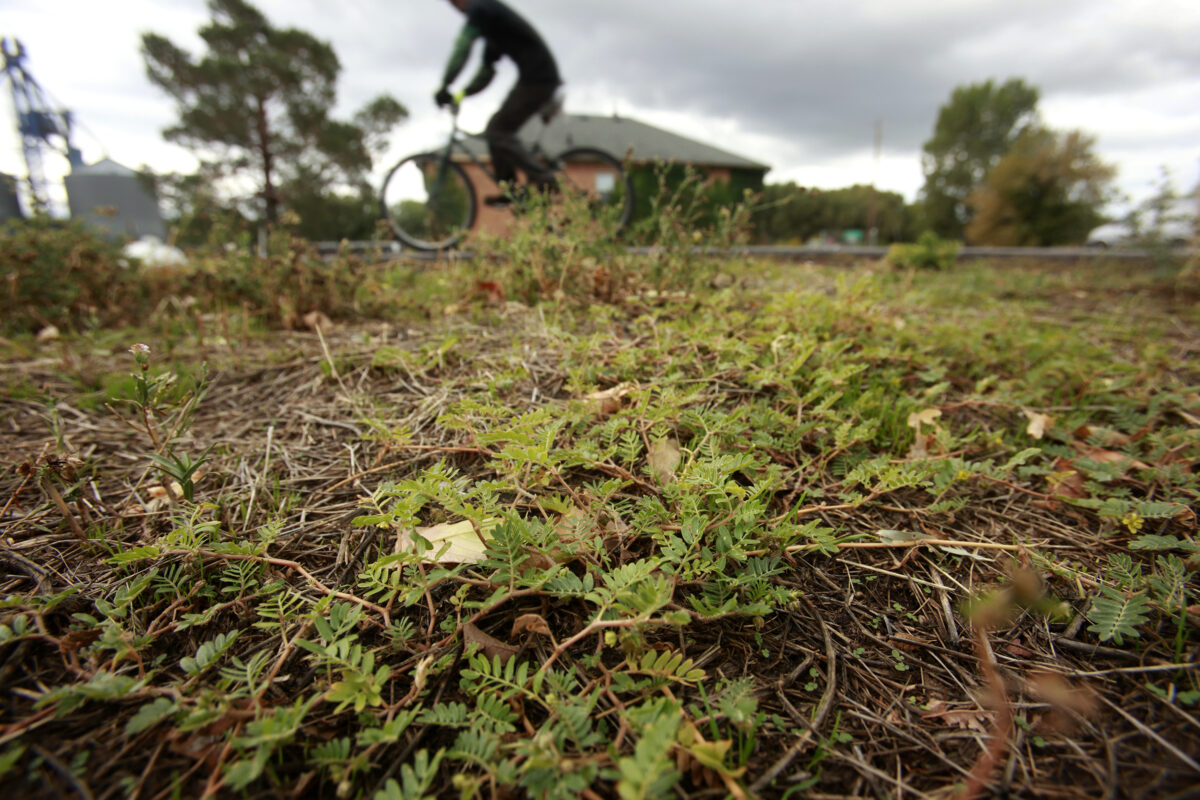
Puncturevine, also known as goathead, spreads along the trail around the 21st St. Pond in Ogden on Tuesday, Sept. 30, 2014. The invasive weed is common around Northern Utah and is known for the hard, spine covered seeds that can puncture bike tires and stick in skin.
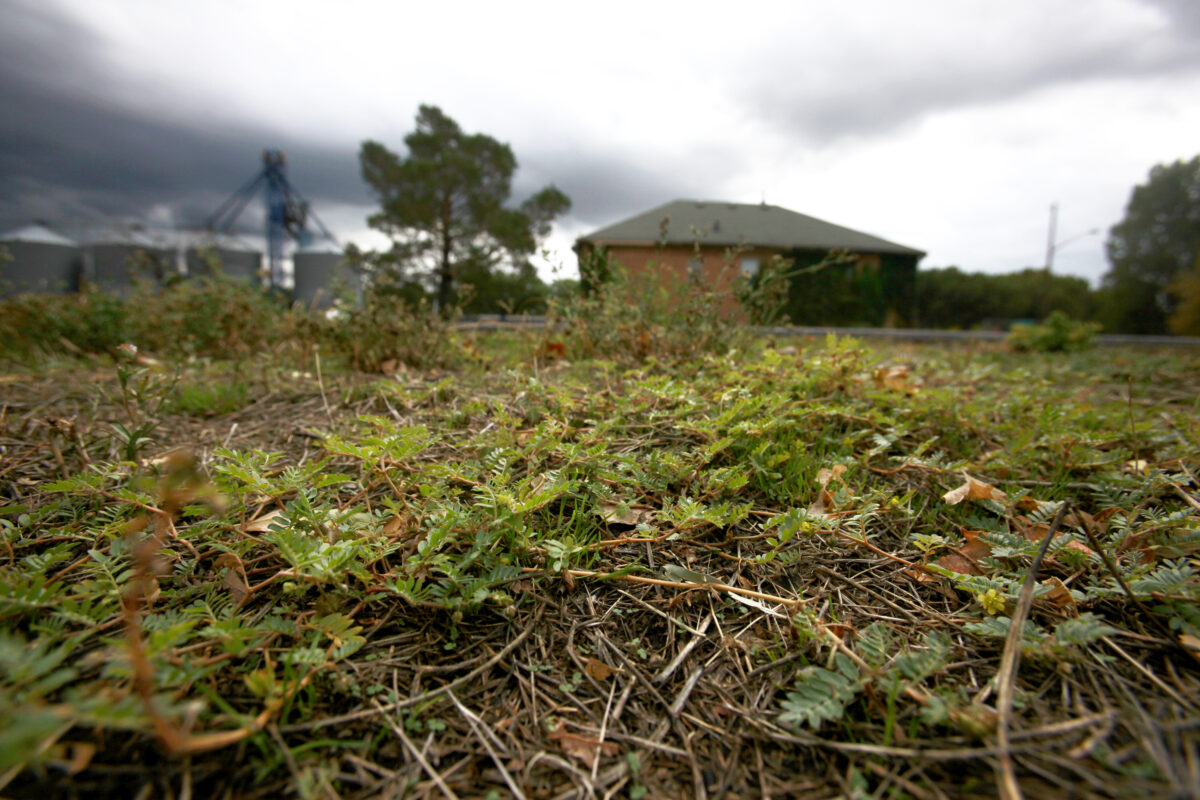
Puncturevine, also known as goathead, spreads along the trail around the 21st St. Pond in Ogden on Tuesday, Sept. 30, 2014. The invasive weed is common around Northern Utah and is known for the hard, spine covered seeds that can puncture bike tires and stick in skin.
A prickly plant is spreading its vines along Ogden paths, causing a lot of irritation for cyclists.
Puncture vine, sometimes called goatheads, produces a spiky seed that sticks to shoes, animals and tires, which have helped it spread and become pervasive, especially in high-traffic areas like trails.
The spikes are painful for bare feet and a nuisance for bikers when they deflate tires. Weber Pathways has been working to eradicate the plant from local bike trails, but it persists in areas like the Ogden River Parkway, the Intermodal Hub Trail and the Weber River Parkway.
“It’s been a tough year because of the moisture and the heat. They had a heyday,” said Rod Kramer, outreach coordinator at Weber Pathways.
Representatives with Weber Pathways officials said they’re especially worried about the seeds deterring people who are just getting into biking.
“We feel people who are just getting into being active … and get a flat in the first mile on the trail, they’re not going to fix it, they’re going to leave it in the garage,” said Weber Pathways Executive Director Mark Benigni. “We want to make their experience pleasant as best as we can.”
Puncture vine grows from a taproot that can thrive in dry conditions. Vines spread from the root, covering the surrounding ground like carpet. They can grow in gardens, gravel, sidewalks and driveways. Because of its pointy seeds, the plant can also be difficult to remove.
“If it’s still in flowering stage, you can spray it,” Benigni said. “Once the seeds start forming, you have to pull it, bag it and burn it.”
Seeds sit dormant for up to seven years, so plants can still sprout a few seasons after an area has been cleared.
Weber Pathways has coordinated with Ogden City, Snowbasin and volunteers to fight the plant throughout the county. Once of their success sites is the parking lot at the Port Ramp Marina on Pineview Reservoir. Snowbasin Resort owns the property, and it’s often used as a staging area for big events like the Outdoor Retailer Open Demo and the XTERRA trail races.
“The problem was, that this parking area was just paved with goatheads,” Kramer said. “So cars would drive in there, get all these thorns in their tires, then drive all over the county and seed everything. It was a bad, bad scenario.”
For the past two years, Snowbasin Resort has donated time and money to weed out the problem.
“They did a great job of being proactive,” Benigni said. “They brought in their tractors and they sprayed, so Snowbasin gets a lot of credit for that work there.”
In August, Weber Pathways also worked with volunteers from Waypoint Academy to remove more puncture vine from the Port Ramp site and to weed sections of the Pineview Loop Pathway.
“They pulled up all these garbage bags full of it,” Kramer said. “The bags are hard to handle, as you can imagine — thorns are poking through plastic and it’s hard to even pick the bag up.”
Weber Pathways is currently looking into a weevil that eats puncture vine seeds, although Utah winters are typically too cold for the insect to thrive.
“Jordan River Parkway volunteers experimented with them last year, and we’re going to take a look at it this fall,” Benigni said. “We’re supposed to be getting some weevils from Colorado that are more hardy, and can withstand the winter.”
Trail users can help prevent the plant’s spread by being aware of how to properly dispose of seeds.
“People often, and I’m one of them, find one in a tire or shoe, then pull it out and throw it,” Benigni said. “Well, what did I just do? I just planted another seed for the plant, versus pulling it out and putting it somewhere until you can throw it in a garbage can.”
The plant can be controlled at home as well. According to the Utah State University Department of Plants, Soils, and Climate, after the plant has gone to seed, the best way to remove them is by sweeping seeds, using a wet-dry vacuum or rolling a piece of carpet over the area, then throwing away the seeds.
They also suggest a novel method useful in the fall. Roll pumpkins over the puncture vine. Goathead seeds will stick to the pumpkin, which can then be thrown away.
If you see puncture vine along local trails, report it to Weber Pathways by calling (801) 393-2304.