
Release fish the right way
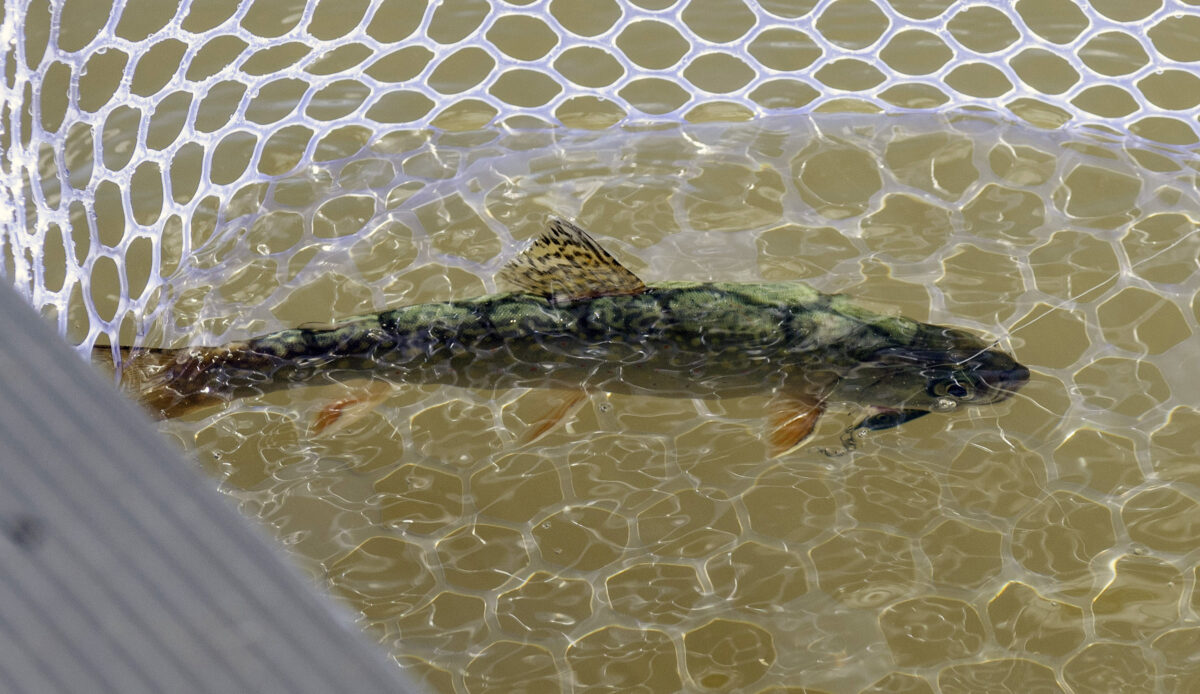
If you plan on catching and releasing fish, nets made of silicone or rubber are the best nets to use.
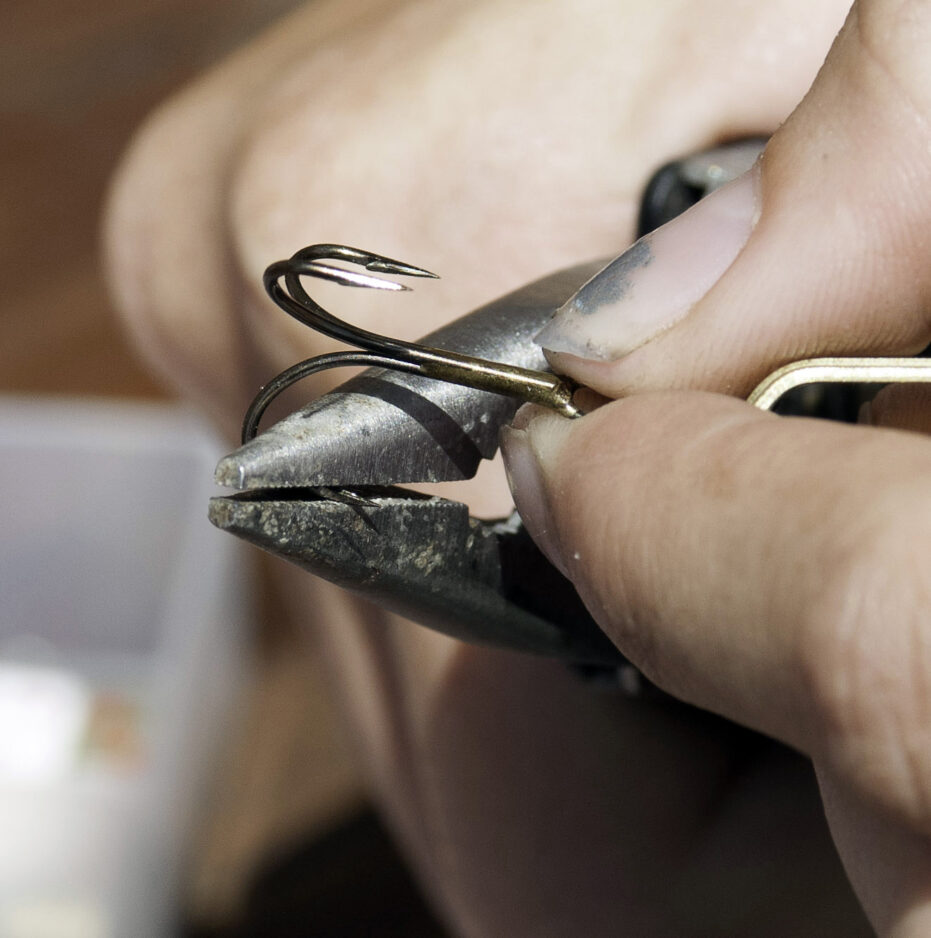
If you don't have barbless hooks, flattening the barbs on the hooks you do have will make it easier for you to remove the hook from a fish's mouth.
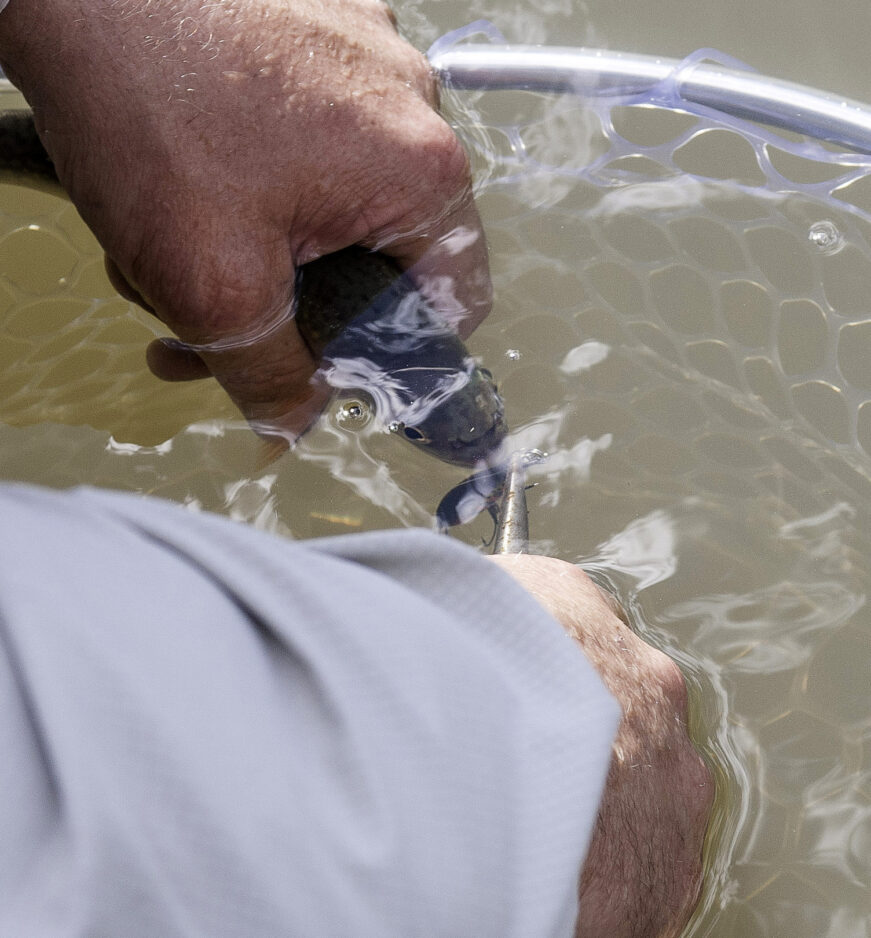
This angler is releasing fish the right way: his hands are wet, he's keeping the fish's gill under the water and he's using a pair of long-nosed pliers to remove the hook. He also landed the fish using a modern net.
Proper catch and release of fish is especially important when temperatures are reaching the hottest they’ll be all year. As the water warms, the amount of oxygen in the water declines. Less oxygen makes it harder for fish to recover after fighting with an angler. And in southern Utah, and other spots that have low water levels this summer, fish are more concentrated. Fish that are concentrated into a smaller area are easier to catch, which increases the chance that a fish will be caught and released by anglers multiple times.
“Fish survival is all about equipment and technique, especially during the hot months of summer,” Ron Stewart said.
Stewart, an avid angler who serves as a regional conservation outreach manager for the Division of Wildlife Resources, said following a few simple rules will greatly increase the chance that fish survive after you release them:
1. Reel fish in quickly. Bringing the fish in quickly reduces the buildup of lactic acid and cortisol levels in the fish; 2. Unhook fish without bringing their gills out of the water. Leaving its gills in the water will allow the fish to breathe during the unhooking and release process; 3. Do not touch the gills while handling fish. Fish breathe through their highly sensitive gills; 4. If you need to bring the fish out of the water, wet your hands or glove and any surfaces the fish will contact. Doing so will lessen the chance that the fish’s scales and its protective slime layer are damaged. Its scales and slime protect the fish from bacteria, fungus and other disease-causing organisms. Better yet, use a net. 5. Minimize the amount of time a fish is exposed to air, especially in warmer air temperatures. 6. If the fish is deeply hooked, don’t pull on the line or try to remove the hook. Cut the line as close to the hook as possible, and let the hook rust out. 7. Before releasing a fish from a net, allow the fish to recover while you hold the net in the water alongside your boat or the shore. 8. Avoid hanging a fish from its jaw or mouth. Hanging a fish from its jaw or mouth can break the jaw or backbone of some fish.
Stewart provided additional details about equipment:
- Use strong, heavy tackle — pole, line and leaders — to reduce the time it takes to land fish.
- Use barbless hooks. Barbless hooks are easier to remove from a fish’s mouth.
- If you’re fishing with lures, use single hooks and bend the barb on the hook down. Bending the barb down makes it easier to get fish off the hook.
- Use needlenose pliers or forceps to reduce the amount of time it takes to unhook fish.
- If you need to bring a fish out of the water, use one of the new, specialized nets. In addition to reducing the chance that your hook or line become tangled in the net, these nets — which are often made of rubber or silicon — do less damage to skin, scales and the protective slime layer of fish.