ATV Adventures: A warm ride on a cold day in the Grassy Mountains
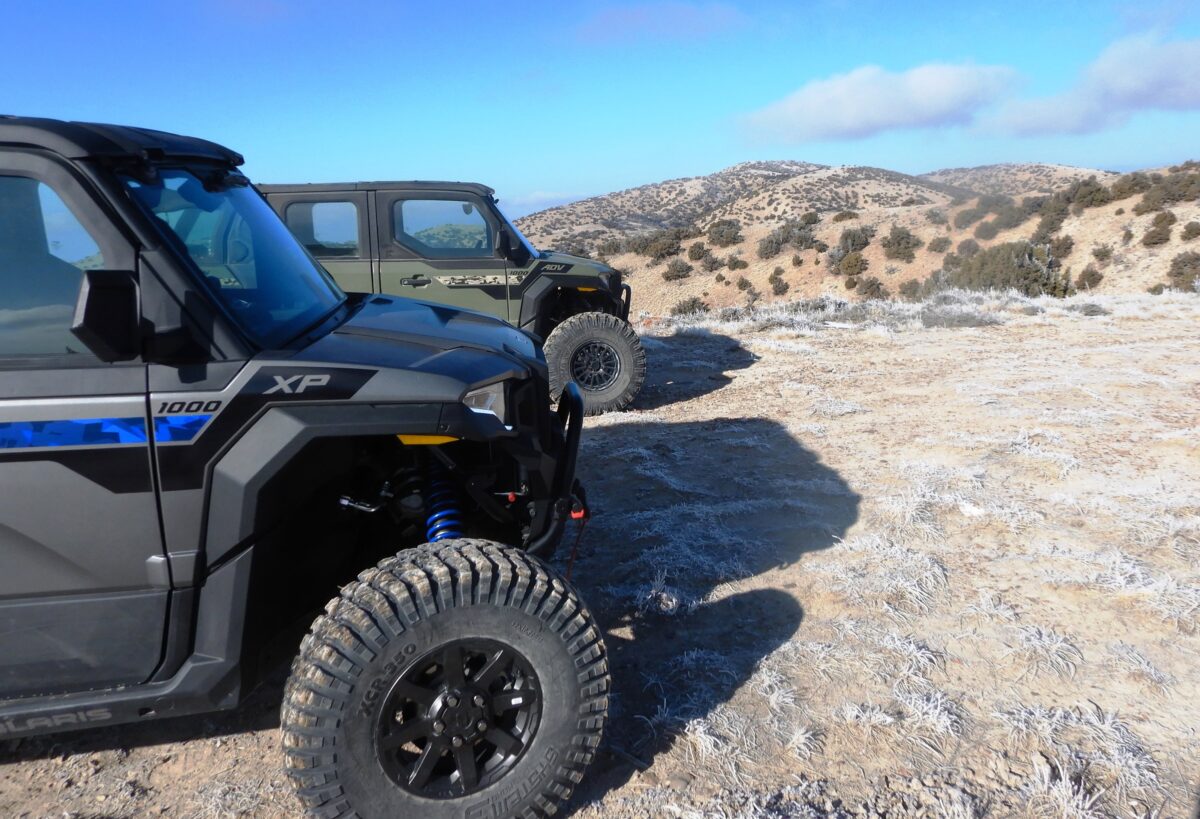
-
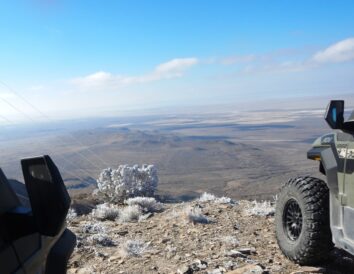
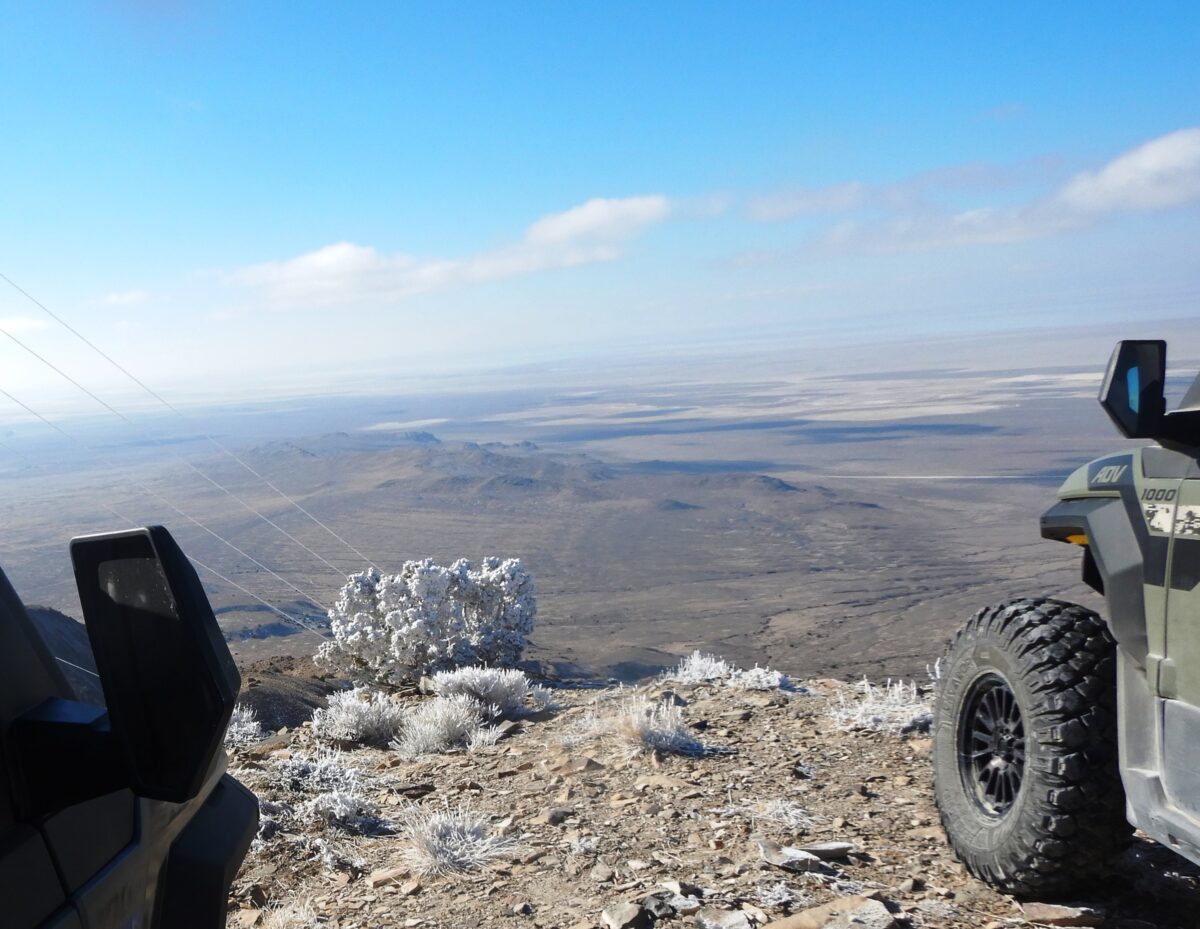
- The frosty bush at our lunch stop overlooking the Air Force Range.
-
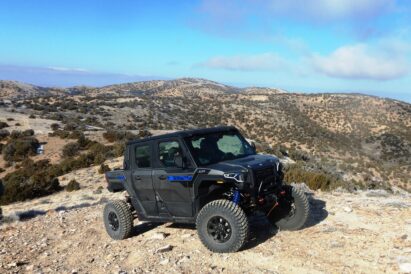
- The other Xpedition climbing to the top of the Grassy Mountains to ride the ridge.
-
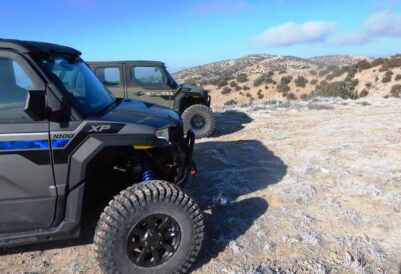
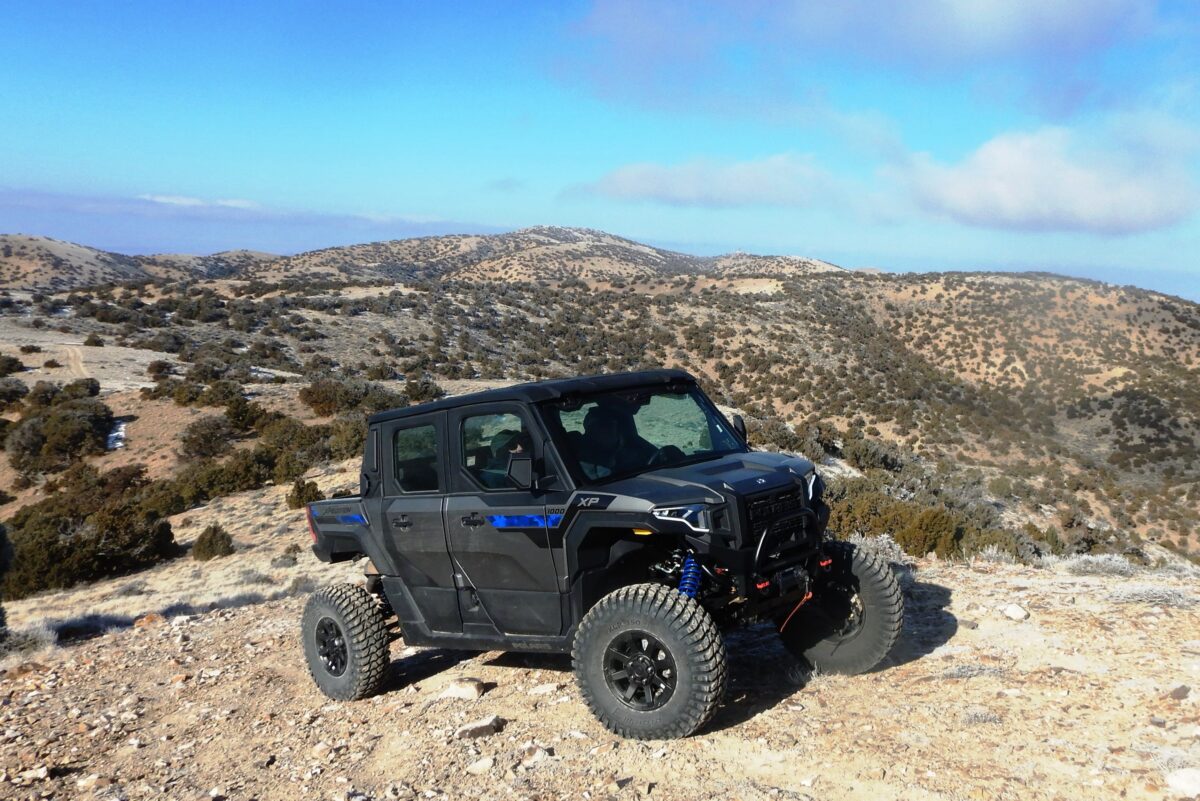
- Two Polaris Xpeditions starting on a frosty ride in the Grassy Mountain.
It was a cold day in January when Dean Eborn of Layton called me and asked me to go for a ride with him. “Have you looked at the temperature outside?” I asked. I was thinking about a ride from Moab to the Onion Creek trailhead in May a few years ago.
The temperature was 40 degrees. We rode 27 miles to the trailhead at 45 mph, with no windshield. My wife was not happy. She was shielding her face from the cold with a hoodie she was wearing backwards. It took a while for the grimace frozen on my face to thaw.
“Leave your machine at home and ride with me,” Dean countered. Then I remembered that he had a fully enclosed Polaris Xpedition with a heater. I reviewed an Xpedition last summer, but that was summer, and this was winter. I relented, because this would be a true test of this machine in cold weather.
Eborn had a trail he wanted to show me in the Grassy Mountains. He invited a friend who also drove an Xpedition. We headed west on I-80 past Delle to the Aragonite exit. Taking the exit, we turned north and drove around a berm and into a gravel pit to unload.
The Grassy Mountains are a short range, 19 miles long, running north and south about 16 miles west of the Great Salt Lake shoreline, and on the south end of the Hill Air Force Range. They are a part of the Basin and Range Province, reaching an elevation of about 6,200 feet. Their history is a timeline of ancient seafloor deposition, intense tectonic compression, and the eventual stretching of the Earth’s crust.
In the pre-1800s, the area was part of the traditional lands of the Goshute people, who utilized the desert ranges for seasonal foraging and hunting. For a 20-year period beginning in the 1840s, the range became a landmark for pioneers and explorers on the Hastings Cutoff, a difficult bypass of the California Trail that led through the Great Salt Lake Desert. Later, mining prospectors explored the range for minerals. The range is now used for grazing livestock and motorized recreation.
The temperature was 20 degrees as we started our ride, but we were cozy inside the heated Xpeditions. We started our ride along the base of the range on the west side, before traversing to the east side and traveling along the base on that side.
The trails were fast and smooth. The suspension on the Xpedition made them even smoother. I was having a hard time not smiling as we zipped along.
We turned back east, climbing into a canyon on the north side of Cobble Hill. That trail took us back over to the west side of the mountain, where we continued our ride north. Another canyon took us east to the top of the mountains, where we rode the ridge line back to the south.
There is a crazy loop that was Eborn’s favorite part of the ride. It was in the canyon that was just north of Cobble Hill. It goes straight up to the top of this hill and then comes straight back down to the road. It wasn’t enough to do it once – he had to come back and do it again. It is not so much going up and down as it is knowing where to turn at the top.
There is a radio tower in the middle of the mountain range at an elevation of 6,200 feet. We stopped at a place that offered a view to the north of the vast Air Force Range. We took a lunch break – inside the Xpeditions, the temperature outside was now a balmy 22 degrees. I stepped outside the Xpedition long enough to take a picture of a frost-encrusted bush. I think that task was completed in less than 60 seconds.
I was impressed with the Xpedition. It also has air conditioning and power windows, which we didn’t need on this ride. The 114-horsepower rating provided a fun and zippy ride, and the cab is very comfortable.
After lunch, we went down to the east side of the mountain, worked our way around the base on the northside next to the Range, and headed south back to our trucks. We finished an 80-mile ride in 4¾ hours. When you go, take plenty of water, keep the rubber side down, and if you don’t have an Xpedition, wait until spring.
Lynn R. Blamires can be reached at quadmanone@gmail.com.