Get Out There: Smitten in San Diego, conflicted in Tijuana
Courtesy Blake Snow
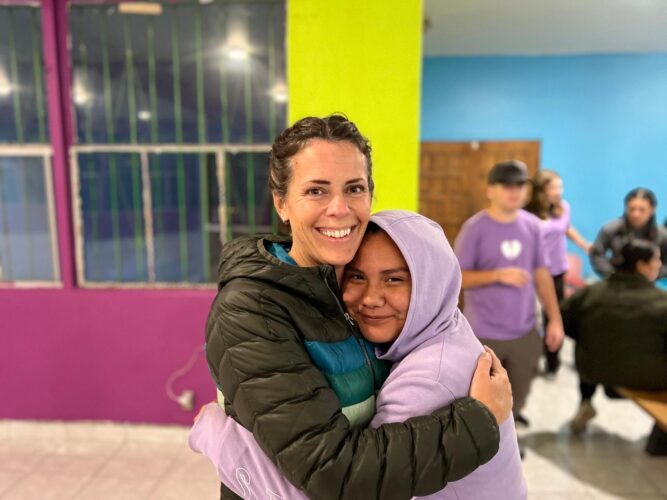
Blake Snow's family works with orphans in Tijuana.After years of hearing close friends and good neighbors rave about it, my family recently booked a service trip to work (and sometimes play) at a Mexican orphanage over the holidays.
I was initially reluctant to do so, having read the controversy surrounding “voluntourism” — the global mashup of part-time volunteering with part-time vacationing — that’s exploded into a multi-million participant industry.
At its best, voluntourism fosters cultural exchange, humility, funds under-resourced programs, creates lifelong givers, and changes lives. At its worst, it’s disorganized, performative, perpetuates outdated orphanages that developed countries abandoned long ago, reinforces child abandonment once volunteers leave, and may even be unintentionally harmful.
I’ve long wondered if both can be true. Like most things in life, the truth is in the middle. But after donating a week of my time and spending over $6,000 for my family of six (including airfare and a $2,800 donation to the organizing charity), I won’t be voluntouring again anytime soon. Here’s why.
Before I answer that, let me explain the conflicting ups and downs you’ll probably experience when voluntouring. Our family started “up” on a pre-night paradisiacal stay at Bahia Resort Hotel in San Diego. Maybe it was the rescued seals sunbathing in the onsite sanctuary. Maybe it was the swaying palms that whispered, “Relax, buddy — you’re here now.” Or maybe it was the 1950s throwback charm of classic California before California got self-conscious.
Whatever the reason, Bahia has it dialed in. The place still looks fresh and is immaculately maintained. The pool sparkles. Iconic Mission Beach is five minutes away. And Dockside 1953, the hotel’s signature restaurant, is the kind of “wow” that made me put my fork down mid-bite to confirm, yes, this really is that good.
Our family fell hard for Bahia: the vibe, the food, the staff — all of it. Consider us smitten.
But travel isn’t all infinity pools and sunset dinners. Sometimes it’s messier, heavier, and harder to square — in this case, just 45 minutes south after crossing the border into Tijuana, where we spent the bulk of our trip helping (I guess?) at a top-rated but small orphanage doing its best with limited resources.
And here’s where things get complicated.
The orphan-turned-director was charismatic, hardworking, earnest, and pretty transparent about the place being a couple months from running out of money. Wonderful guy, but also a salesman — because he has to be. Once our group of seven families and 35 individuals arrived, the place was crawling with volunteers and not nearly enough purposeful work for all of us. Some days felt like controlled chaos. My own kids, plus a lot of other kids (both orphaned and parented), definitely added to the chaos.
And yet, there were moments.
An early morning visit to a church in the slums that serves free daily breakfast to hungry mouths. After handing out plates of eggs, beans, and tortillas to the community, we then served the very workers we had just volunteered beside. The director was clearly touched by our modest efforts; even cried while saying goodbye.
We visited a nearby school and shared several games, a tamale lunch, and lots of “6-7!” exchanges that jumped the border just as quickly as we did. We painted a mural at the orphanage, nearly finished cementing a new sports court, served the orphans three meals a day, cooked, cleaned, and beautified the already colorful compound. We played soccer with the kids, jumped rope, and even held a pinewood derby race.
But there were also red flags. After a surprise government inspection one morning that caused the director to visibly panic and plead with my family to hurry and clean several classrooms and bathrooms, three sibling orphans were abruptly removed. Nothing to do with orphanage neglect, or anything. The authorities simply felt these three would do better at another location.
At other times, it was clear we were watching some sort of “impress the donors” show put on by the workers. On top of that, several staffers looked bone-tired and even discouraged by the sometimes circus-like conditions our caravan of temporary travelers had introduced into their normal and probably more measured routines.
By the final night (a long one involving a bonfire, an adobo turkey, dance party, and the lights going out), some of us felt like we were at the welcome end of summer camp. Homesick. Overfed. Emotionally overloaded. “It’s still been a good experience,” one volunteer told me. Feeling unsure about how impactful her contributions were, another admitted that this might be her last trip.
So what do you make of something that’s both good and flawed? Helpful and harmful? Heartwarming and heartbreaking?
Here’s where I’ve landed. You can separate volunteer work from travel. You can combine the two. And both can be OK.
What matters is honesty — about your motives, about the system you’re stepping into, and about what you can and can’t control. Not every orphanage is the same. Not every program is ethical. Some are excellent. Some are not. Many fall somewhere in between.
On the morning we left, the orphans lovingly surrounded my family and our departing van like little Ewoks circling “golden” C-3PO in Return of the Jedi. It was heartwarming. Then we promptly abandoned those kids, never to return, like so many others have before us.
Voluntourism? It’s complicated. To decide if it’s right for you, read the pros and cons before making your choice. Consider donating all you otherwise would with a focus on funding local leaders and education programs over pop-in service visits, selfies, and soccer. Then forge ahead with all your heart and zero judgment of those who choose a different path.
Because the truth is this: The world needs our help. Orphans need love, resources, and advocacy — however imperfect the system. And travel, at its best, stretches our empathy in ways staying home never will.
Blake Snow contributes to fancy publications and Fortune 500 companies as a bodacious writer-for-hire and seasoned travel journalist to all seven continents. He lives in Provo, Utah with his wife, five children, and one ferocious chihuahua.