
Jail inmates can suffer or die without their prescription medications
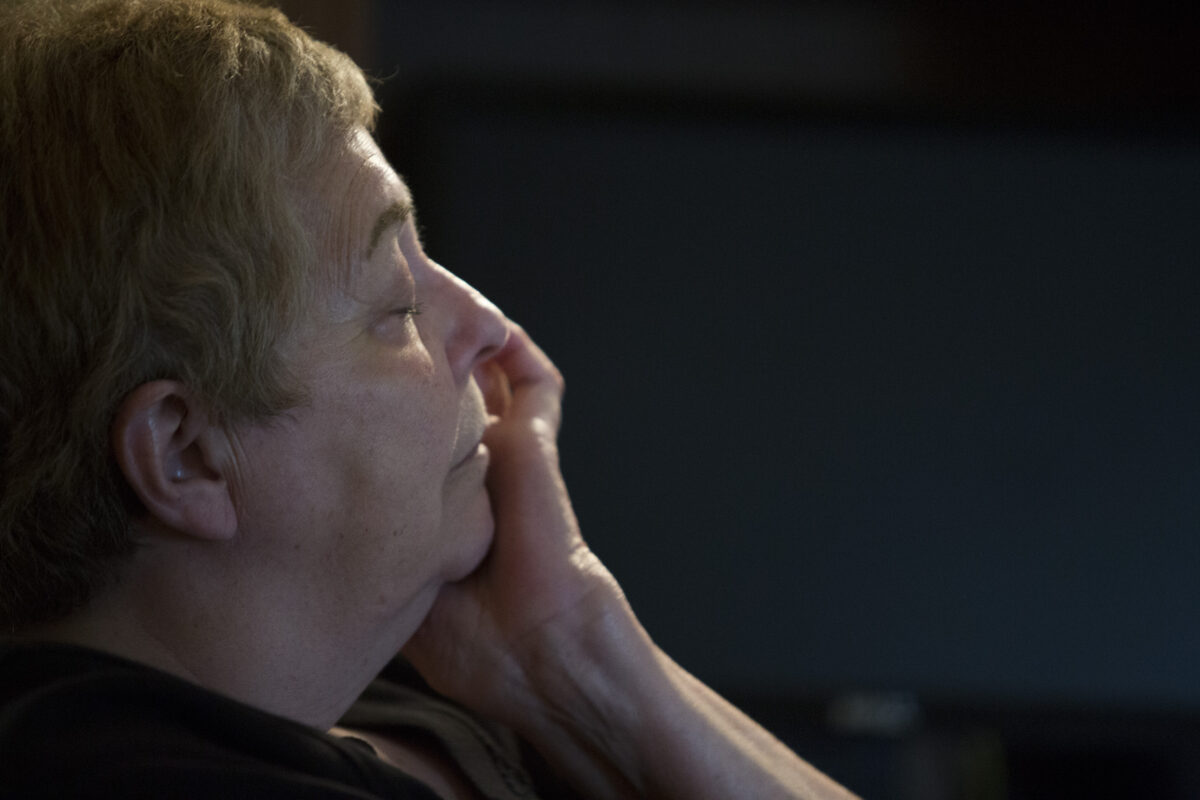
Pat Monson, of Roy, discusses the experience of her son, Christopher Miconi, at the Weber County Jail. Christopher said Friday, July 1, 2016, that he was denied heart pressure medication and other medication he is prescribed. He lost 22 pounds and was sent to the emergency room after three and a half days in the jail.
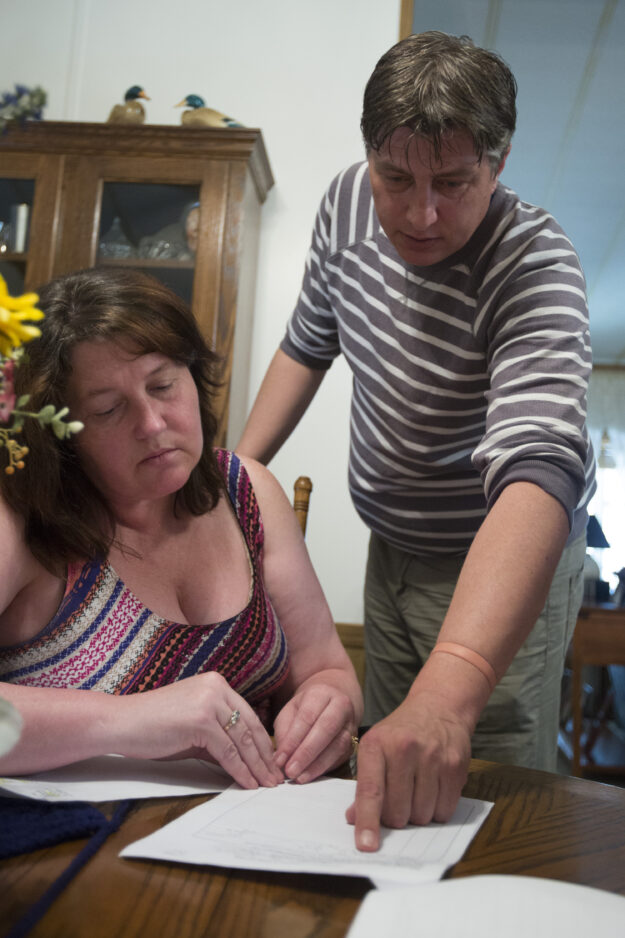
Christopher Miconi, and his sister, Madelyn Miconi, both of Ogden, go over paperwork and discuss Christopher's experience at the Weber County Jail on Friday, July 1, 2016. Christopher said he was denied heart pressure medication, among others that he is prescribed. He lost 22 pounds and was sent to the emergency room after three and a half days in the jail.
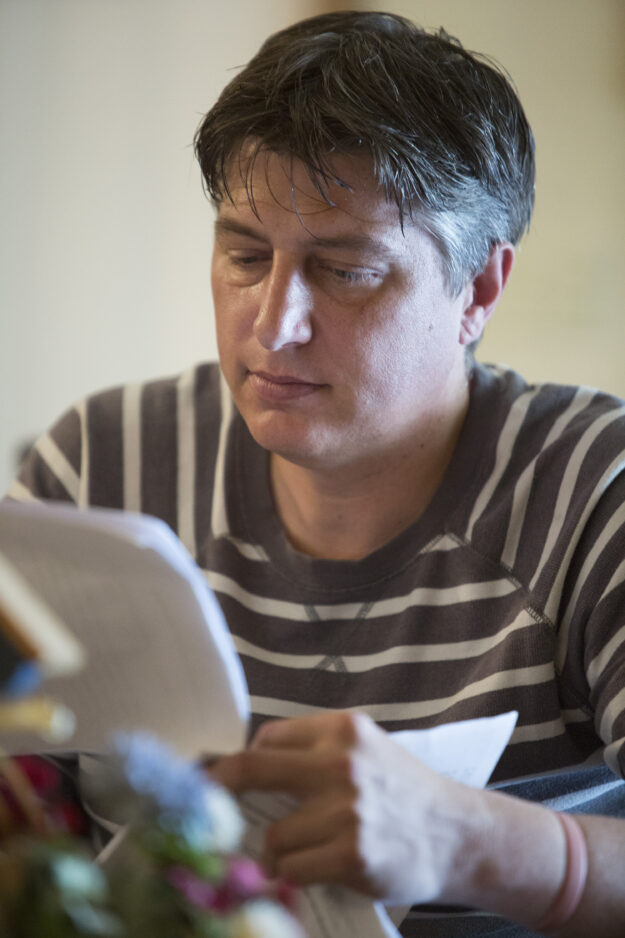
Christopher Miconi, of Ogden, goes through paperwork from his experience at the Weber County Jail on Friday, July 1, 2016. Christopher said he was denied heart pressure medication, among others that he is prescribed. He lost 22 pounds and was sent to the emergency room after three and a half days in the jail.

Christopher Miconi, of Ogden, said he was denied heart pressure medication, among others that he is prescribed. He lost 22 pounds and was sent to the emergency room after three and a half days in the jail.
OGDEN — When the string of cop cars, lights flashing, pulled Christopher Miconi over in rush hour traffic on west 12th Street, the 45-year-old Ogden man had no clue why.
But his 10-hour workday ground to a screeching halt, and to make matters worse, his boss had just fired him by phone for something Miconi claimed wasn’t his fault.
That was Friday, April 15, the beginning of Miconi’s three-day stint in the Weber County Jail, a nightmarish weekend that ended the following Monday with an ambulance ride to McKay-Dee Hospital.
After three days without his blood pressure medication, the Lortab he routinely took for chronic pain and the Xanax he used to alleviate his anxiety and help keep his high blood pressure in check, the 6-foot-2-inch Miconi had dropped 22 pounds due to severe vomiting and diarrhea, Miconi said in an interview with the Standard-Examiner, adding paramedics told him he had likely suffered damage to his heart muscle.
When Miconi was booked into the Weber County Jail Friday evening, his blood pressure measured 205 over 120. By Monday it had dropped to 178 over 119, still elevated well above the 140 over 90 “high” range determined by the Centers for Disease Control and Prevention, but Miconi said he did not receive any of his regular medications that weekend.
The CDC website details why high blood pressure should be taken seriously: “High blood pressure is a major risk factor for heart disease and stroke, both of which are leading causes of death in the US . . . Doctors, nurses and others in health care systems should identify and treat high blood pressure at every visit.”
On Sunday after being taken into custody, Miconi was given medications to control diarrhea, nausea and vomiting, and the next morning he was given a small dose of Ativan to treat his anxiety. Ativan belongs to a family of pharmaceuticals that caused his removal from the general jail population to a small cell he would share with two other men for 23 hours a day. But when he vomited near one of them Monday, a brief fight ensued that led to his removal, Miconi said.
Results of an electrocardiogram (EKG) test administered to Miconi at the jail shortly after the fight indicated a possible left ventricular strain, which the National Institutes of Health says is associated with a poor prognosis.
Miconi was taken to McKay-Dee Hospital in an ambulance that picked him up at 2:11 p.m. Monday, and records indicate his release from jail at 2:16 p.m., even though he was scheduled to receive several in-jail medications the next day. The ambulance ride cost $1,845 and his brief stint in the emergency room racked up $3,711 in charges.
Public records show four charges filed more than a month later against Miconi, who claims he’s innocent of three of them — a DUI because of the Lortab in his blood sample, possession of drug paraphernalia due to a piece of plastic ballpoint pen found in a wallet in the work truck he was driving and improper usage of lanes when he pulled over.
Miconi, was also charged with failure to wear a seat belt, and he admitted that he was not wearing a seat belt at the time. The DUI and drug charges are class B misdemeanors, the other two are traffic infractions.
Weber’s jail policy
Dr. Kay Haw, nursing administrator at the Weber County Correctional Facility, said their policy is for a nurse to see and conduct intake screenings of each inmate within their first two hours in the jail. At that point, they’re asked specific questions, and Haw said they rely on the inmate to report what medications they routinely take. Then her staff contacts the inmate’s pharmacy to verify if the prescription is current. Any narcotic use would mean moving the inmate out of the general jail population where such drugs are subject to abuse.
Haw said if a prescribed drug is not part of the jail’s formulary, they can administer an alternative and equivalent medication once they obtain a physician’s approval.
In Miconi’s case, Haw said he wasn’t very specific at intake and might not have known the exact names of his blood pressure medication. Attempts to verify prescriptions after a pharmacy’s business hours often result in delays.
But Miconi’s EKG results at the jail also fall short of indicating the problems were brought on by his three-day stay there, Haw added.
“He could have been walking around with that for years. That’s very much a potential,” Haw said, adding that transporting an inmate by ambulance to the hospital is done on a case-by-case basis based on individual symptoms.
When asked about possible staffing shortages, Haw said the jail has 24/7 nursing coverage, and she has the ability to reach a provider any time.
One mother’s heartbreak
While Miconi endured a harsh and perhaps unnecessary experience, some inmates fare even worse. David Steelman’s brief stint in the Davis County Jail on federal counterfeiting charges ended with his death.
Steelman, then 46, was indicted July 26, 2013, in federal court and booked in the Davis County Jail pending trial. On July 31, he hanged himself.
Steelman’s mother, Betty Burchfield, said she traveled from her home in Madison, Alabama in time to see her son in the hospital on life support.
“As I walked into his hospital room, I saw my beautiful son with a lot of things in his mouth. They told me he was brain dead,” Burchfield said. “This did not have to happen.”
Story continues below photo.

Courtesy of Betty Burchfield
This photo shows David Steelman with his bird Gilligan on his shoulder. After being detained in the Davis County Jail on federal charges, Steelman struggled without his anti-depressant medication and hung himself July 31, 2013.
According to Burchfield, her son suffered depression from the time he was five years old. Her efforts to get his antidepressant medication to him in the Davis County Jail met with dead ends.
“I tried to help, but couldn’t reach anyone who would halfway listen to me. Yes, he made some mistakes and wrong choices, but even a dog should not be treated the way he was at Davis County Jail,” Burchfield said, vowing to fight to get the facility to make some changes. After hearing of Kara Noakes’ unfortunate death last month, Burchfield reached out to the Standard-Examiner with her son’s story in hope of helping others.
Don Steelman, David’s brother, said David served in the Navy from 1986 to 1988 and was discharged after breaking his collarbone. David’s funeral included a military honor guard, Burchfield said.
Davis’ jail policy
According to the Davis County Jail’s website, personal prescriptions are not allowed inside the jail, and only the jail physician can prescribe medications to inmates. ”He was returned to the federal marshal’s custody on July 31, 2013 and they watched him in the hospital from there,” Servey said.
While she could not speak specifically to Steelman’s medical records due to federal privacy laws, Sgt. DeeAnn Servey of the Davis County Sheriff’s Office said the jail’s policy is to give each inmate medical and suicide screenings during intake, and in Steelman’s case “it didn’t look like he needed to be put on an immediate suicide watch.”
Similar to Weber’s protocol, Davis only dispenses medications after confirming an inmate’s prescription with his or her pharmacy or physician.
Servey said protocol requires jail nurses to make medical passes twice a day to pass out any prescribed medications. Deputies also check every hour for medical distress, and the jail is staffed 24 hours a day to handle emergencies.
“We have full pharmacy and staff to make sure our inmates our getting the proper care they need,” Servey said. “We attend suicide prevention training every year and try to take a proactive approach to recognize those signs.”
One attorney fights back
Shawn Bailey, a partner in the Logan-based law firm of Peck Hadfield Baxter & Moore, LLC, said he and his colleagues have had success in getting justice for families with similar tragedies and also in making some jails safer.
“The Constitution requires jails to be run in a humane way, and what that means in practice is that the jail and jail staff cannot be indifferent to an inmate’s medical needs,” Bailey said. “So we’re looking at what those medical needs were, if jail and staffers were aware of those needs, and what they did to address them.”
When Bailey tells people he’s heavily involved in litigation against law enforcement and jails, he said they’re often surprised. “But the thing I explain is that those who end up in jail are often more vulnerable than the rest of the general population, and the majority have mental health and/or addiction issues.”
Without access to any of their regular resources, inmates find themselves 100 percent dependent on their jailers to provide their medical care, and Bailey believes they have the duty to address those needs.
“I’m not a psychiatrist, but I know from experience that cutting off anxiety and antidepressant medications can be very dangerous and cause suicide risks,” Bailey said. “It troubles me that jails are doing that and I assume they’re doing it to save money.”
Contact reporter Cathy McKitrick at 801-625-4214 or cmckitrick@standard.net. Follow her on Twitter at @catmck.