
Utah students who don’t pass civics test don’t graduate
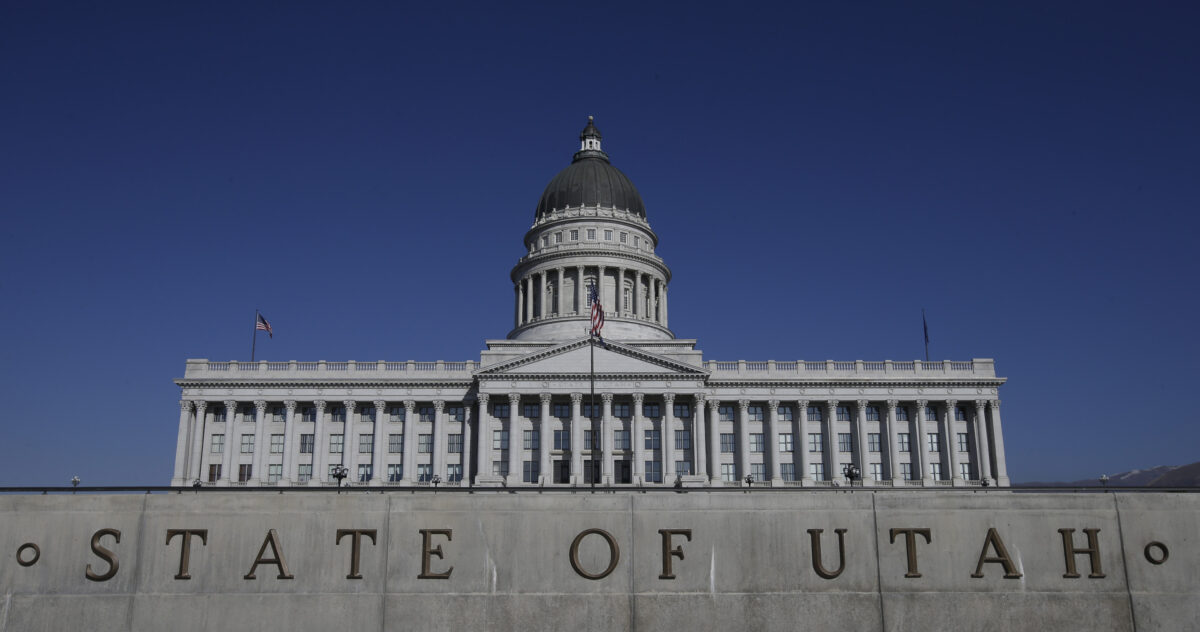
FILE - This Jan. 26, 2015, file photo shows the Utah State Capitol, in Salt Lake City. In 2015, Utah's legislature passed a law requiring all Utah students to pass a basic civics test in order to graduate with a diploma. This year's seniors are the first impacted by the law. (AP Photo/Rick Bowmer, File)
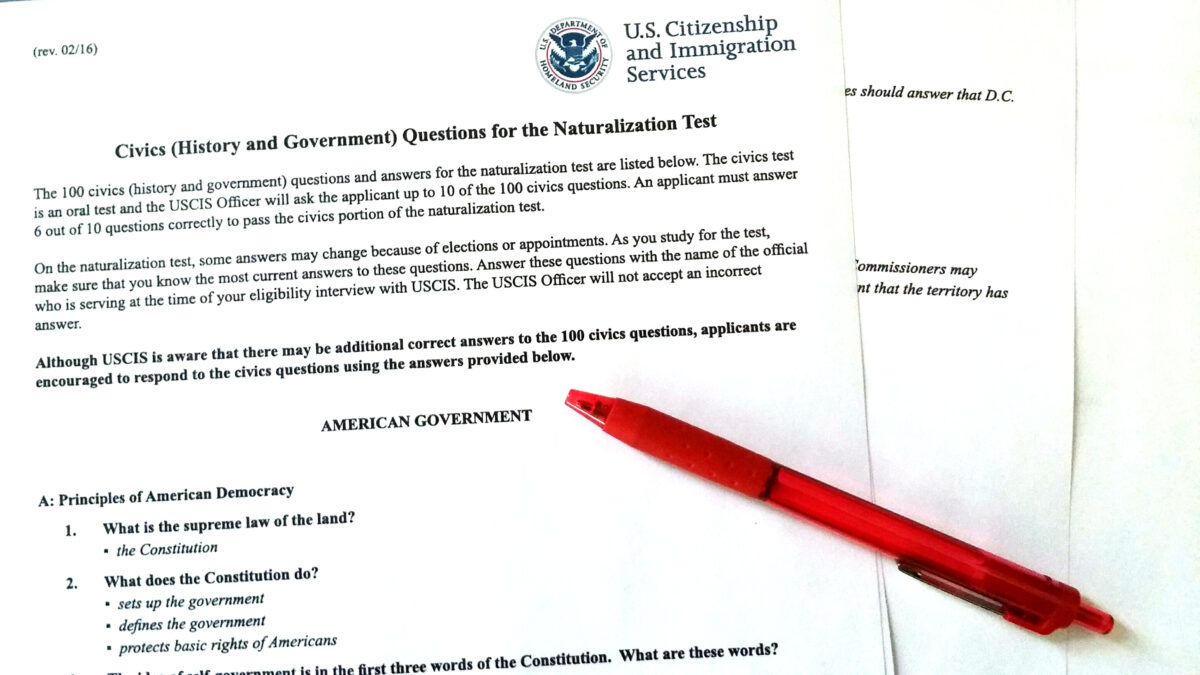
Questions for the Utah Basic Civics Test, which all students must pass to receive a diploma, come from the test administered in the U.S. Citizenship and Immigration Services Naturalization Test.
To prove they know enough about the U.S. system of government to be engaged in the process, immigrants who want to become citizens are required to take a civics test. There’s a national movement, called the “Civics Education Initiative,” to have high school students to pass a similar exam before they can graduate.
Utah’s legislators passed a bill last year requiring all students to pass a basic civics exam in order to graduate from high school. This year’s seniors are the first who could be denied a diploma if they fail, but local school administrators say it’s not likely to happen.
S.B. 60, sponsored in 2015 by Sen. Howard A. Stephenson (R, Salt Lake City), says the questions for the Utah Basic Civics Test come from those used by the United States Citizenship and Immigration Services. The original has 100 questions with multiple-choice answers; Utah’s test is made up of 50 of those questions, and students have to correctly answer at least 35 to pass.
WE CHALLENGE YOU, take our sample quiz.
Matthew Patterson, a curriculum supervisor for Weber School District, said students should be able to easily pass.
“This particular test is very low-level, even to the point that students can memorize a lot of answers,” he said.
Memorizing the answers is possible because the U.S. Citizenship and Immigration Services practice test is available online. Locally, some teachers have taken class time to go over questions and answers, and schools have posted links to practice on their websites.
“It’s not as protected as, say, the end-of-level criterion tests,” said Darin Nielsen, an assistant superintendent for Box Elder School District. “A student can look at it, and basically find the answers before they take the test.”
• RELATED: Students and teachers disagree on mandatory civics test
Districts are integrating the exam into existing social studies classes focused on government and citizenship. However, most students finish those courses by their junior year, so districts had to come up with a way to test this year’s seniors. In most cases, students are taking an online exam created by their district.
Box Elder District is allowing students to choose a testing time convenient to their schedule.
“The rules do not require us to proctor the test,” said Darin Nielsen, an assistant superintendent for Box Elder School District. “Students can take it at home, or in a classroom with peers.”
It’s not encouraged, but students taking it at home could cheat by looking up the practice tests, Nielsen said.
Stephenson was surprised to learn some students may be taking the exam without supervision.
“We did want to make it simple to take,” he said, but added that the test should be proctored. “I’ll have to look at the statute, but we certainly didn’t anticipate students simply looking at the answer sheet while taking the test.”
The test can be taken as part of a class or individually in Davis School District.
“They have to be taken within a school,” said Chris Williams, spokesman for the district. “We also have a testing center here in Farmington, where students can come and take the test if they wish.”
It may not be law, but Patterson said Weber School District teachers are encouraged to use class time for the test, and essentially serve as proctor while the students are taking it.
“We feel like we have a little more integrity with the test that way,” he said.
Jeysa Wilson, a junior at Bonneville High school in Weber District, said some students would likely cheat if testing without supervision.
“You don’t really need to,” she said. “It’s pretty basic information.”
She’s already passed the test.
“It was fairly easy, and it should be required to graduate,” she said.
Senior Breauna Ingram, disagrees.
“I took it twice, and I studied the first time,” she said.
Ingram thinks it’s redundant to take the civics test when she passed a U.S. Government and Citizenship course last year. She also wondered why she had to take the test when Utah law allows parents to opt students out of other state-wide tests.
“My parents don’t do the SAGE (Student Assessment of Growth and Excellence) test,” she said, adding that the civics test was “the first one we actually had to do.”
A page on the Utah State Office of Education website, offering technical assistance on the civics requirements, says parents may opt students out of the test — but they won’t be able to graduate with a high school diploma.
Bonneville senior Sam Filiaga said learning about it in the middle of the year blindsided some students.
“I think if they had told us closer to beginning of the year it would have been better,” she said. “But I think with how easy it was, and how well our teachers prepared us, it wasn’t a huge thing.”
Students can take it as many times as it takes to pass, and alternate tests are allowed for student who have special needs.
Zac Williams, spokesman for Ogden School District, said 92 percent of students pass their test on the first try.
“We do not anticipate the civics test will prevent any student from graduating this year,” he said.
School counselors are tracking and reminding students to take the test or get help if they don’t pass.
“We’re not going to necessarily guarantee every student is going to pass a test,” Chris Williams said. “It’s often up to the student. We can do everything we can to bring the horse to water, so to speak, but it’s their responsibility.”
You can reach reporter Becky Wright at bwright@standard.net or at 801-625-4274. Follow her on Twitter at @ReporterBWright or like her on Facebook.