
Volunteers restoring 1881 steam engine at Ogden Union Station await outcome of ownership squabble
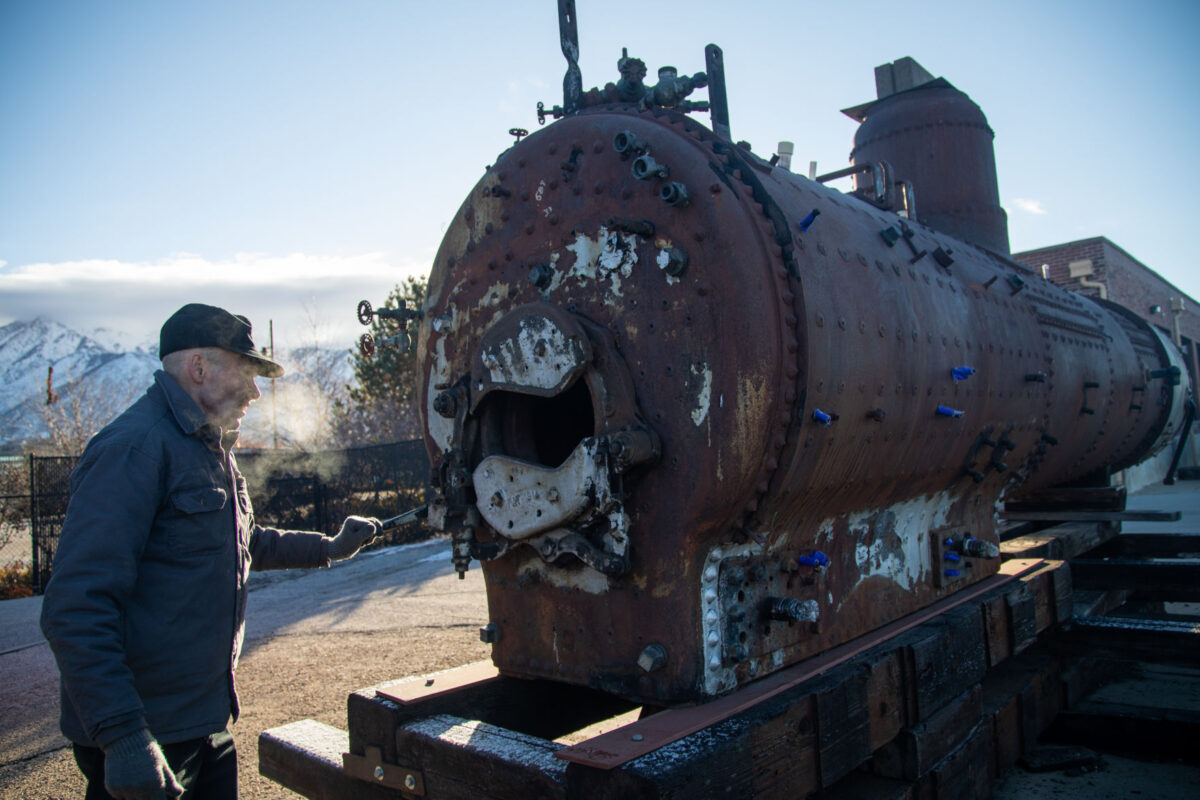
John Barrett, a volunteer train enthusiast, opens the boiler of locomotive No. 223 on Saturday, Dec. 22, 2018. The 137-year-old steam engine is being restored in a shop behind Union Station.
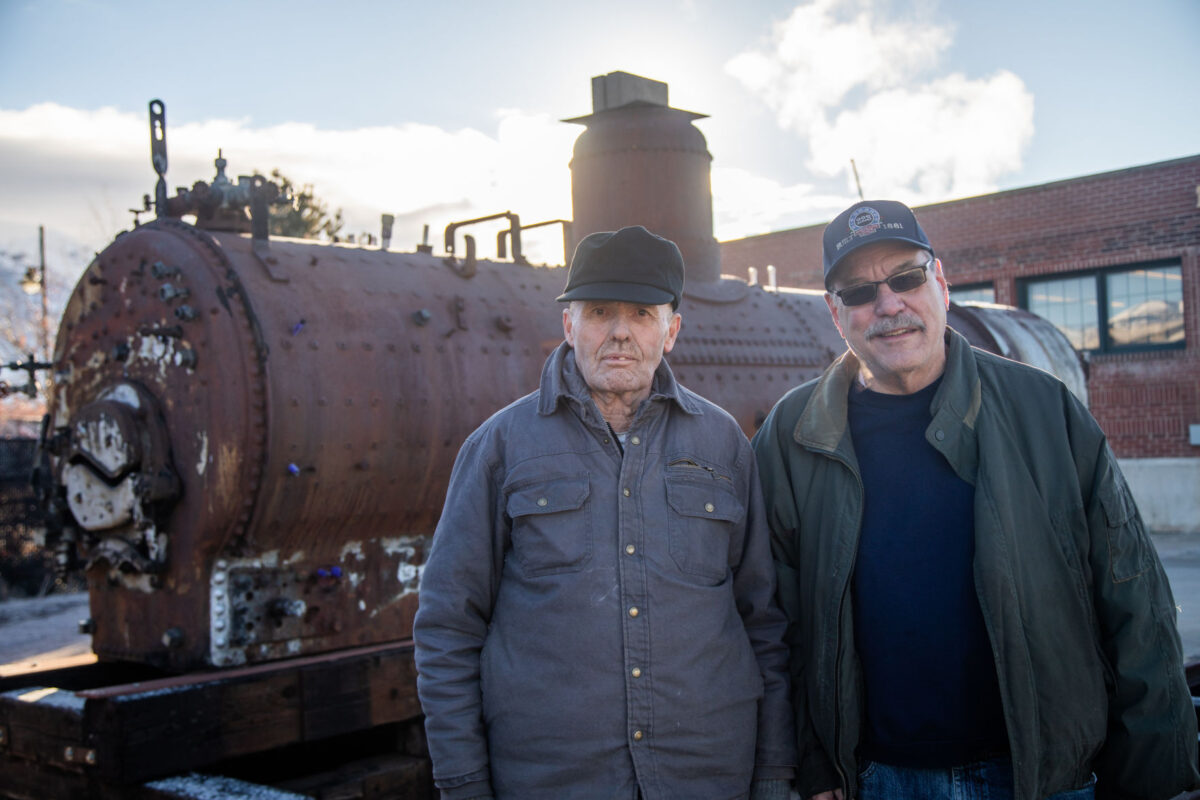
John Barrett, left, and Steve Jones, stand in front of the boiler of locomotive No. 223, a 137-year-old steam engine, that they are restoring along with other volunteer train enthusiasts at a shop in the back of Union Station on Saturday, Dec. 22, 2018.
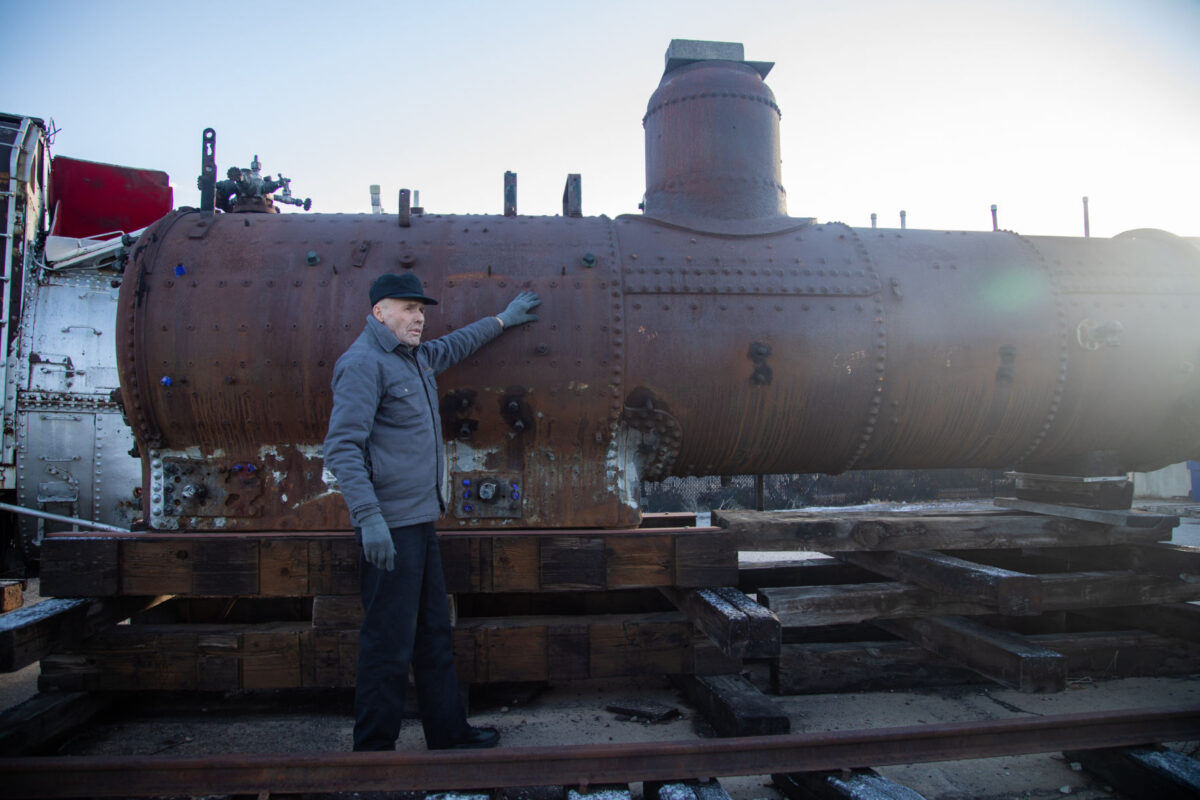
John Barrett, a volunteer train enthusiast, points out features of locomotive No. 223's boiler on Saturday, Dec. 22, 2018. The 137-year-old steam engine is being restored in a shop behind Union Station.
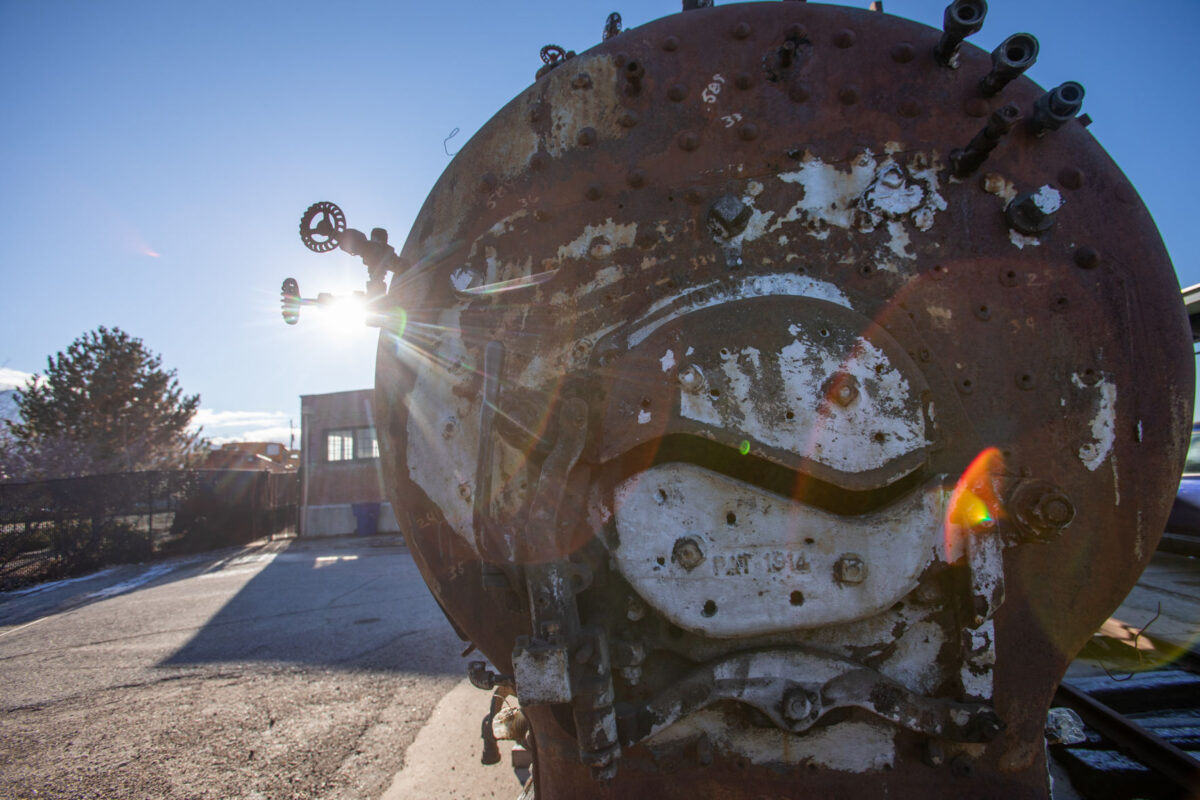
A group of volunteer train enthusiasts are working to restore locomotive No. 223, a 137-year-old steam engine, at a shop in the back of Union Station in Ogden on Saturday, Dec. 22, 2018.
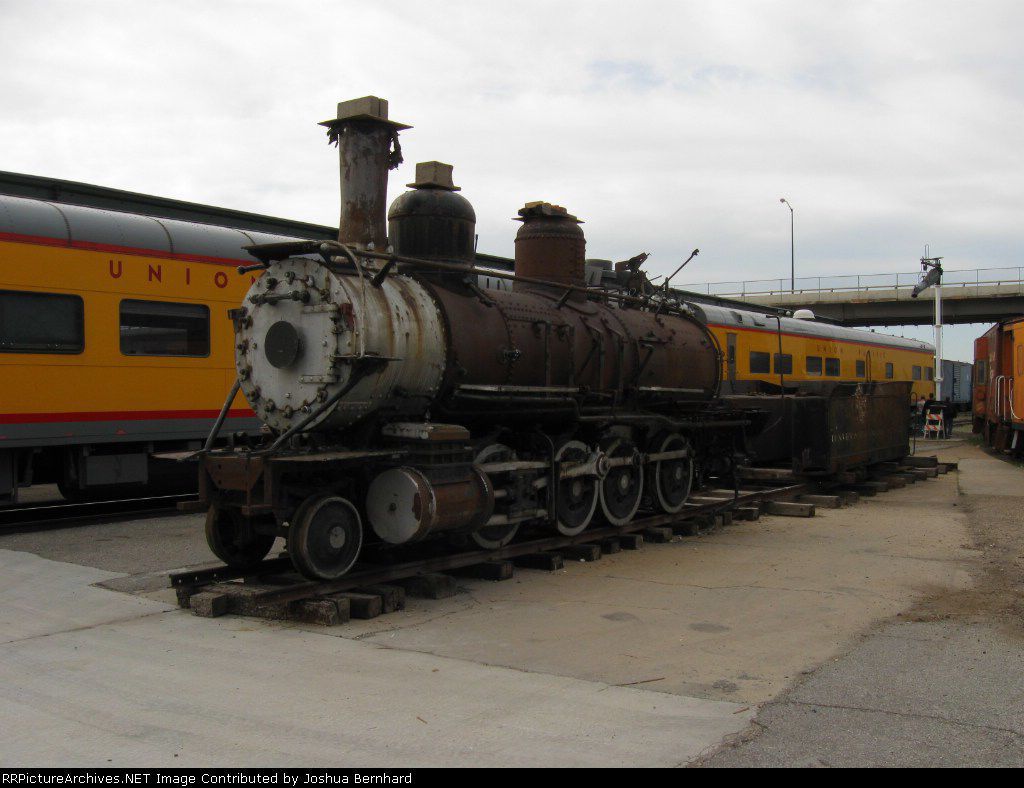
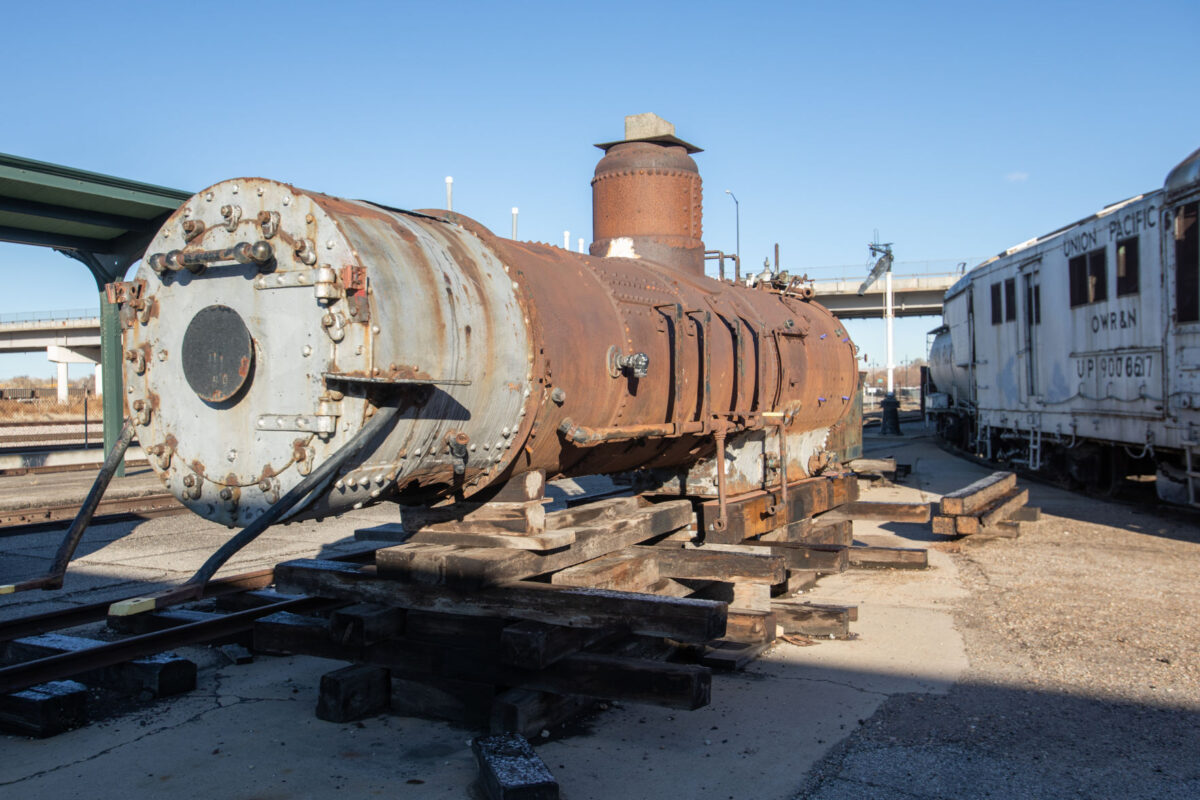
Rusted No. 223 before a restoration project began in 1992 at Ogden Union Station. Denver and Rio Grande Western Railroad narrow-gauge steam locomotive No. 223 operated in Utah from 1881 and 1890. Volunteers of the Railway and Locomotive Historical Society's Golden Spike Chapter have been working on a restoration project since 1992.
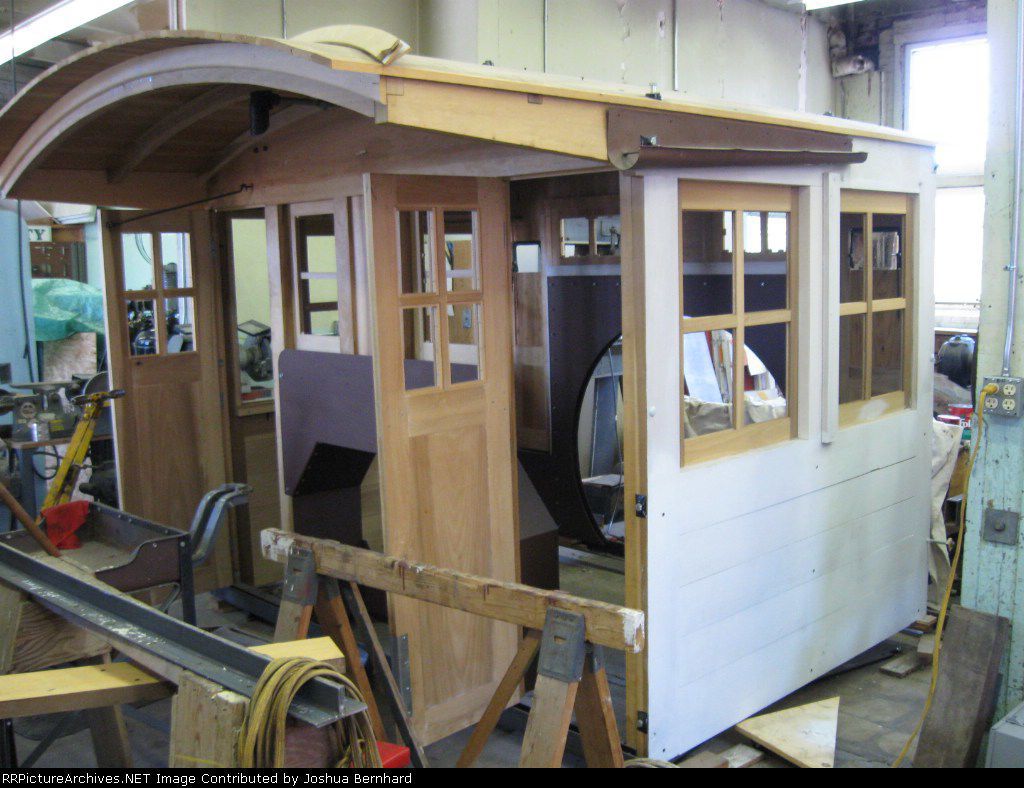
The rebuilt locomotive cab for No. 223. Denver and Rio Grande Western Railroad narrow-gauge steam locomotive No. 223 operated in Utah from 1881 and 1890. Volunteers of the Railway and Locomotive Historical Society's Golden Spike Chapter have been working on a restoration project since 1992 at Ogden's Union Station.
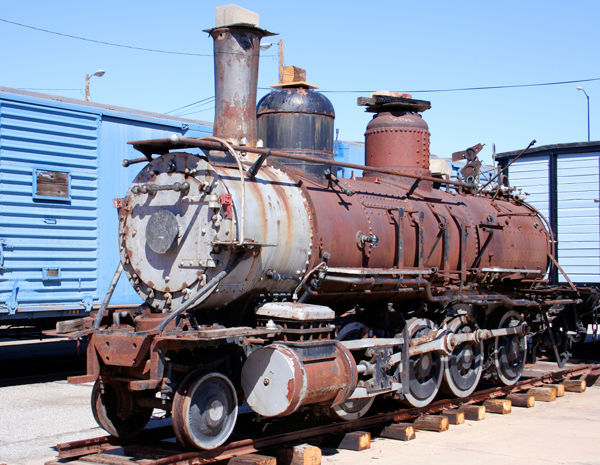
No. 223 before a restoration project began in 1992 at Ogden Union Station. Denver and Rio Grande Western Railroad narrow-gauge steam locomotive No. 223 operated in Utah from 1881 to 1890. Volunteers of the Railway and Locomotive Historical Society's Golden Spike Chapter have been working on a restoration project since 1992.
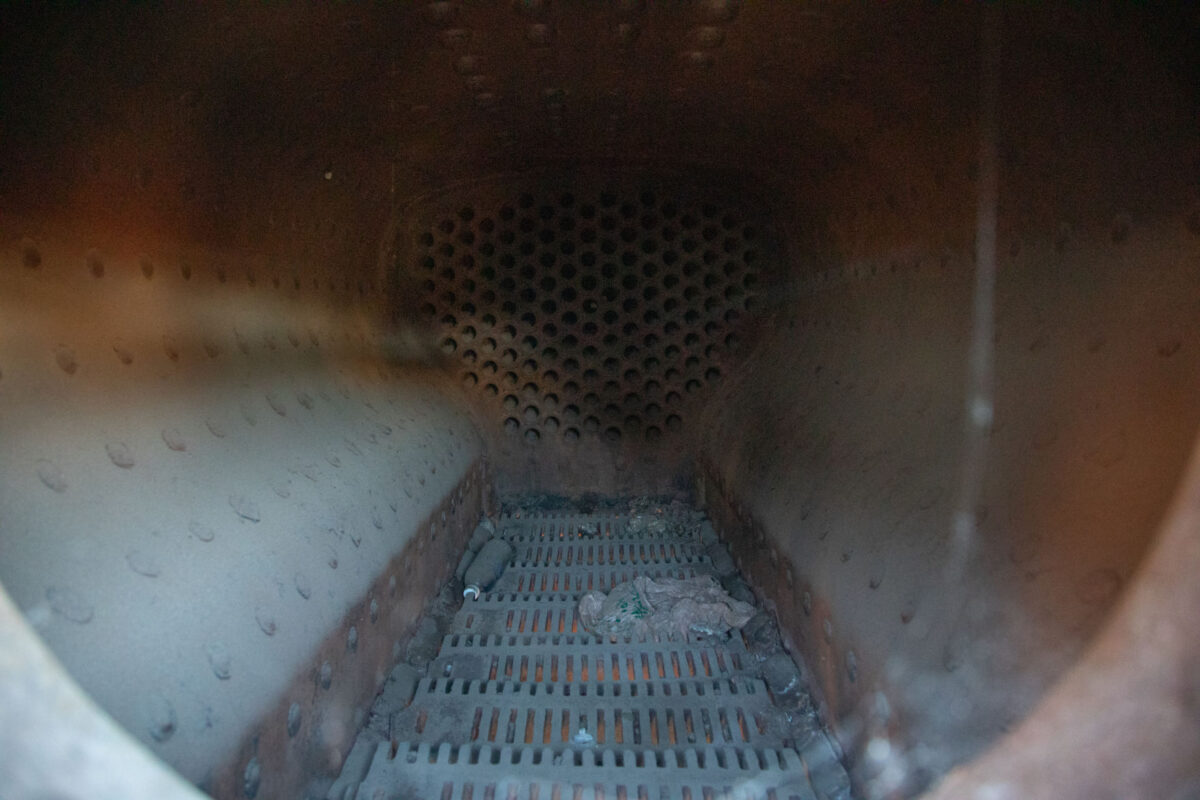
Inside the boiler of locomotive No. 223, a 137-year-old steam engine, that is being restored by a group of volunteer train enthusiasts.
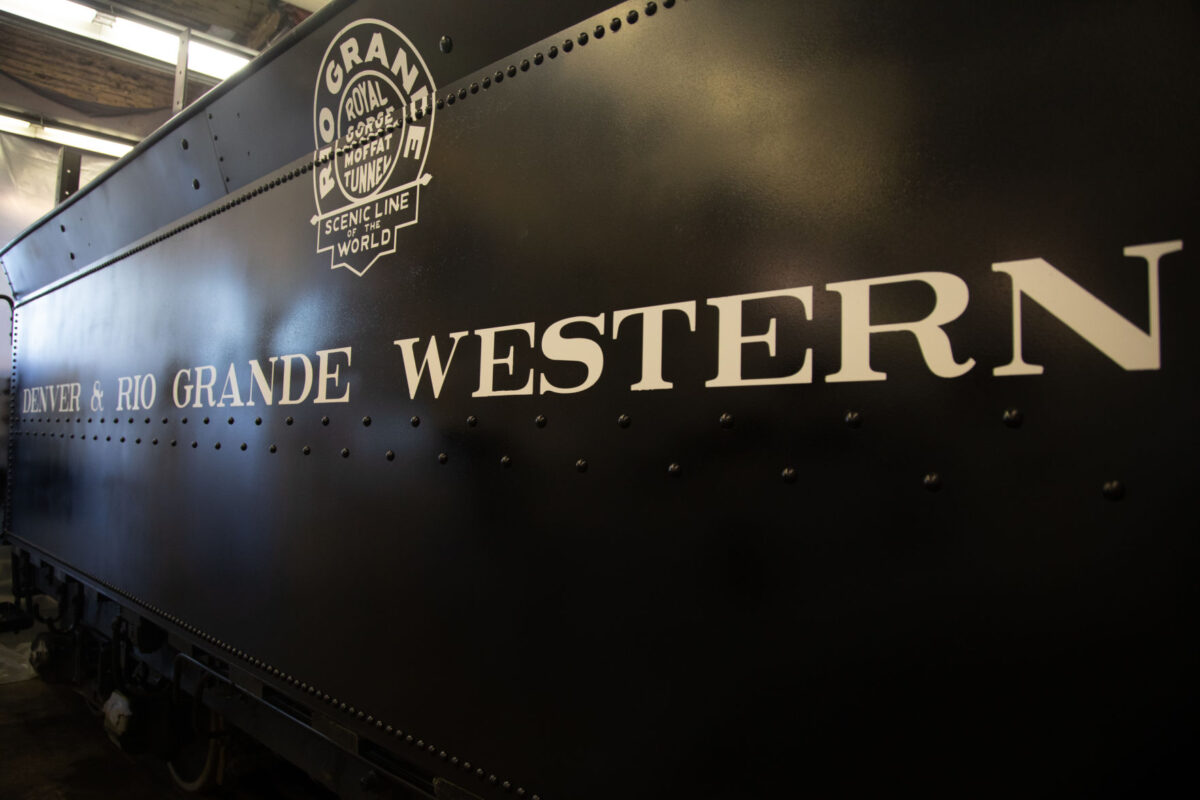
A group of volunteer train enthusiasts are working to restore locomotive No. 223, a 137-year-old steam engine, at a shop in the back of Union Station in Ogden on Saturday, Dec. 22, 2018.
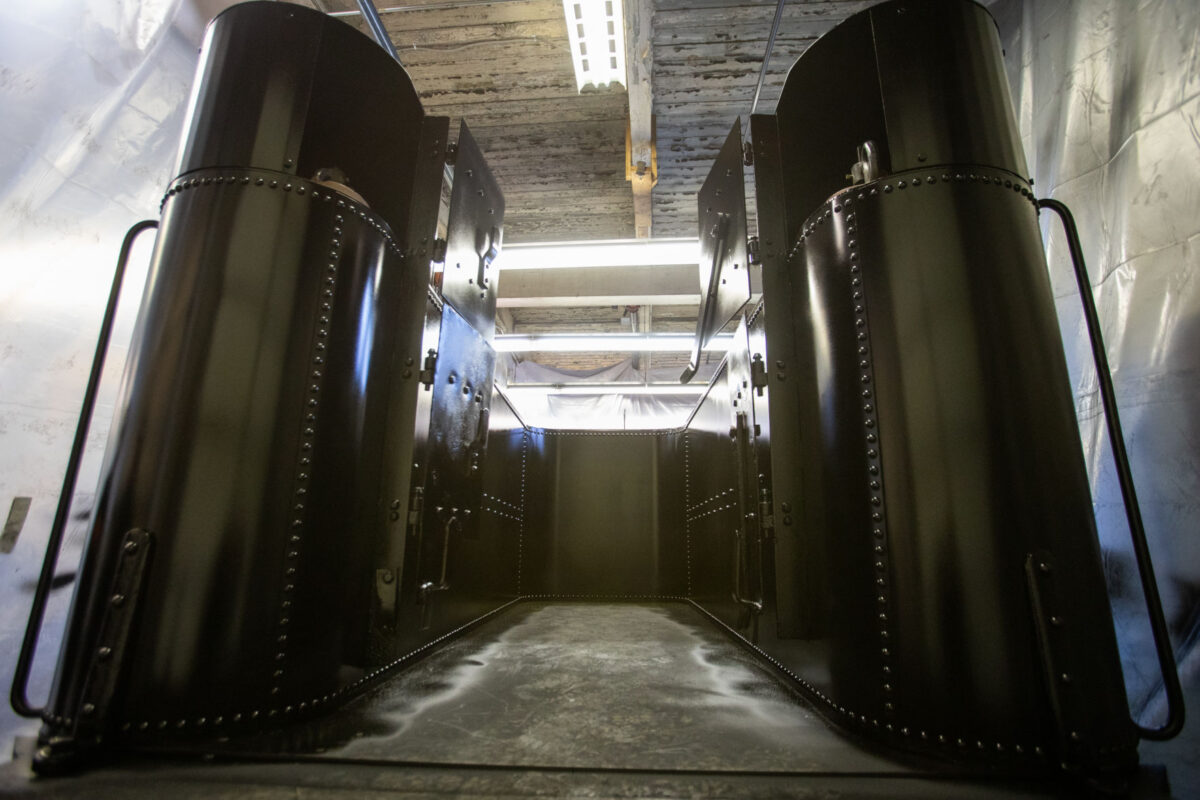
A group of volunteer train enthusiasts are working to restore locomotive No. 223, a 137-year-old steam engine, at a shop in the back of Union Station in Ogden on Saturday, Dec. 22, 2018.
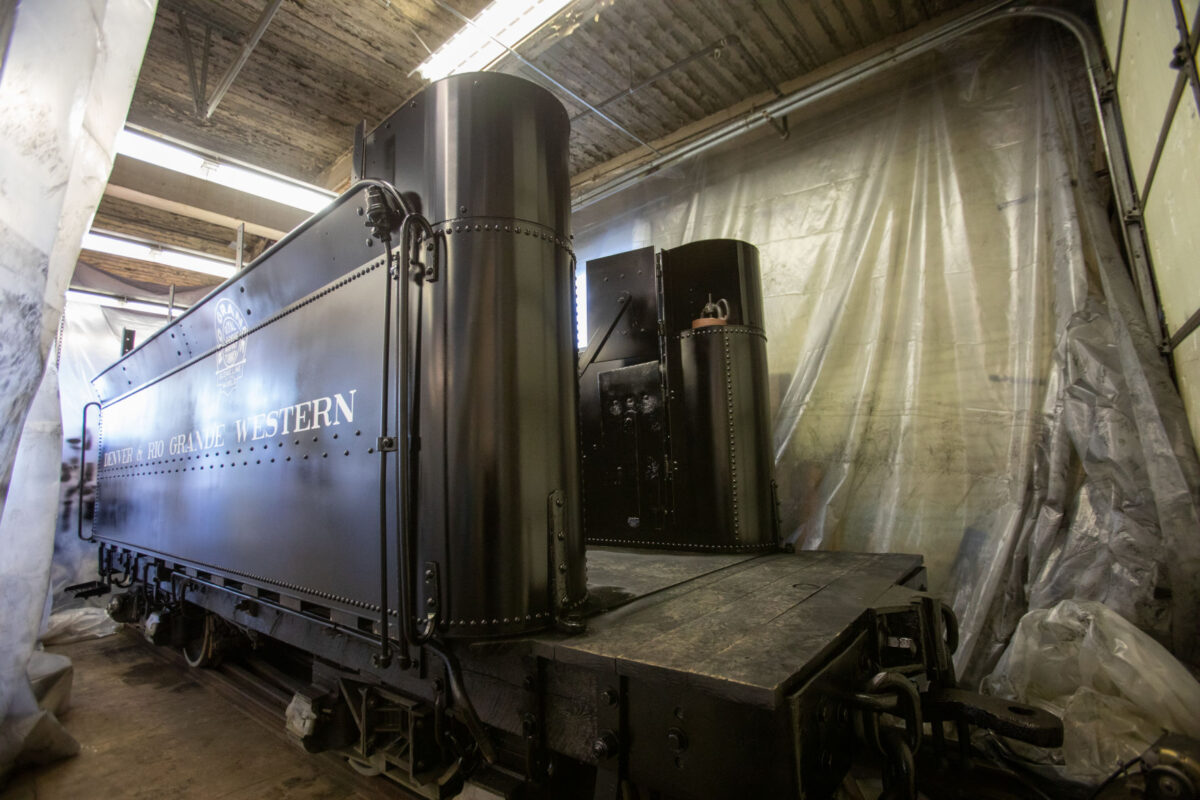
Locomotive No. 223, a 137-year-old steam engine, at a shop in the back of Union Station in Ogden on Saturday, Dec. 22, 2018.
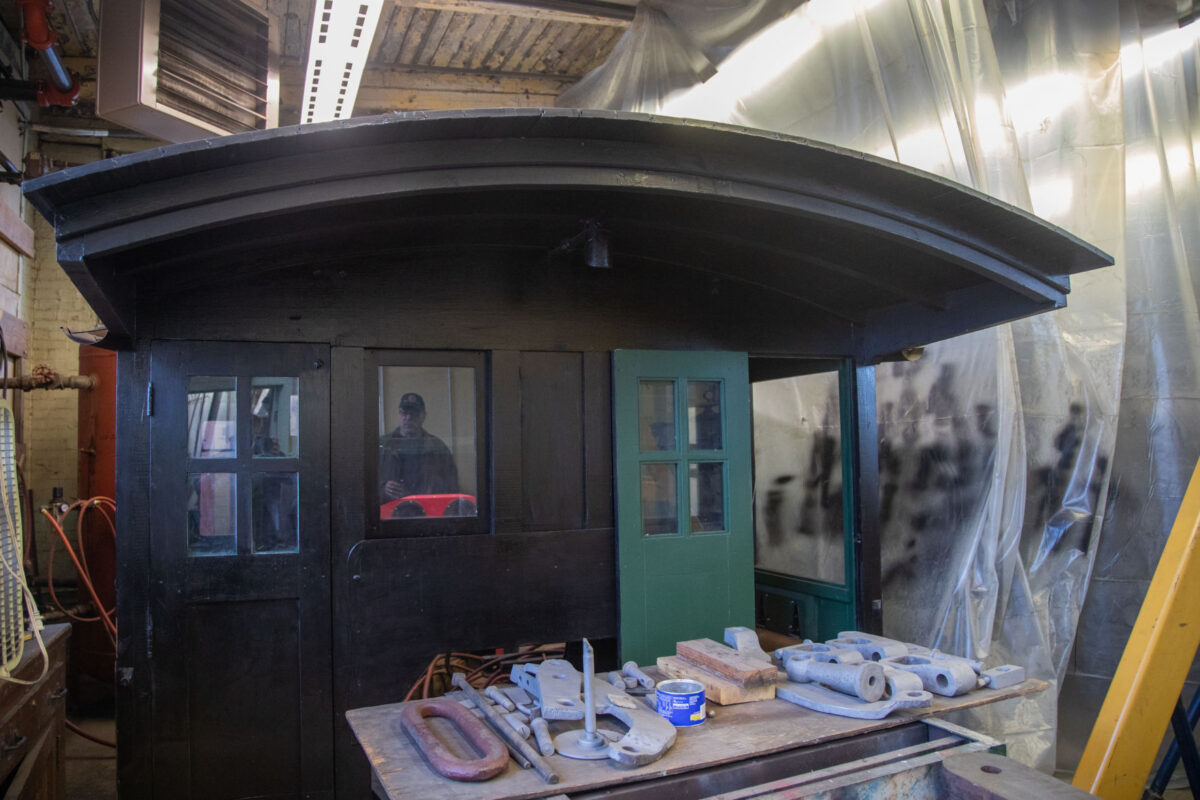
A group of volunteer train enthusiasts are working to restore locomotive No. 223, a 137-year-old steam engine, at a shop in the back of Union Station in Ogden on Saturday, Dec. 22, 2018.
A group of volunteer train enthusiasts are working to restore locomotive No. 223, a 137-year-old steam engine, at a shop in the back of Union Station in Ogden on Saturday, Dec. 22, 2018.
OGDEN — Ogden City and the Utah Division of State History are grappling over ownership of a 137-year-old steam locomotive that a determined band of volunteers has been painstakingly restoring since 1992.
The city even issued a stop-work order to the volunteers in October, said Steve Jones, president of the Railway and Locomotive Historical Society’s Golden Spike Chapter.
After further discussions, the city allowed the volunteers to keep working on the locomotive while the apparent ownership tangle is resolved, Jones said.
Union Station Manager Damen Burnham and Kevin Fayles, assistant director of the Division of State History, did not immediately respond to requests for comment on the ownership issues.
The object of the conflict is Denver and Rio Grande Western Railroad locomotive No. 223, which was built in 1881 and then suffered decades of neglect after being taken out of service in 1940. It was a work locomotive, hauling lumber and mined minerals.
The railroad donated the locomotive to Salt Lake City in 1952 (it had been on display there since 1941). The city in turn donated it to the state in 1979.
According to the Utah State Railroad Museum at Ogden Union Station, 223 is the sole surviving engine built by the Grant Locomotive Works in Colorado. It was built to operate on narrow-gauge tracks, which became less-used after most railroads adopted standard-gauge tracks.
After sitting unattended in Salt Lake City’s Liberty Park, exposed to the elements for 40 years, the locomotive was moved to languish another 10 years behind the Rio Grande terminal in Salt Lake.
“No maintenance, no protection, no nothing,” Jones said.
In 1992, news accounts at the time said, the history division gave the locomotive to the Railroad Museum and moved it to Union Station to be restored. That’s when the Golden Spike Chapter was created, Jones said.
In the 26 years since, a few dozen volunteer craftsmen, engineers and others have toiled on the historic locomotive. They are invested in the idea of restoring a part of Western railroad history for the education and enjoyment of the community, not just train junkies.
So why is there an ownership hassle now?
“Evidently when it was brought up here for restoration, the i’s were not dotted and the t’s were not crossed,” Jones said in an email explaining the situation to the Golden Spike Chapter’s parent national society. “No one has a paper trail documenting the change of ownership.”
He said the chapter is trying to stake out its territory.
“I have asked Ogden City that as part of the agreement being negotiated between Ogden and the state that the Golden Spike Chapter … be formally named as the conservator for 223,” his email said. “That simply documents the role we have been performing since 223 started its trip from SLC to Ogden many years ago.”
Jones, the 67-year-old owner of an Ogden software development company, said the volunteers work three hours every Saturday on 223. They recently finished rebuilding the wooden cab and they reconstructed the engine’s attached tender car “from the wheels up.”
The work is taking so long because the workforce is all volunteer and materials cost so much.
Jay Hudson of Ogden, another volunteer, said the group plans to exhibit the tender car at Union Station during the 150th anniversary celebration of the joining of the transcontinental rails in May 2019.
The group says it may need to seek outside expertise for reconstruction of the locomotive boiler, perhaps $300,000. The anniversary open house will be a fundraising opportunity, Jones said.
“If the boiler ends up in the same situation as the tender, that we need to start over and build a new one, it will be very, very expensive,” Jones said. “We can’t do that all with good-will volunteers.”
There’s no fixed timetable for completing the locomotive project.
“I’ll probably be dead before it’s done,” Hudson said.
“Some people call this a hobby, a bunch of old guys telling stories or occasionally doing some work,” Hudson said. “But the guy who started this (Maynard Morris) was a nuclear engineer, and we have all the different talents it takes to do this kind of work.
“We even have a guy who takes photos who played with the Benny Goodman band.”
Jones and John Barrett, a retired industrial mechanical engineer, gave visitors a tour of the project Saturday. The rusted boiler and the disintegrating original tender car sit just outside the Union Station train shop.
The locomotive’s wheels and related hardware take up a large area inside the shop. Barrett pointed out several places where welders have repaired cracked and damaged places.
The restored tender car, beautifully painted and lettered, dominates the far south end of the shop.
Jones pointed out the platform at the front of the car where the tender’s fireman would work, moving coal and water to the locomotive.
Barrett and Jones said the group’s needs boil down to two things: Money and people. The more of both, the faster the project may be finished.
The chapter has collected $2,200 of a desired $50,000 through a GoFundMe page, and the open house next spring may provide another boost.
Jones said they hope to restore the locomotive to full operation. Union Station has no narrow-gauge track, so either some would have to be added for demonstrations of the locomotive or it would need to be shipped somewhere else.
In any case, the locomotive and its volunteer guardians represent a spark of history that is being lost.
“The mechanical era is almost gone,” Barrett said.
1881: The Baldwin Locomotive Works is contracted to build new 2-8-0 locomotives for the D&RG. It is unable to fulfill the order, so 28 of the locomotives to the Grant Locomotive Works to be built to Baldwin specs.
December 1881: Baldwin Locomotive Works completes 223 at a cost of $11,553 and ships it to the Denver & Rio Grande’s Burnham Shop in Denver.
Dec. 11, 1892: A fire in the railroad’s Salida, Colorado, shop, destroys 17 locomotives, including the 223, which was soon rebuilt.
Jan. 17, 1905: A fire in the Gunnison, Colorado, roundhouse destroyed 223. Again, the locomotive was rebuilt.
April 1905: In the rebuild, the 223 gets an improved tender tank.
1908: The 223’s fluted domes are replaced with modern Baldwin domes.
October 1914: The Rio Grande shop crews build a new tender frame for the 223.
June 1915: The 223’s oil headlight is replaced with an electric one.
July 21, 1921: The D&RG is reorganized, merging with subsidiary Rio Grande Western to form the Denver & Rio Grande Western.
Sept. 12, 1922: The 223 collides with No. 222 in the Chama, New Mexico, yard. No details of the wreck were recorded.
November 1924: The 223 is upgraded with a new air compressor and air reservoir. In addition, the 1-1/4″ throttle valve and SD-5 duplex governor are replaced with a 1-1/2″ throttle and SD-6 governor. Total cost: $289.64.
January 1928: Under the 7th amendment to the 1892 Safety Appliance Act, the 223 receives cab curtains. This involved replacement of the existing curtains and storm windows, as well as modifications to the tenders.
Aug. 13, 1937: The Colorado & Southern abandons its narrow-gauge lines, including the Baldwin Branch, where 223 operated.
July 4, 1940: 223 and 278 make a run on the Baldwin Branch. Rail fans’ photographs are the last known of the 223 in operation.
Early 1941: Salt Lake City requests a steam locomotive for display in a park. For unknown reasons the 223 was selected.
Spring 1941: The 223 is moved to the Salida, Colorado, shop and given a fake diamond stack, fake box headlight, link-and-pin couplers and a fanciful 1880s paint scheme.
July 24, 1941: The 223 is paraded down Main Street for the Pioneer Day celebration. Later that day she is unloaded and placed on a short display track next to the Tracy Aviary in Liberty Park, where a dedication ceremony took place. The D&RGW kept ownership of the locomotive.
December 1941: The 223 is officially retired, being taken off the list of operational locomotives.
1952: D&RGW transfers ownership of the 223 to Salt Lake City. Salt Lake shop crews renovate the 223, repainting her in a 1930s paint scheme.
Jan. 11, 1979: Salt Lake City no longer wants the locomotive. The 223 is transferred to the Utah Division of State History.
May 23, 1979: The 223 is added to the National Register of Historic Places.
March 27, 1980: The 223 is moved to the old Rio Grande terminal, where the history division is headquartered. Moving crews block the locomotive improperly and the fireman’s side main rod is bent.
June 1989: The history division hires professional restorationist John Bush to head a study of restoration feasibility. It is determined cosmetic restoration of the 223 could range from $88,000 to $1 million.
1991: Ogden Union Station is designated as the Utah State Railroad Museum.
Sept. 26, 1992: It is decided to move the 223 to the railroad museum in Ogden. Upon arrival in Ogden, the 223 is adopted by the Golden Spike Chapter of the Railway & Locomotive Historical Society. Restoration begins.
2000: The chapter completes restoration of the dynamo and one the 223’s air pumps.
2002: Restoration of the pilot is completed.
2018: Restoration, painting and lettering of the tender car is completed and the volunteers finish rebuilding of the locomotive’s wooden cab.
Sources: Grant Locomotive Works, D&RGW, Utah State Railroad Museum archives.