
Weber State professor probing history of housing discrimination in Ogden
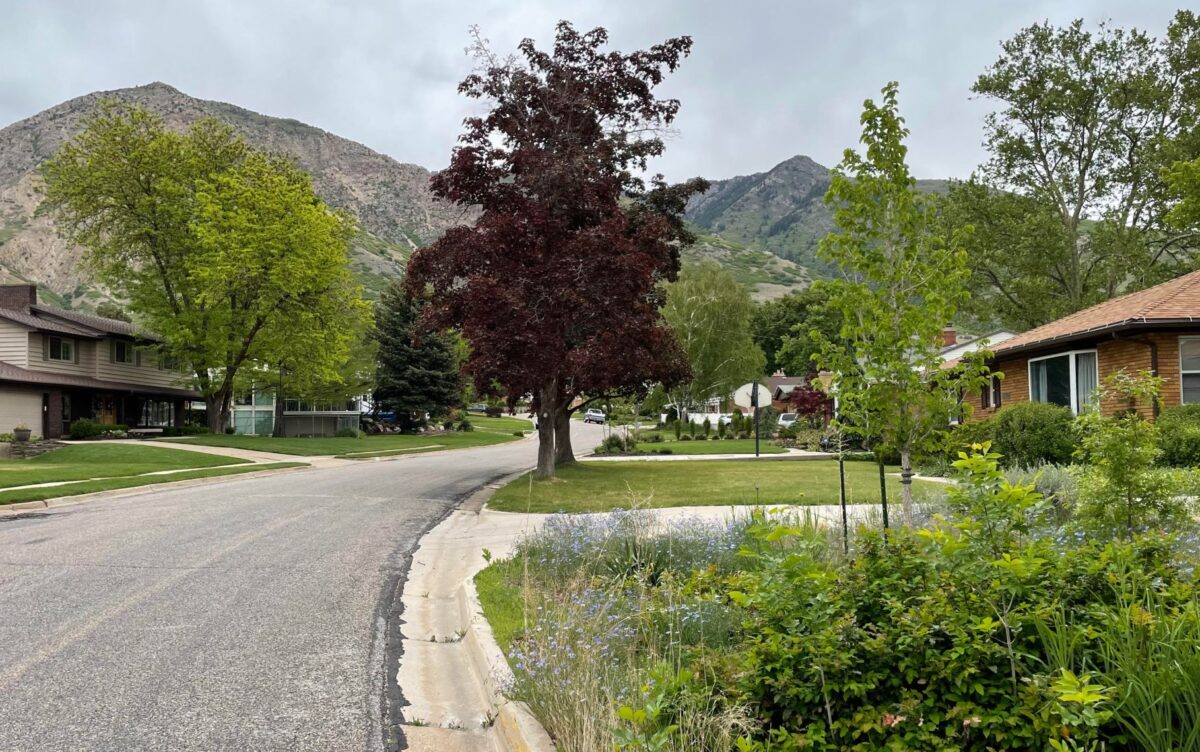
One of the neighborhoods on Ogden's East Bench that was covered by a 1947 covenant that prohibited people of color from owning homes in the area is pictured on Tuesday, May 25, 2021. Such covenants, now illegal, are the focus of a research effort into Ogden housing by Jennifer Gnagey, an adjunct Weber State University professor.
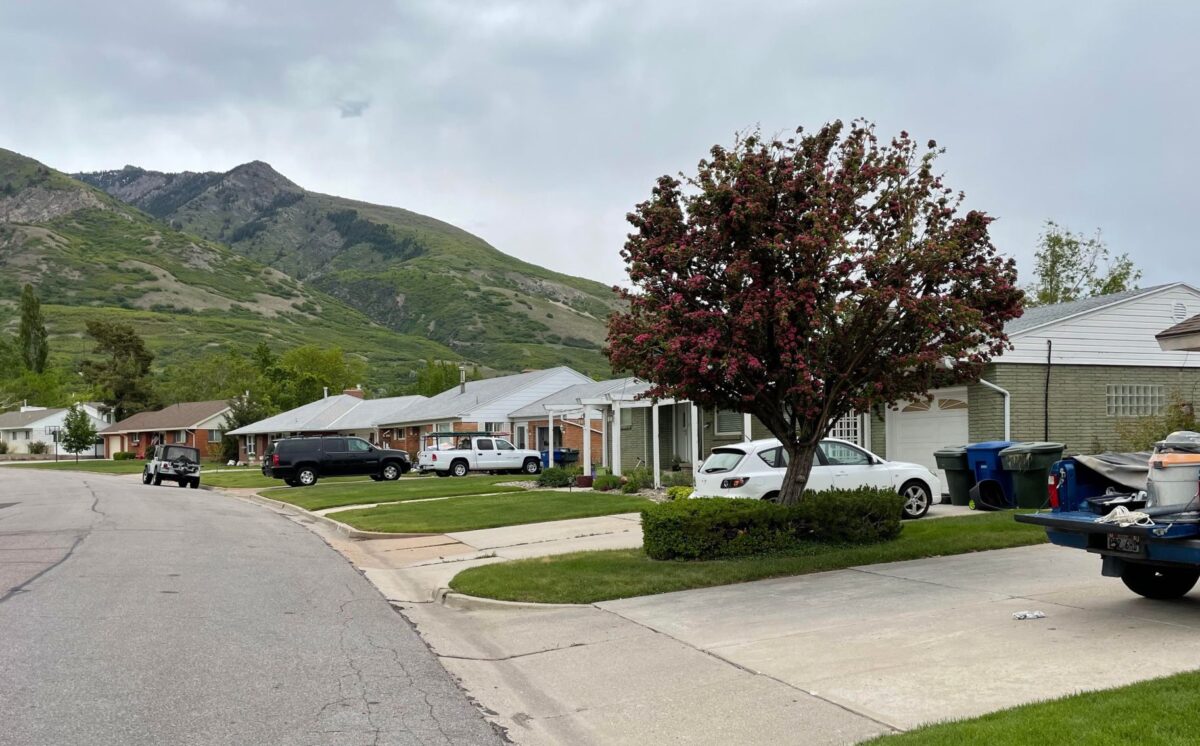
One of the neighborhoods on Ogden's East Bench that was covered by a 1947 covenant that prohibited people of color from owning homes in the area is pictured on Tuesday, May 25, 2021. Such covenants, now illegal, are the focus of a research effort into Ogden housing by Jennifer Gnagey, an adjunct Weber State University professor.
OGDEN — Dating to the 1940s, there were parts of Ogden where, if you were a person of color, you just couldn’t live.
It wasn’t a matter of economics, custom or societal pressure, however important such factors may be in determining where people live. Rather, documents spelling out development schematics of certain neighborhoods, called protective covenants, stated the racial restrictions in unambiguous terms.
“No person or persons of any race other than the Caucasian race shall use or occupy any building or lot in this subdivision,” reads a covenant dated June 18, 1947, for the Hillcrest Addition. That’s the residential neighborhood on Ogden’s East Bench between Tyler and Taylor avenues to the east and west and 30th Street and 32nd Street to the north and south.

Photo supplied
Jennifer Gnagey, adjunct professor at Weber State University.
The document goes on, excepting “domestic servants of a different race domiciled with an owner or tenant” from the restriction. But the intent seems pretty clear — Black, Hispanic, Asian people and others were not welcome. And a Weber State University adjunct professor of economics, Jennifer Gnagey, has started digging into Ogden’s old property records to get a gauge of how common such racial covenants were here.
So far she’s uncovered three such covenants in Weber County Recorders Office records, including the Hillcrest Addition document, and she’s continuing her research. She can’t say how widespread restrictive covenants were, but such practices can have ripple effects as time passes, shaping how neighborhoods develop, she said.
“People often think government-sanctioned housing segregation is something that only happened in the South. But in fact, numerous policies and practices in Northern and Western states were used to create and sustain racially segregated neighborhoods,” Gnagey said in a Weber State press release.
Indeed, racial covenants, outlawed in 1968 in the federal government’s Fair Housing Act, were once “ubiquitous” around the country, according to University of Minnesota research into the issue. “Covenants were embedded in property deeds all over the country to keep people who were not white from buying or even occupying land; their popularity has been well documented in St. Louis; Seattle; Chicago; Hartford, Connecticut; Kansas City and Washington D.C.,” reads the University of Minnesota website focused on the issue, Mapping Prejudice.
For Gnagey, who’s delved deeply into varied housing issues in Ogden, including housing affordability and the rights of renters, understanding past housing practices can inform the present. “I think this is a history that has been willfully forgotten for 80-90 years,” she said.
She’s also been digging into the issue of redlining in Ogden, the historic practice of not loaning funds to buy homes in areas deemed financial risky. Redlining was frequently used around the country in areas with high minority populations to keep them from owning property, according to the Weber State press release on Gnagey’s work.
Over time, Gnagey said, redlining made home ownership difficult for minorities, thus shutting them off from the equity that builds up over time from owning a home and reducing their ability to pass on inheritance funds to their heirs. That, in turn, makes it difficult for future generations to buy homes.
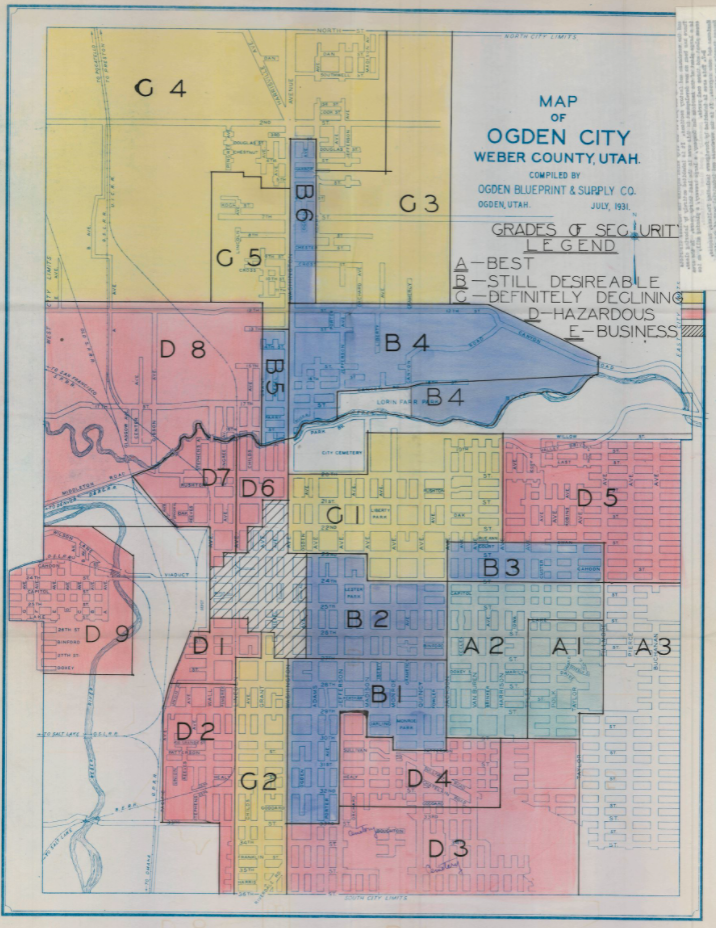
Image supplied, Weber State University
A 1931 map put together as part of a federal government effort to break down what it deemed real estate lending risks, a practice known as redlining, shows Ogden. Jennifer Gnagey, an adjunct professor at Weber State University, found the map as part of her research into housing discrimination in the city.
“Once you understand that we got here by institutional practices, I think it (becomes) very clear we’re going to need some policy change to dismantle these patterns,” she said. As part of her research, she found a 1931 map created by the federal government, similar to maps in other cities, that divvies Ogden up into zones of varied grade, from “best” and “still desireable” to “definitely declining” and “hazardous.”
The influence of the map in lending practices in Ogden isn’t clear. But the current configuration of the city, with a disparate mix of wealthier and more modest neighborhoods, suggests to Gnagey a need for change to better integrate those of varied income levels in a bid to make housing more equitable across the board. These days, she said, zoning rules can serve to segregate different segments of the population.
The other racial covenants Gnagey has uncovered so far covered the Browne Barr subdivision in Ogden, inked in 1944, and the Country Club Heights subdivision in what’s now South Ogden, signed in 1941. Browne Barr covers the neighborhood between Harrison Boulevard and Iowa Avenue to the west and east with 30th and 32nd streets to the north and south. Country Club Heights sits south of 40th Street and west of the Ogden Golf and Country Club.
The covenants for Brown Barr and Country Club Heights had similar language to the Hillcrest Addition covenant. Gnagey discovered them by poring through old land records, and she has a Weber State student who will assist her going forward.
She and her research assistant plan to be at the Weber County Recorder’s Office each Tuesday from 1-3 p.m. this summer if homeowners want help searching for covenants on their property. A law approved by lawmakers earlier this year, House Bill 374, creates a means for homeowners to modify covenants on their property for free.