Private voter info to become public, but some Utahns, including police, can get exemptions
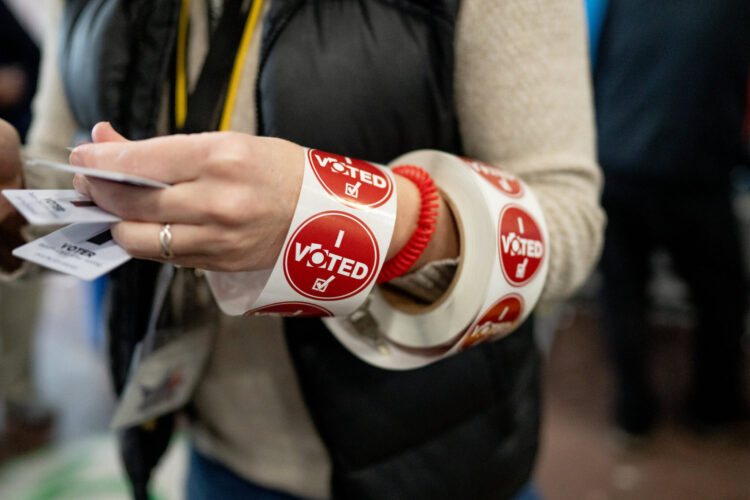
Photo by Spenser Heaps for Utah News Dispatch
An election worker hands out “I Voted” stickers at the Main Library in Salt Lake City on Election Day, Tuesday, Nov. 5, 2024.Utah’s top elections officer says her office is notifying more than 300,000 voters that some of their information will soon become available to those requesting to see the state’s voter registration list and paying a fee to do so.
Lt. Gov. Deidre Henderson’s office mailed letters to the voters this week, letting them know about the change set to take place on May 25 under SB153, signed into law last month by Gov. Spencer Cox.
“We don’t want anyone to worry when they see a letter from our office in their mailbox,” Henderson said in a Thursday prepared statement. Those receiving the notices have previously opted in to privacy protections, she added, and she wants to make sure they understand how the shift may affect them.
The Davis County clerk’s office also called attention to the shift this week, saying in a social media post that “very important changes are coming regarding voter registration records.”
The Utah Legislature approved the changes during its annual lawmaking session. Supporters say it’s needed in the name of transparency and to help political parties and candidates reach voters and learn about them. Critics see it as an intrusion and say it could make people less safe by disclosing where they live if they don’t apply or qualify for an exemption.
Under the new law, the records of most voters now classified as private or withheld will no longer be hidden, Henderson’s office said, making public their full legal name, voter ID number, home and mailing address, voting precinct and districts, party affiliation, active or inactive voter status, and the elections in which they have cast a ballot.
Some information will remain accessible only to government agencies and won’t be shared publicly under the new law, including a person’s full date of birth, along with their driver’s license number and Social Security number.
The U.S. Department of Justice is suing Utah and several other states to obtain that information and calling it necessary for election integrity efforts. Henderson has countered that the agency isn’t entitled to collect “private information on law-abiding American citizens” under federal or state law.
Utahns deemed “at-risk voters” under the new law can keep their information under wraps, but they need to apply to do so. Those eligible include victims or “threatened victims” of domestic or intimate partner violence, law enforcement officers, military members, public figures who have received threats, or someone protected by a court order.
To apply for an at-risk classification, voters can submit a form to their county clerks until May 6. Forms are available at the clerks’ offices and https://vote.utah.gov/voter-privacy-information/.
Local News

Dallin H. Oaks sustained as president of The Church of Jesus Christ of Latter-day Saints in solemn assembly during general conference

Powder Mountain public water district votes to put operations out for bid; resort has expressed interest in contract