Utah lawmakers get a primer on data centers after a summer of protests and political fallout
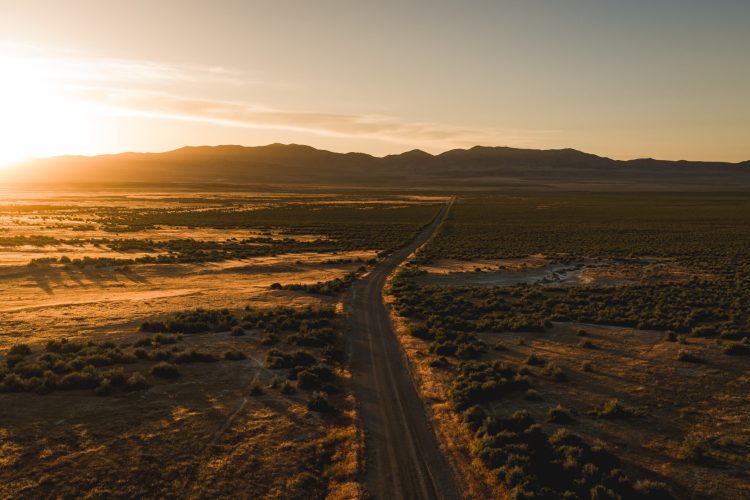
Photo by Spenser Heaps for Utah News Dispatch
The sun rises over a part of Hansel Valley, in Box Elder County, near the proposed Stratos Project, a massive data center planned for 40,000 acres of land, on May 28, 2026.Data centers took center stage at the Utah Capitol Wednesday as lawmakers met to figure out where to focus their attention when they convene for their 2027 session in January.
They didn’t take any action, but focused on listening to experts, administrators and everyday Utahns for insights on the industry and its impacts on the environment and economy during their interim meetings.
They also acknowledged loud and bipartisan public outcry. Fierce opposition to new data center development, erupting across the country, has ignited in Utah in response to a massive proposed project near the northern tip of the Great Salt Lake in Box Elder County.
“We know this is a hot-button issue. Each of us has received, probably, hundreds of emails on this issue, so we know it’s a big concern,” said Rep. Jon Hawkins, R-Pleasant Grove, chair of the Economic Development and Workforce Services Interim Committee.
State leaders are also keenly aware of how that concern has translated into political consequence. Wednesday’s meetings followed the stunning defeat of a top lawmaker, Senate President Stuart Adams, in June’s Republican primary.
Adams, a Republican from Layton, had earlier voted to advance the Stratos data center project as chair of Utah’s Military Installation Development Authority, a move seen as a key factor in his primary loss. Two Box Elder County commissioners who cast votes in favor of the project also lost their seats.
The presentations at the Capitol left some lawmakers with questions that have also vexed constituents in recent months.
Tim Davis, commissioner of Utah’s Department of Environmental Quality, noted no single state agency can fully approve a data center on its own. He showed lawmakers a chart displaying the many layers of approvals that developers must generally obtain, including from land authorities, along with divisions overseeing air quality, water use and wastewater permitting.
It left Rep. Doug Fiefia wondering who exactly Utahns could hold to account if something important falls through the cracks in an approval process.
“That’s just the concern from a constituent’s perspective, of who do we hold accountable for this data center coming in? And if there’s a million people I have to contact, then I never really get to the right person that I have a question or concern to,” Fiefia, R-Herriman, said.
Davis said state agencies have been discussing how to coordinate better. He also pointed out that his agency’s work overseeing air quality permitting hasn’t begun for the large-scale Box Elder County project backed by celebrity investor Kevin O’Leary. Once it does, it’ll take a year just to obtain data on existing air quality before developers can apply — a process that involves opportunity for public comment, he said.
“We haven’t even started our process with them,” Davis told the economic development committee.
The Military Installation Development Authority has said it’s hitting pause on the Stratos project as a group of citizens pushes to allow Box Elder County voters to pursue a referendum vote on the county commission’s decision to green light the data center, which would give them a chance to effectively reject the development. But Stratos backers are “full steam ahead on the project,” O’Leary told The Salt Lake Tribune in July.
Rep. Jim Dunnigan, R-Taylorsville, was focused Wednesday on the money Utah gives up by offering “significant” tax incentives to data centers.
“I know we need the jobs, and yet we’re giving away significant tax breaks to attract them,” Dunnigan said.
Jessica Wiarda, of Salt Lake City, told a natural resources panel Wednesday her biggest concerns surrounding data centers revolves around effects on wildlife, especially deer.
But it was also upsetting that the public didn’t have more information on the Stratos project before public officials voted on it, she said. Wiarda told the committee she was grateful to learn more since then and gave them a piece of advice.
“The transparency will reduce the public pressure,” she said.
Local News
Antelope Island State Park celebrates expanded visitor center
Utah House speaker ‘extremely disappointed’ in how JCC handled Hagen investigation