Snowpack plunges to record low as Utah’s dry winter drags on
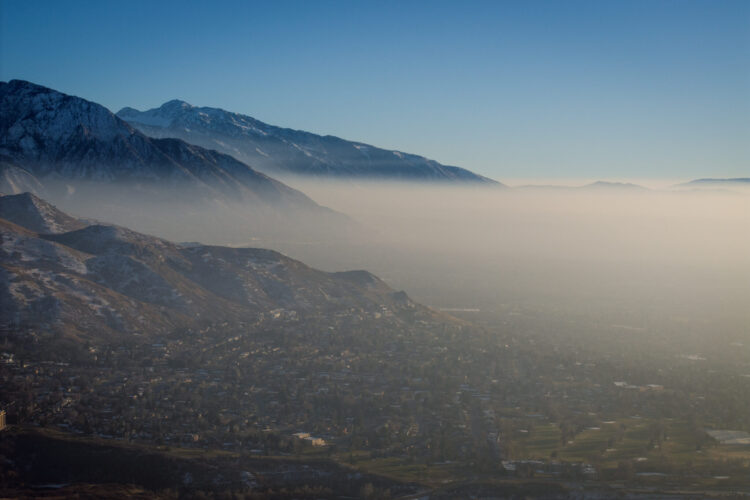
Photo by Spenser Heaps for Utah News Dispatch
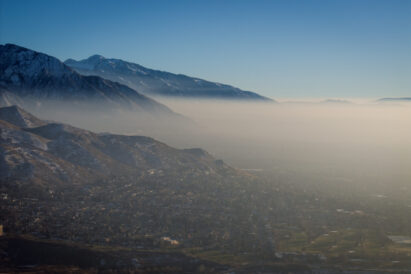
A thick pollution haze hovers over Salt Lake Valley on Thursday, Jan. 15, 2026.Whether you’re a skier or just enjoying the mountain views, the problem isn’t hard to see — there’s not much snow in Utah.
Statewide snowpack has reached new record lows since measurement began in 1980, according to a report released Monday by the U.S. Department of Agriculture’s Natural Resources Conservation Service.
Utah gets “approximately 95% of our water from snowpack” — which is compressed, accumulated mountain snow — according to the Utah Division of Natural Resources. Snowpack melts throughout the year, providing vital runoff that “reservoir storage is dependent upon … to get us through dry years,” the DNR website explains.
As 93% of the state is facing drought, Monday’s snow survey report shows “31 of Utah’s 140” measurement stations have reached record-low levels of snow water equivalent, a metric gauging how much water the snowpack contains. Twelve more stations reached their second-lowest recorded levels, meaning 31% of Utah’s measurement network “is at its worst or second-worst amount of snowpack” ever recorded.
The USDA tracks snow water equivalent data using various SNOTEL stations — or snow telemetry systems — around the state “designed to collect snowpack and related climatic data,” according to the agency’s website. These systems are sprinkled throughout the Western U.S. and Alaska.
“We don’t want this to be the No. 1 year for the record (low) snowpack, but obviously there’s not a lot we can do,” said Utah House Speaker Mike Schultz, R-Hooper, speaking to reporters Monday.
Great Salt Lake
When it comes to what this means for the Great Salt Lake, lawmakers pointed to previous water conservation efforts while raising concerns about the record-low snowpack.
Schultz, who told reporters to “keep praying,” said the snowpack “certainly does create more challenges” for water conservation plans.
“The exciting news is, because of a lot of the things that we put into place, we will not hit the record low (lake levels) again, even if we don’t get a significant increase in snow,” he added. “We’re prepared, and we’re managing for that. We started managing a month ago, and we are still having conversations.”
Sen. Scott Sandall, R-Tremonton, is tasked by Republicans to head water legislation. He said “we’ve always felt a sense of urgency” since lake levels reached a record low in 2021, and again in 2022.
“We want to make sure that the health of the lake is the primary focus, so I believe we will continue to look at everything we can do in conservation,” he said. “Beyond that, I am going to suggest that the governor is right. I think we need to pray a lot.”
After the Great Salt Lake hit its third-lowest level on record last year, public health officials have warned the drying lake is creating a public health crisis, as shrinking lake levels expose toxic dust laden with arsenic and other heavy metals that worsens air quality.