Utah’s digital ID program, ‘digital bill of rights’ could lead the nation in privacy framework
One year after outlining state policy and creating privacy requirements, the legislature is back with a bill to implement a digital ID program for Utahns
Will Ruzanski, Utah News Dispatch
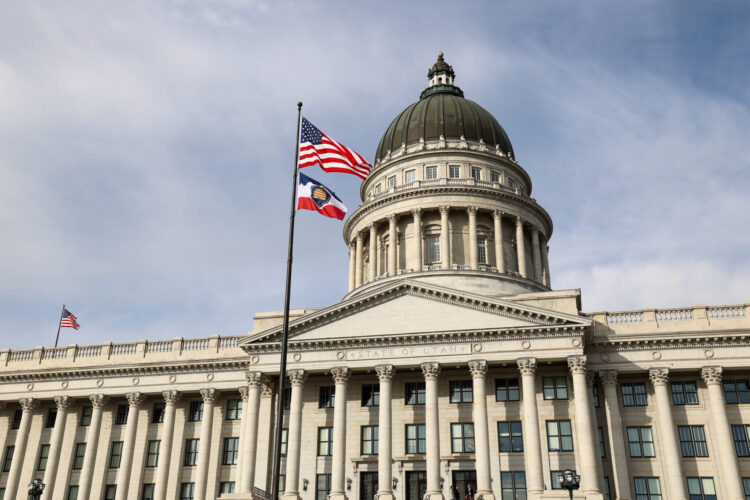
The Utah State Capitol is pictured on Tuesday, Jan. 20, 2026.Utah may soon establish an optional digital ID system — one focused on privacy protections including a “digital identity bill of rights” — after a year of research and preparation to develop the program.
Sponsored by Sen. Kirk Cullimore, R-Cottonwood Heights, the Senate Government Operations and Political Subdivisions Committee unanimously approved SB275 on Wednesday, sending it to the Senate floor. Last year, Cullimore sponsored another digital ID bill to begin research for the program, outline state policy, and establish privacy principles.
“(Last year’s bill) did three critical things,” Cullimore told the committee. “It declared that identity belongs to the individual and not the state. It embedded strong privacy and anti-surveillance guardrails into the statute, and it also required study and stakeholder consultation before implementation.”
He said SB275 builds on that existing framework and “takes principles adopted from last year and turns them into an operational program.” Getting a digital ID would be optional, as the bill includes safeguards that prevent Utahns from being forced or compelled to acquire one.
“Digital identity is coming, regardless of whether we address it or not,” Cullimore told the committee. “I think Utah is unique in being ahead of the curve, dealing with this and getting in front of it.”
Cullimore said he thinks the state is becoming a national leader in digital ID framework, with its system based on privacy protections that gives Utahns the right to control their own identity data.
“We’re building a coalition of other states to get on board,” Cullimore said. “As we lead out with this, there’ll be a critical mass of other states that are also doing this.”
The federal government would not have access to state identity data, with Cullimore emphasizing that the bill “keeps the technical infrastructure in a state- controlled data center here in Utah.”
Anti-surveillance privacy protections
Critics of digital ID often express concern for privacy infractions, government surveillance, and other rights violations. But, Utah’s program isn’t anything like Orwell’s “Big Brother.”
The ACLU supports Utah’s digital ID program — which requires strict security safeguards and grants citizens the right to own and control their own identity — saying that Utah is the only state “asking the right questions.”
SB275 establishes a “digital identity bill of rights, which is important,” Cullimore said. “It guarantees the right to use a physical ID instead of digital, the right not to be compelled to use digital ID, the right to selective disclosure of identity attributes, the right to be free from surveillance, tracking and profiling, and the right to transparency and how the system operates.”
He added that as time goes on, these changes are becoming necessary, and Utah’s plans protect citizens in a changing digital world.
“Everything we do is online, and so it’s important that we get in front of this as much as we can, to lay the groundwork to respect people’s privacy,” Cullimore said. “I think the political climate here is one that respects privacy, one that respects limited government, and that government’s role is to protect our civil liberties.”
Utah Office of Data Privacy Director Christopher Bramwell also spoke in support of the bill, emphasizing that it puts more power in the hands of Utahns.
“The individual controls their identity, the state’s role is only to endorse it and to ensure the individual has mechanisms to protect it,” Bramwell told the committee. He emphasized that Utah needs to adapt to the changing digital age, pointing to artificial intelligence and Utah’s approaching 2034 Winter Olympics.
“We know this bill is disruptive,” Bramwell said. “It’s an intentional disruptive approach to try to empower individuals and to change what the internet and world will look like 10 years from now.”
Pointing to the bill’s bipartisan support, Cullimore expressed optimism for the program’s future.
“We’re trying to redevelop this in a way that becomes more citizen, consumer centric, to where you actually own all your data and you elect what goes out,” he said. “It’s about keeping government in its proper place, and that is to maintain our civil liberties and prevent government encroachment.”
Local News

Volunteer opportunities available at local organizations

Utah’s digital ID program, ‘digital bill of rights’ could lead the nation in privacy framework