Utah SBI identifies man found under Riverdale Road overpass in 2012
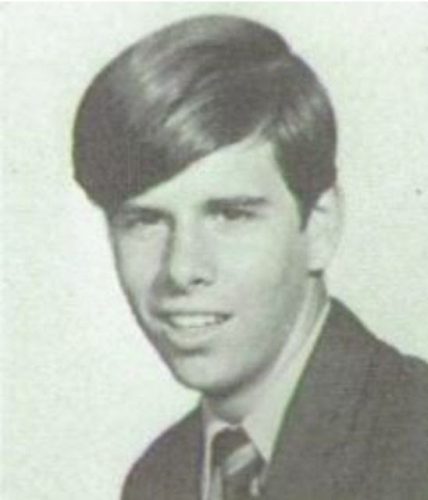
Photo supplied, Utah State Bureau of Investigation
Terry Richardson Chawk, pictured here in an undated photo, passed away in 2012 at the age of 59 and was found under an overpass in the Riverdale/Roy area. For 14 years, he remained unidentified. However, on Tuesday, July 28, 2026, the Utah State Bureau of Investigation announced that Chawk had been identified thanks to investigative genetic genealogy.In May 2012, the Ogden Standard-Examiner ran a brief on a grim discovery in Riverdale.
“Investigators are trying to identify the body of what appears to be a man in his 50s thatwas [sic] found Monday morning under the Riverdale overpass adjacent to Interstate 15.”
The short story ends by noting “a backpack and camping gear with the body make investigators think the man was a transient, he said. Investigators are in the process of identifying the body and then will try to contact any next of kin.”
In spite of their best efforts, investigators wouldn’t be able to make that identification.
That all changed this summer.
On Tuesday, the Utah State Bureau of Investigation announced in a press release that, after 14 years, this man had finally been identified.
“The Utah State Bureau of Investigation (SBI) has successfully identified an unknown deceased male discovered more than 14 years ago under an Interstate 15 overpass near Roy, Utah,” the release said. “Through the efforts of investigators and recent breakthroughs in Forensic Genetic Genealogy, the individual has been positively identified as Terry Richardson Chawk of Florida.”
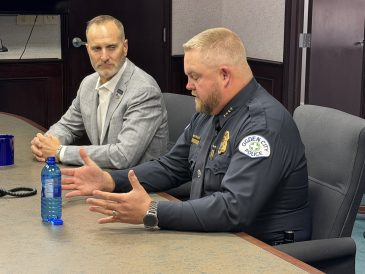
The Standard-Examiner spoke with Utah SBI Agent Brian Davis and Utah SBI Forensic Investigative Genetic Genealogist Kathryn Moore about how an emerging technique helped give a person their name back while solving a mystery that had plagued a Florida family for more than four decades.
A cold case
Davis said, from the beginning, investigators had little to work from in 2012.
“We did everything we could really think of,” he said. “We did press releases back then, we went through all the databases that were available. We had a thumbprint that we were able to generate from this individual, which was which was a no small feat. The state crime lab was able to develop one usable thumbprint despite the level of decomposition — never hit any databases. We did multiple canvases in the area. Businesses and individuals and lots of people that knew this knew this individual saw him all the time, but at most they thought, ‘Well, we think he kind of went by Terry sometimes.'”
He said that local police had noticed Chawk at times, but that he had never caused any problems inviting further scrutiny on him.
“He was definitely living a kind of a homeless transient lifestyle, but just was never a never a problem,” Davis said.
He added that there was no evidence to suggest anything nefarious played a part in Chawk’s death.
“We don’t suspect any foul play at all,” Davis said. “Not to get into too many specifics, but the cause of death was undetermined There’s no signs of any type of foul play or trauma From from what the medical examiner could observe. People that we spoke with that knew him he said he had a really really bad cough and he was actually he was a pipe smoker. And it sounds like it was some of the history that I’m aware of from the family, he always kind of had like a compromised lung condition. So from what the medical examiner could observe — even though it’s undetermined — it’s probably more of a natural cause type death.”
According to the release, several steps were taken at the time and in the ensuing 14 years to try and identify Chawk, including:
- “Following up on dozens of public tips and media appeals.
- Conducting local area searches and comparing dental records.
- Entering the case details into the National Missing and Unidentified Persons System (NamUs).
- Uploading DNA profiles into the Combined DNA Index System (CODIS).
- Coordinating with multiple law enforcement agencies nationwide and conducting searches through Interpol.”
Breakthrough
Last October, the Utah SBI brought on Kathryn Moore as one of the country’s first forensic investigative genetic genealogists.
“Utah is definitely leading the way in this,” she said.
And one of the first cases she’d take on was the 2012 cold case, this time employing investigative genetic genealogy.
“This was one of those cases that we identified immediately that we wanted to solve and resolve here,” she said. Investigative genetic genealogy uses DNA and traditional genealogy research together to provide an investigative lead. Essentially, we are trying to identify someone whose DNA is unknown by connecting them to people who they’re related to biologically.”
She said this summer would see a major development in the case.
“We’ve done a lot of research on this this UHR’s (unidentified human remains) family tree and then in June we got a cousin match who was significantly closer than any of the other matches and that kind of blew the case wide open,” she said. “We had already done a lot of research and as soon as we got this new match, it was like all the pieces finally came together and we were able to narrow down to this man who’s Terry Chawk. Agent Davis then reached out to family and spoke with them. They took a DNA test and it confirmed, yes, our UHR really was Terry Richardson Chawk.”
Moore said this marked the first case that the Utah SBI has solved utilizing investigative genetic genealogy.
“There’s a lot more of these cases that we want to solve, and so we’d love the public to be aware of it and support it because we need more of this stuff,” Davis said. “Kathryn’s very, very good at what she does.”
‘We were able to give Terry Chawk back his name’
Terry Chawk was 59-years-old when he passed away in 2012.
To Moore, being able to bring some closure to a family is one of the best parts of an already difficult job.
“We Don’t usually bring great news to families,” she said. “We’re telling them that, in this case, that their family member was deceased. In other cases, we’re telling them that we are able to identify the perpetrator of a crime, so it’s not great news that we bring to them per se, but what we hope that it brings is some sort of sense of of peace.”
Davis said that Terry’s status and whereabouts had been a mystery for many, many years.
“In talking with with Terry’s brother who lives in Florida, it’s not the news that they wanted but it’s news that they kind of expected,” Davis said. “It had been about 47 years since he left home and they’d seen or spoken with him, so they just wondered for nearly 50 years what happened to their brother.”
Davis said the family had attempted to learn Terry’s whereabouts at the time but were unsuccessful.
“Even though it’s not great news for them, they’re very grateful to know,” Davis said. “Those arrangements are now being made for his remains to go back home to the family.”
The press release included a brief statement from the family.
“Our family is grateful to the investigators of the Utah State Bureau of Investigation and everyone who worked on our brother’s case to help bring us closure,” said the family of Terry Chawk.
Moore said this breakthrough technique also gave Terry Chawk something important back to him.
“Everybody deserves to be known to have their name attached to them,” she said. “So the fact that we were able to give Terry Chawk back his name, that’s that’s exactly what we wanted.”
Investigative genetic genealogy’s future
Moore said that investigative genetic genealogy will play a role in a wide spectrum of cases in the future.
“I think we’re going to see investigative genetic genealogy become more and more prominent in solving cases — both cold cases and current cases,” she said.
She added that the technology ultimately needs the public’s help.
“When that one match showed up in June that kind of opened up this entire case to be able to solve it, that match came because somebody decided to take a DNA test and chose to say that their results could be used for law enforcement purposes,” she said. “Sometimes we’re looking for perpetrators of crime. Sometimes we’re just trying to identify unknown persons, but for us to be able to connect our cases to those other DNA profiles, people need to opt in. That’s something that I want to highlight — how helpful it is for the public at large to one be willing to take a DNA test and Then to to opt in to allowing that to be used by law enforcement.”
Moore said databases that allow users to opt-in to allowing law enforcement to utilize DNA info in solving cases include GEDmatch, DNA Justice and FamilyTreeDNA.
“A lot of people have tested elsewhere, but if they if they would like to to help with cases like this all they have to do is upload their DNA to one of those sites and opt-in,” she said. “They may be part of bringing somebody home, giving somebody’s name back to them or bringing justice to a family who’s been looking for for justice for decades.”
Local News

Harvest Moon Celebration to usher in autumn this weekend

UTA announces zero-fare weekend on all services while upgrades are made to fare collection system