‘Wings Over Weber’ project aims to enhance understanding of Weber Basin snowpack, provide better utilization of water resources
-
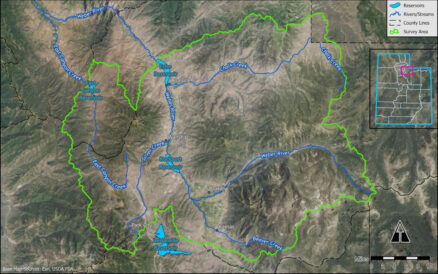
- A map showing the “Wings Over Weber” project’s study area.
-
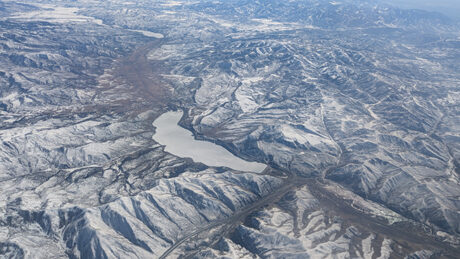
- An undated photo of Echo Reservoir, which is part of the Wings Over Weber study area.
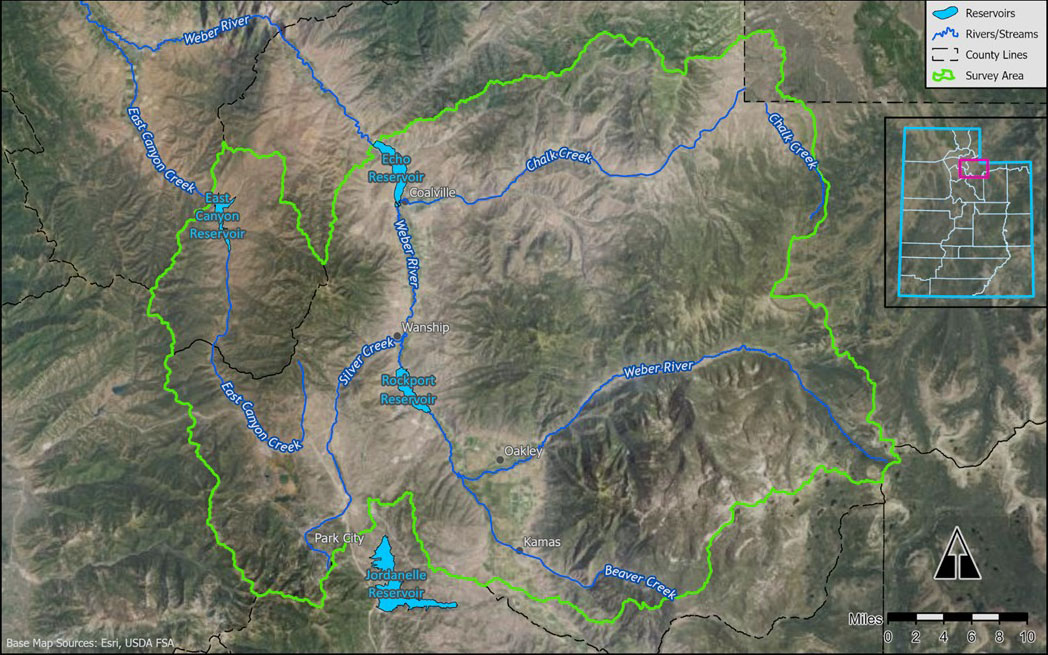
Image supplied, Utah Division of Water Resources
A map showing the "Wings Over Weber" project's study area.
WEBER BASIN — A partnership between agencies is funding an experiment to study the Weber Basin’s snowpack.
This week, the Utah Division of Water Resources sent out a press release on its efforts to partner with the Weber Basin Water Conservancy District and the Great Salt Lake Commissioner’s Office to “expand and explore the use of Airborne Snow Observatories (ASO) technology in the Great Salt Lake Basin.”
The project has been dubbed “Wings over Weber.”
Scott McGettigan, water efficiency and technology section manager with the Division of Water Resources, told the Standard-Examiner Thursday that the project goes back to technology developed by researchers at NASA over the course of a decade.
“It originated from work that they did to look into ways they could improve measurements of snow by using LIDAR and spectrometers as they fly planes over watersheds to try and measure snow depth,” he said. “In recent years, they’ve taken it to the public sector and are operating this kind of technology in the Western United States.”
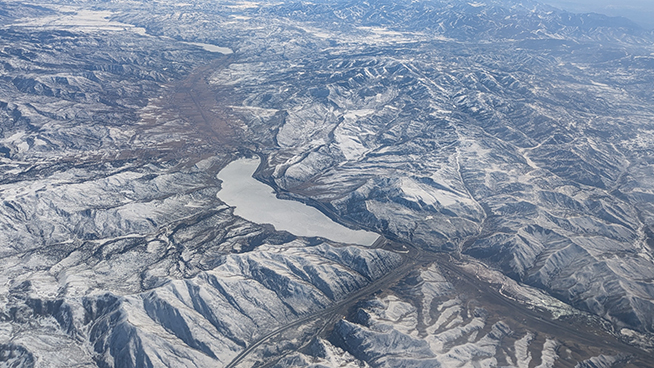
Photo supplied, Utah Division of Water Resources
An undated photo of Echo Reservoir, which is part of the Wings Over Weber study area.
He said that “Wings Over Weber” is taking advantage of this technology to complement the existing SNOTEL stations which are limited in their scope.
“Snow measurement, in areas where there’s not ASO, they typically use single stations throughout a basin to try and estimate snow and snow water equivalent,” he said. “They’ll take a one-point measurement in a large, hundreds of square miles (area) typically and that only provides information at that one point.”
According to the project’s website, “Wings Over Weber” aims to:
- “Enhance water supply accuracy within the Weber River Basin
- Address drought crisis by aiding water managers in balancing priorities of water use needs and mitigating drought impact in the area, particularly for Great Salt Lake
- Foster collaboration with partner agencies and knowledge transfer for use in runoff forecasts”
McGettigan said the goal is also to see how useful the flights are to the partner agencies in the first place.
“We’re interested in learning the value of the technology,” he said. “It hasn’t been widely used in Utah. There’s one other project that is still ongoing in the state and that’s in the Uintah Basin, and they started a year before ours.”
He said two flights were conducted in 2025 while one of two planned flights has occurred this year. A single flight will be conducted in 2027. McGettigan said the total project is around $1 million.
McGettigan said, ultimately, the goal is to manage the region’s water in the best way possible as it faces the challenges with supply.
“The goal is to learn to see if we can improve operations in a way we can better apply our water resources to where they need to be,” he said. “That’s why we’re working with those two entities — the Great Salt Lake Commissioner’s Office and the Weber Basin Water Conservancy District. Weber Basin manages a lot of the water that’s on the Weber River — not all of it but a good portion of it — and the Great Salt Lake Commissioner’s Office is interested in ways that they can achieve their goals with the Great Salt Lake. Having more precise information related to our snowpack can help them to do that because 95% of our water supply comes from snow. That’s an important statistic and that’s what kind of motivates us to look more closely at the snowpack and how it’s related to all of the water processes we’re involved in.”
He said that there aren’t plans to make this a long-term project following the initial experiment’s conclusion and that it is not a planned replacement for SNOTEL.
For more information, visit https://water.utah.gov/wings-over-weber/.
Local News
‘Wings Over Weber’ project aims to enhance understanding of Weber Basin snowpack, provide better utilization of water resources

WSU Intermountain Sustainability Summit set for next week