Salt Lake City mayor asks for urgent meeting with feds over ICE warehouse purchase
‘A large-scale detention facility is inappropriate for this location and does not have the support of Salt Lake City officials,’ Mendenhall writes in letter
McKenzie Romero, Utah News Dispatch
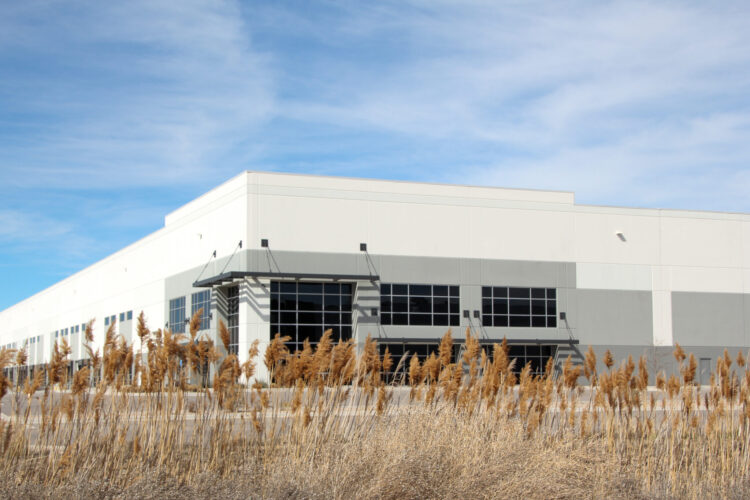
A warehouse purchased by U.S. Immigration Customs and Enforcement at 6020 W. 300 South in Salt Lake City is pictured on Friday, March 13, 2026.Salt Lake City Mayor Erin Mendenhall on Tuesday sent a letter to a top Immigration and Customs Enforcement official asking for a meeting over the U.S. Department of Homeland Security’s recent $145.4 million purchase of a warehouse property in the city.
In the letter, Mendenhall asked Todd Lyons, the acting director of ICE, to respond by March 27 “with times you or your designee can meet with myself and other Salt Lake City officials.”
“While we are seeking additional information about the ultimate intended use for this building, a large-scale detention facility is inappropriate for this location and does not have the support of Salt Lake City officials,” the mayor wrote.
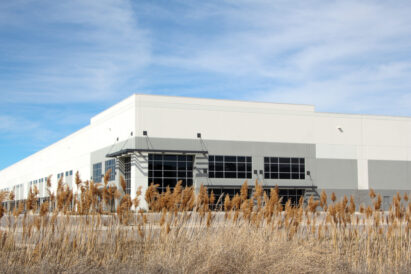
The 830,000-square-foot building is located in a sea of warehouses in a developing industrial district along a rail line and a 10-minute drive from the Salt Lake City International Airport.
Last week, a representative from ICE issued a statement saying the agency intends to use the site as a detention facility and that it will undergo “community impact studies and a rigorous due diligence process to make sure there is no hardship on local utilities or infrastructure prior to purchase.”
However, the mayor said in her letter that the Department of Homeland Security “has not engaged Salt Lake City regarding its plans for this facility.”
“It is critical to communicate with Salt Lake City plans to operationalize and mitigate the detrimental and numerous community impacts it would create,” Mendenhall wrote.
The mayor’s three-page letter outlined concerns that a “large-scale detention facility” would create for the city, including for zoning and infrastructure, economic development, and public safety.
Mendenhall wrote that the city’s police, fire and 911 dispatch departments “are already at maximum capacity serving our residents and businesses.”
“A large-scale detention facility could create additional strain on our public safety teams by diverting officers, first responders, and other needed safety resources away from our residents and businesses,” she wrote. “It is imperative that we know how DHS plans to staff, secure and protect the facility from a public safety perspective as well as fire prevention/response and emergency medical services.”
Mendenhall also noted that public safety in Utah’s capital city has been a “significant concern” for the state’s top Republican leaders, including Gov. Spencer Cox, Senate President Stuart Adams, R-Layton, and House Speaker Mike Schultz, R-Hooper.
She pointed out that Cox, Adams and Schultz sent her a letter in 2024 expressing concern about “escalating public safety challenges in Salt Lake City” — to which she responded with a public safety plan that has since been applauded by state leaders.
“Implementation of this plan alongside all of our criminal justice partners has made a significant difference in Salt Lake City, and we cannot divert much-needed resources away from addressing homelessness challenges, preventing crime, and responding to calls for mental health and substance abuse concerns,” Mendenhall wrote in the letter to Lyons.
Mendenhall also said such a facility “would take an enormous toll” on the city’s water and sewer infrastructure and capacity. She noted the area’s utility lines have been built “specifically for warehouse use, not high-occupancy residential use.”
She also said the city’s “preliminary modeling” shows that the facility would likely require sewer improvements “to be made offsite,” which could lead to permitting concerns from the U.S. Army Corps of Engineers and Union Pacific, a railroad company located in the area.
“While we can only make assumptions without more concrete information, it is clear that the area in question does not have the public utilities infrastructure to serve a large residential population,” Mendenhall wrote.
Additionally, the mayor pointed out that the warehouse is located within the Utah Inland Port Authority’s jurisdiction, an area that’s been tasked with “creating generational regional economic growth” and is already “active with critical economic activity, warehousing, distribution and rail.”
“If this facility were used as a large-scale detention center, it would have troubling ramifications for neighboring properties and a chilling effect on the potential of this area to thrive as an economic driver of the state,” Mendenhall wrote.
She also noted that because the warehouse is now owned by the federal government and is exempt from paying taxes, “local taxing entities will lose more than $1 million per year in property taxes.”