9/11 at 25: WSU professor discusses what we’ve learned and how attacks compare to other historical benchmarks

Richard Drew, Associated Press
A street in New York's lower Manhattan area is littered with debris after the collapse of the twin towers of the World Trade Center following terrorist attacks, Sept. 11, 2001. (Richard Drew, Associated Press)OGDEN — The events of Sept. 11, 2001, are a quarter century gone.
Many young adults have grown up with no memory of the event with some college graduates not having even been born at the time. They’ll only know the world shaped by 9/11 and not the one that existed before it.
As the nation looks back 25 years, historians are starting to also grapple with the event’s place in history, how it intersects with others and what it will mean to the generations as time continues to move along.
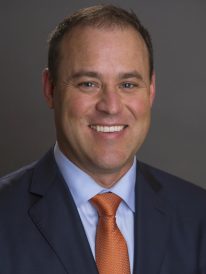
Recently, the Standard-Examiner spoke with Weber State University assistant professor of history Nathan Rives about the legacy of 9/11 and its place in history.
Layers
Rives said that he has plenty of experience studying historic events that have the distance of time.
“My main interests are in that sort of 18th, 19th century — the Revolution down to the American Civil War,” he said. “That time period is where I do most of my focus.”
He said that he also has published work on American religious history, political history and cultural history, which tend to intersect with the events of 9/11.
“9/11 is an event that I think operates in layers or on multiple levels, as events tend to do,” he said. “That means that there are a variety of ways that different aspects of history collide with it. … It involves the United States and the decisions that the U.S. makes that lead to or provide the backdrop to what happens on 9/11.
“And there are, of course, the religious aspects to the history — the ways in which particularly people reacted to the element of 9/11 that implicated aspects of Islamic identity. It’s such a fraught issue in part because it’s an issue that people wrestle with who are Muslims themselves. What does it mean for us to be implicated in this event? What does it mean then for people who are not Muslims to look from the outside in and say, ‘Well, what does it mean for relationships, say, between Christians and Muslims, between Jews and Muslims globally?’ It intersects with a number of different kinds of history.”
Generational divides
Rives said it’s been impossible to ignore the growing generational divide between those who experienced the world prior to 9/11 and those who have grown up with the post-9/11 world.
“One of the things that happens over the course of that time is there’s a sort of generational distinction that takes place, and I don’t mean generational in the sense of like Baby Boomers and Gen X and Millennials and Gen Z,” he said. “I observe this from my own standpoint as an educator of college students. At this point in 2026, the vast majority of my students, in most cases, all of them in any given classroom were born after 9/11 or were so young at 9/11 that they don’t remember it terribly well. If I’m in a classroom talking with students, I’m often the only person in the classroom who was alive and an adult at the time, because I was just shy of 24 years old when 9/11 happened.”
He said that time tends to add perspective to major historical events.
“One of the things that we learn about the event is that the perspectives that people have on it change over time,” he said. “You have the event that day and the things that people experience that day, and remembering those things matter. But as we gain some distance from it in time, the way people think about … what that event meant starts to change at the same time.”
National traumas
Another perspective that has emerged is how the attacks of 9/11 compare to other benchmark historical events of the last century. People of certain generations have noted they remembered where they were hearing the news of Pearl Harbor or the assassination of President John F. Kennedy.
Rives said he came to understand this phenomenon.
“I can remember growing up, my dad telling me, he was in middle school when JFK was assassinated — him telling me, ‘Yeah, I remember exactly where I was when they came over the school intercom and announced that the president had been killed,” he said. “And you heard that kind of story from anyone who was alive that day. ‘I remember where I was when I found out Kennedy was shot.’ I was like, ‘How can every single person in America claim to remember something like that?’ Then when 9/11 happens, I’m like, ‘I get it now.'”
He also noted how, in some ways, 9/11 became linked with the Japanese attack on Pearl Harbor that kickstarted America’s direct involvement in World War II.
“Pearl Harbor, a sneak attack that takes more than 2,000 American lives — I remember on 9/11 and since people compared 9/11 to Pearl Harbor,” he said. “That was something that people said, this is the biggest attack on American soil since Pearl Harbor.
“What happens in some ways is that we make those connections across time, so our understanding of Pearl Harbor gets reflected through our understanding of what happens on 9-11.”
Rives said there are some distinctions in how these national traumas are felt by the wider population.
“We remember something that happened to all of us,” he said. “Pearl Harbor was something that happened to folks in the military in Hawaii. JFK happened to this guy. But on some level, we feel like 9/11 happened to all of us, and you’ll often talk to people who were alive that day, and one of the things they will say — and I get students in class sometimes who are older and who remember this — the same thing. I remember that as tragic and horrifying as it felt, there was this sense of unity, a trauma that happened to everybody on some level that we all felt.”
Living in the shadow
Rives said that 9/11’s legacy at 25 years is that it’s an event that happened well beyond the physical locations impacted that day.
“It’s an event that doesn’t just happen at Ground Zero,” he said. It does happen at Ground Zero, but it doesn’t just happen there. It doesn’t even just happen in New York City. It happened to everyone alive that day. It happened even not just to Americans. It’s an American event and it’s also not. And I think one of the takeaways from 9/11 25 years later, among other things, is that this event was and remains a very global event. Not just because of the fact that it involves people from dozens of countries around the world — Americans were not the only people who died on 9-11, as we are well aware. People from dozens of countries were killed at Ground Zero. And it’s not even just because the response to the events was obviously quite global — the American response in the Middle East, for example — But it wasn’t just Americans who felt the trauma of it that day. I can remember at the time, and it’s worth remembering since, that there were people all around the world who expressed horror at what had happened.”
He said 25 years on, it’s clear that the world continues to feel the impact of Sept. 11, 2001, and will continue to for the foreseeable future.
“But it is, at the same time, an event that happens on this global scale that affects everybody on some level to some degree or another,” he said. “I think that’s an important takeaway to remember, because perspective matters in history. And taking that larger global view helps us to, I hope, not just remember 9/11 in its proper perspective, but also, I would hope, helps us to remember that the things that happened that day have bigger ramifications than just Sept. 11, Sept. 12, Sept. 13, 2001. They’re still with us. All of us still live in the shadow of 9-11.”