Utah-built prefab walls leverage energy efficiency
LAYTON — The first floor is up and crews have already started on the second floor of the new colonial-style office building, trucking in pre-manufactured wall slabs from a facility in North Salt Lake.
When finished, the new building called Katie’s Place, 1649 Antelope Drive in Layton, will offer 23,000 square feet of energy-efficient office space, including the Advanced Spinal Rehabilitation, thanks to the construction materials manufactured by Epik Walls.
Chiropractor Corey Bowden, owner of Advanced Spinal Rehabilitation, wanted energy efficiency when he decided to construct the new facility.
He feels the materials will save on heating, cooling and construction costs.
“I think it’s the new way of building buildings,” Bowden says. “I saved 30 percent of the cost of traditional wood and because it is recycled steel I don’t have to cut down a forest.”
Bowden hopes to share the gains in energy savings with his tenants.
“It is also supposed to cut 40 percent (of) energy usage through environmental controls,” Bowden says. “We’ll find out what the bill really will be.”
Ashley Franscell Detrick
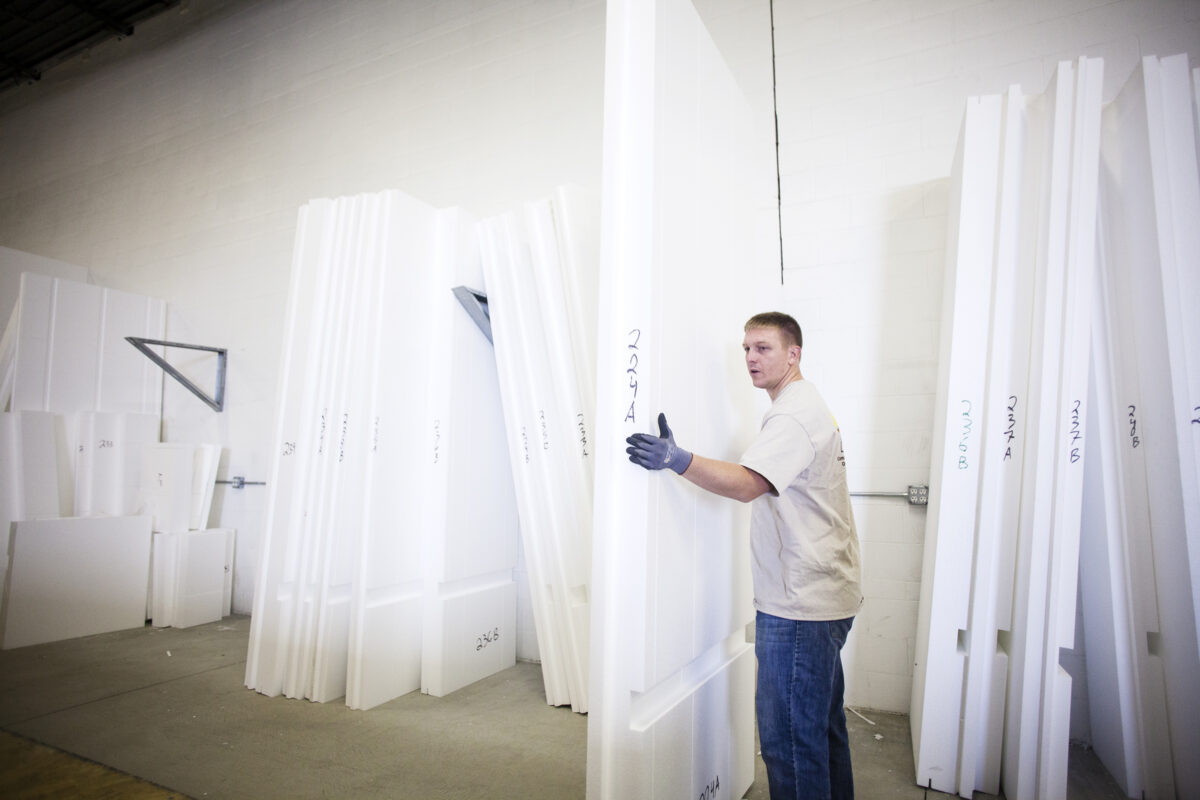
Kyle Tolman prepares a foam wall for assembly on Friday, May 22, 2015 at the EpikWalls in North Salt Lake. EpikWalls manufactures energy efficient prefabricated foam walls. The walls will be installed for a new Advanced Spinal Rehab in Layton. Ashley Franscell Detrick/Special to the Standard-Examiner
EpikWalls co-owner Ryan Garrett describes the company’s products as a patent-pending exterior wall system incorporating recycled steel framing and dense foam.
This makes the walls lighter, stronger and more fire resistant, insect resistant and more energy efficient than traditional framing.
EpikWalls started in September 2013 and currently has four full-time staff. When necessary, company officials hire a number of people to help with manufacturing and installation.
At its facility, EpikWalls takes plans, designs walls, cuts the products and ships them to the location.
Because they are pre-manufactured, walls are formed and insulated in one step, which saves time.
Ashley Franscell Detrick
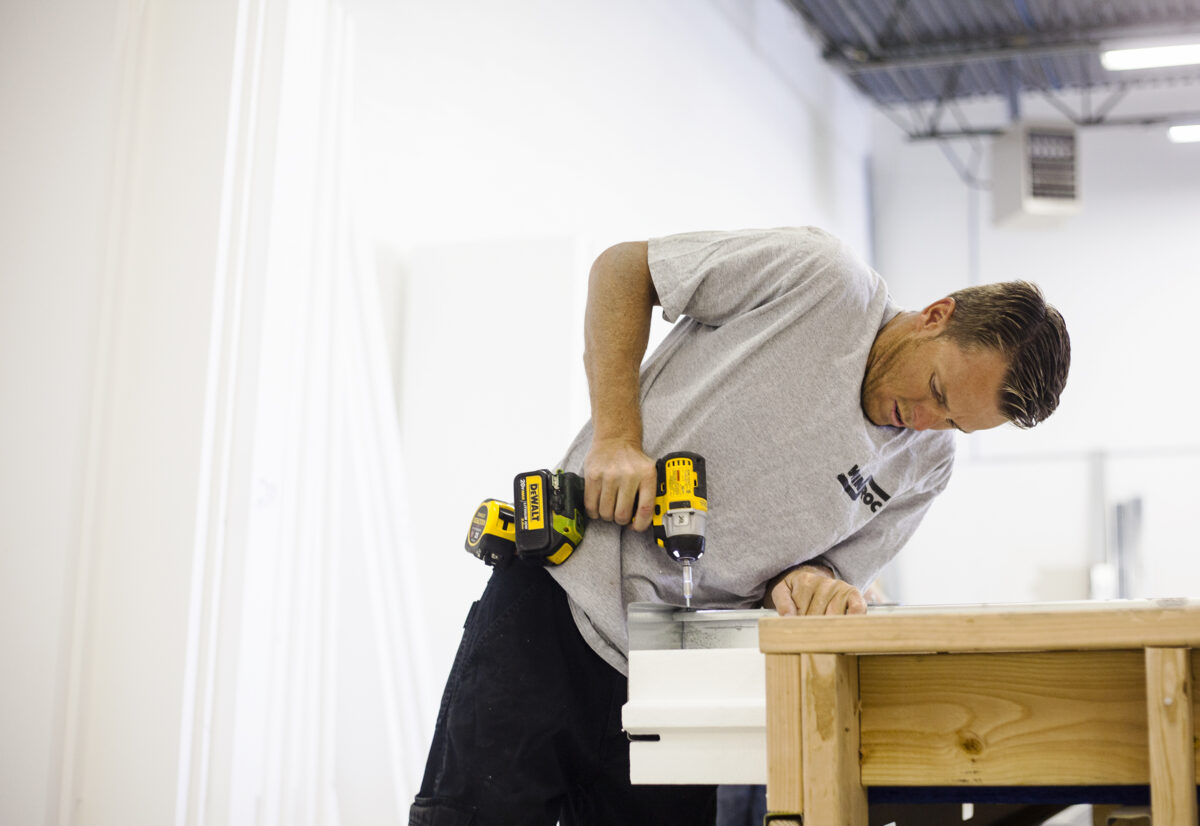
Josh Lee assembles a foam wall with steel studs on Friday, May 22, 2015 at the EpikWalls in North Salt Lake. EpikWalls manufactures energy efficient prefabricated foam walls. The walls will be installed for a new Advanced Spinal Rehab in Layton. Ashley Franscell Detrick/Special to the Standard-Examiner
Bowden and his wife had initial hesitations with using prefabricated materials because it conjured images of trailer parks.
“You can do any design you want to; we thought you had to only do a square building because it was manufactured, but oh, no,” Bowden says. “I think it’s a pretty building. It’s definitely not square.”
When finished, Bowden says the style of the facility will help transition from the commercial to residential areas.
“We’re trying to get away from the, ‘hey, let’s build a commercial building that looks like a commercial building,'” Bowden says.
Ashley Franscell Detrick
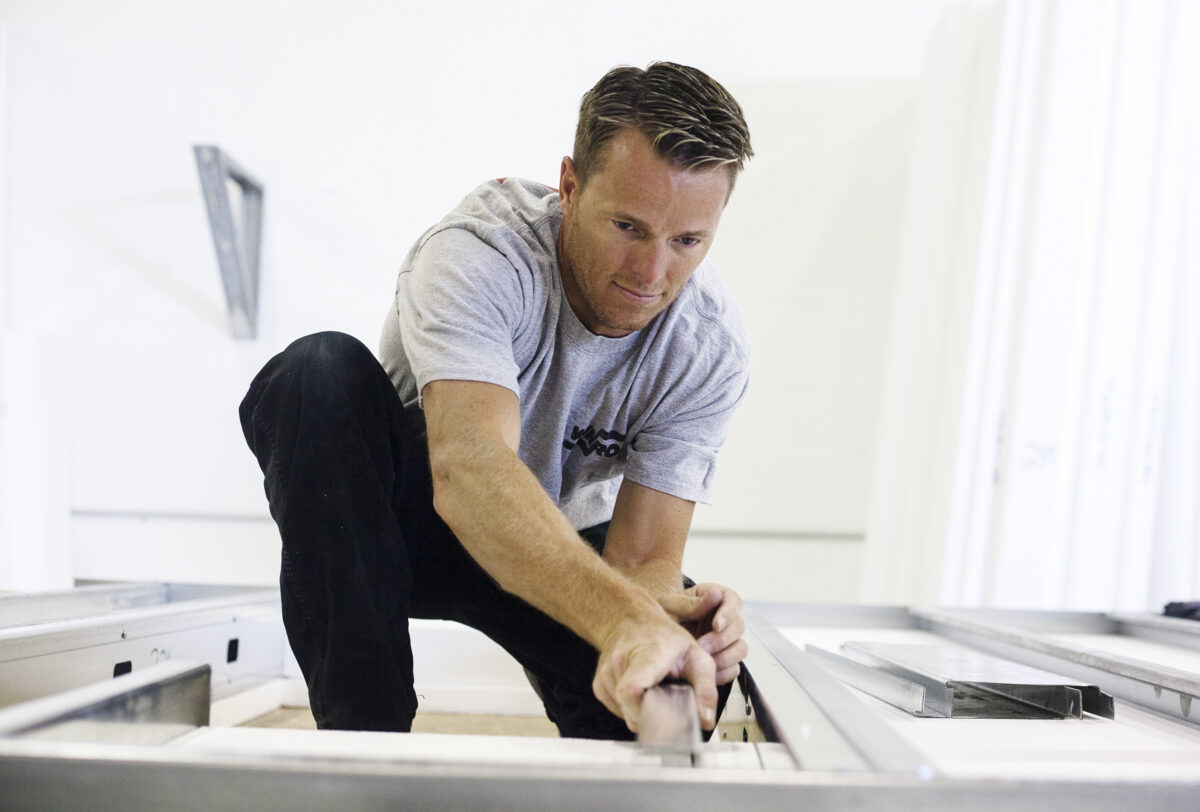
Josh Lee secures a steel stud to a foam wall during assembly on Friday, May 22, 2015 at the Epik Walls in North Salt Lake. EpikWalls manufactures energy efficient prefabricated foam walls. The walls will be installed for a new Advanced Spinal Rehab in Layton. Ashley Franscell Detrick/Special to the Standard-Examiner
Utah Homebuilders Association Executive Vice President Ross Ford says using premanufactured materials is a way to produce components in a controlled environment, which reduces waste and increases quality.
“I see this as kind of a growing trend,” Ford says. “I see it growing more and more around the country, I see people talking about how it can be used.”
People want tight, insulated homes, Ford says. Prefabricated materials cut construction time because while concrete is poured, the walls are under construction.
The goal, however, is to make it more mainstream. Not everyone knows how to use the materials yet.
Bowden came across the problem in the design phase of the Katie’s Place project. He says the architect turned out to be the biggest hurdle for the project.
In order to make it more mainstream, manufacturers are trying to drive the prices down where they can be competitive.
“So far, what we’ve seen is down,” Ford says. “It’s still not where it’s one-to-one competitive, but they’re still down and they will get there.”
Ashley Franscell Detrick
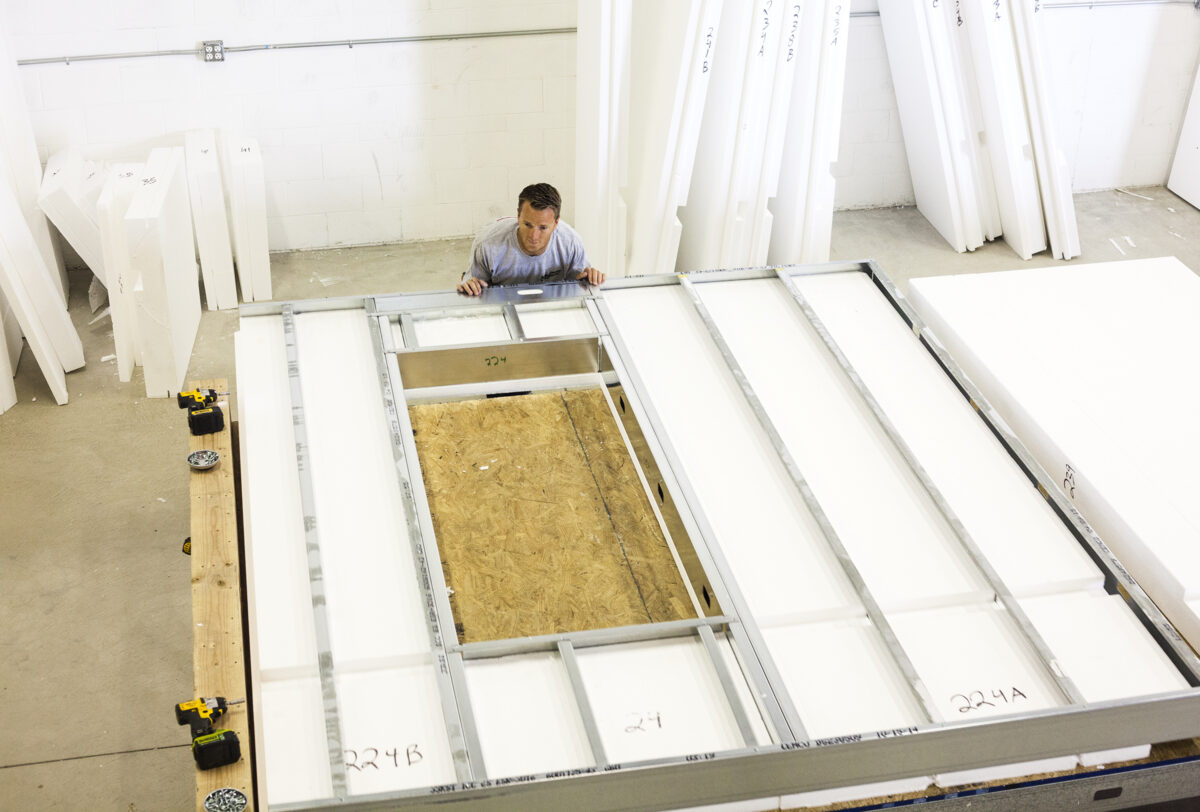
Josh Lee slides an assembled foam wall off a work table to be loaded into a truck on Friday, May 22, 2015 at the EpikWalls in North Salt Lake. EpikWalls manufactures energy efficient prefabricated foam walls. The walls will be installed for a new Advanced Spinal Rehab in Layton. Ashley Franscell Detrick/Special to the Standard-Examiner
For those interested in building with pre-manufactured materials, Ford recommends running the numbers, taking all the factors into account, to see if it is most cost effective for them.
It is certainly worth looking into the process and understanding how it works and how much it is worth for the customer, Ford says.
Others have taken an interest in the building materials. Garrett says during a trade mission to Brazil through the Utah Governor’s Office, the company discussed using the materials to build affordable housing for Brazilian citizens.
Such large projects would help lower the cost of producing the wall systems, making it as affordable as traditional building materials.
In addition to the possible project in Brazil, the company hopes to build Netzero communities, which stay off of the grid, using no electricity or gas from utility companies.
“For me, my passion is energy efficiency and in particular this will help establish energy efficient communities,” Garrett says. “Of all that I have been a part of, this is the only way to build a community of the future in an affordable way.”
The company is working with Tesla to build such a housing community in Southern Utah, which would capture solar energy and store it in a battery array.
Even at added expense, Garrett says using the energy efficient materials is worth it.
By adding $15 to their mortgage, homeowners are saving $90 a month on energy bills.
“If you spend a few more dollars making your home more efficient,” Garrett says, “then you will have to spend less on solar panels.”
Ashley Franscell Detrick
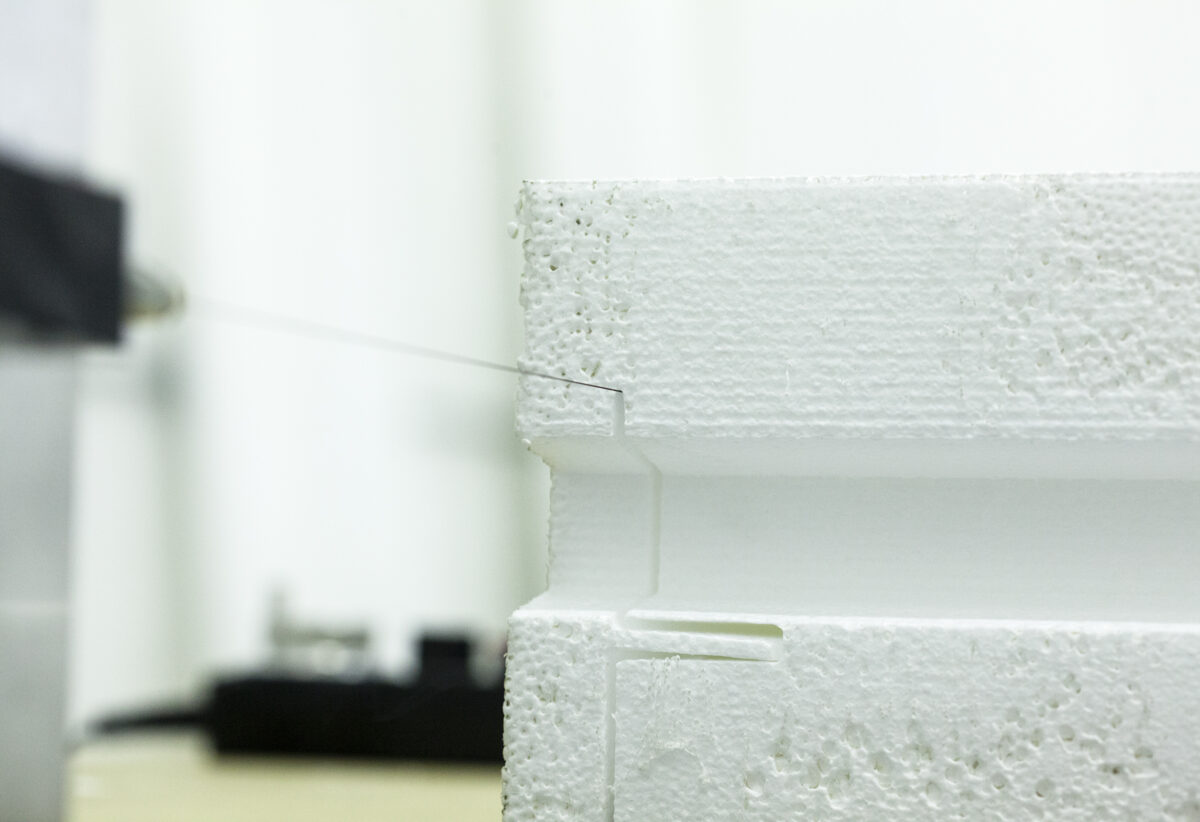
A large piece of foam is cut by a hot wire on Friday, May 22, 2015 at the Epik Walls in North Salt Lake. The hot wire cutting makes tract notches and space for electrical wiring. EpikWalls manufactures energy efficient prefabricated foam walls. The walls will be installed for a new Advanced Spinal Rehab in Layton. Ashley Franscell Detrick/Special to the Standard-Examiner
For Garrett, EpikWalls is a means to an end for the use of renewable energy.
“Think about all of the technological advancements we’ve had over the last 100 years,” Garrett says. “It’s sad that we’ve been building the same way.”
Garrett says there is more pollution in the air than ever before and fossil fuels are a finite resource.
Many people think they just need to add more solar panels after the fact, Garrett says, but it is more feasible to include energy efficiency.
Through building with energy-efficient materials, the use of energy alternatives is more feasible and more affordable, because the homes require less energy.
“To me, I’m passionate because we have to change,” Garrett says. “It’s not optional.”
It goes beyond keeping Salt Lake Valley pretty, he says.
“Save on energy, it saves on money and it saves our planet,” Garrett says. “It’s kind of a no-brainer, really.”
As of now, Garrett’s crew is finished with the first floor of Katie’s Place and is about ready to put up second floor. They hope to put up the next level in June and have occupancy by October.
“So far it’s been easier to build than the home we built,” Bowden says, “so far I’m perfectly happy.”
Contact Jesus Lopez Jr. at 801-625-4239 or jlopez@standard.net. Follow him on Twitter at @jesuslopezSE and like him on Facebook at facebook.com/JesusLopezSE.
Business

2026 Chrysler Pacifica Limited AWD: The minivan that continues to set the standard for family travel

Layton Hills Mall announces ‘Back to Community Fashion Experience’