
Western Weber Co. residents tout rural appeal, planners aim for balanced growth
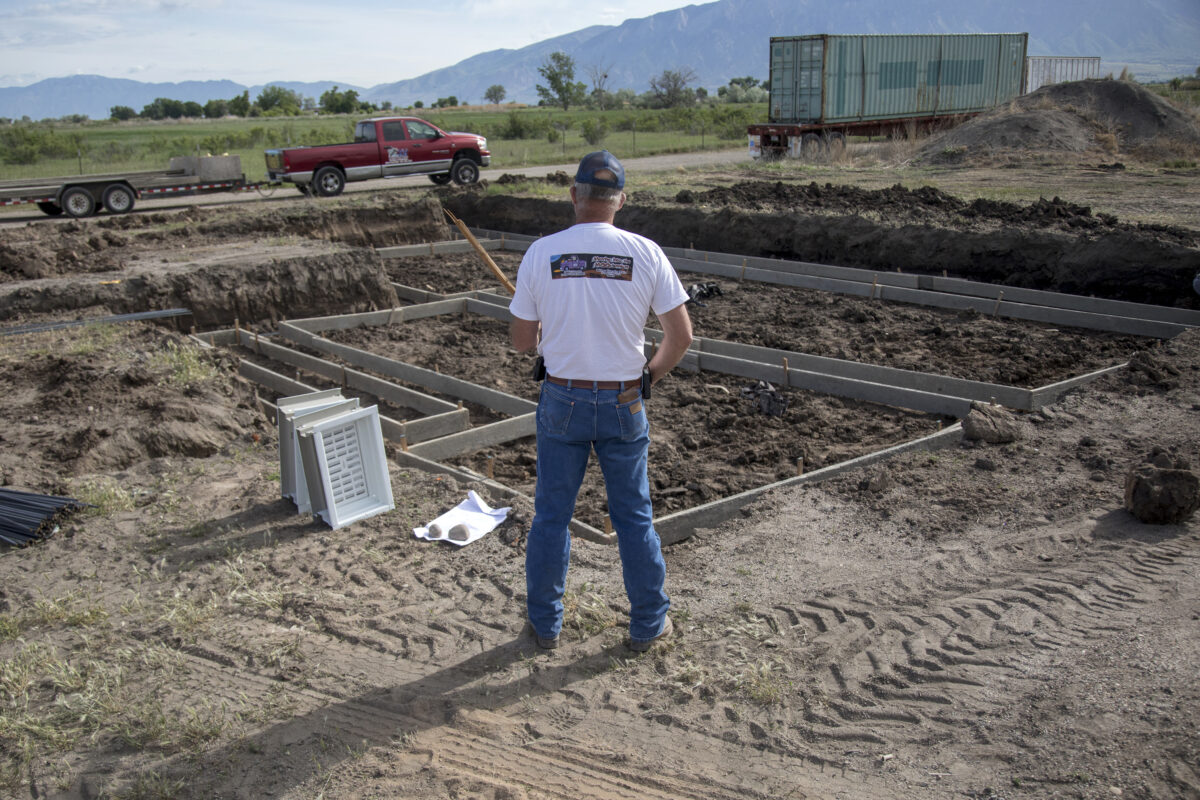
Ron LaRue looks over the location of his planned home near Warren in far western Weber County on Tuesday, May 23, 2018. LaRue believes that his property is far enough west that no one else will build around him soon, but he says development will come eventually.
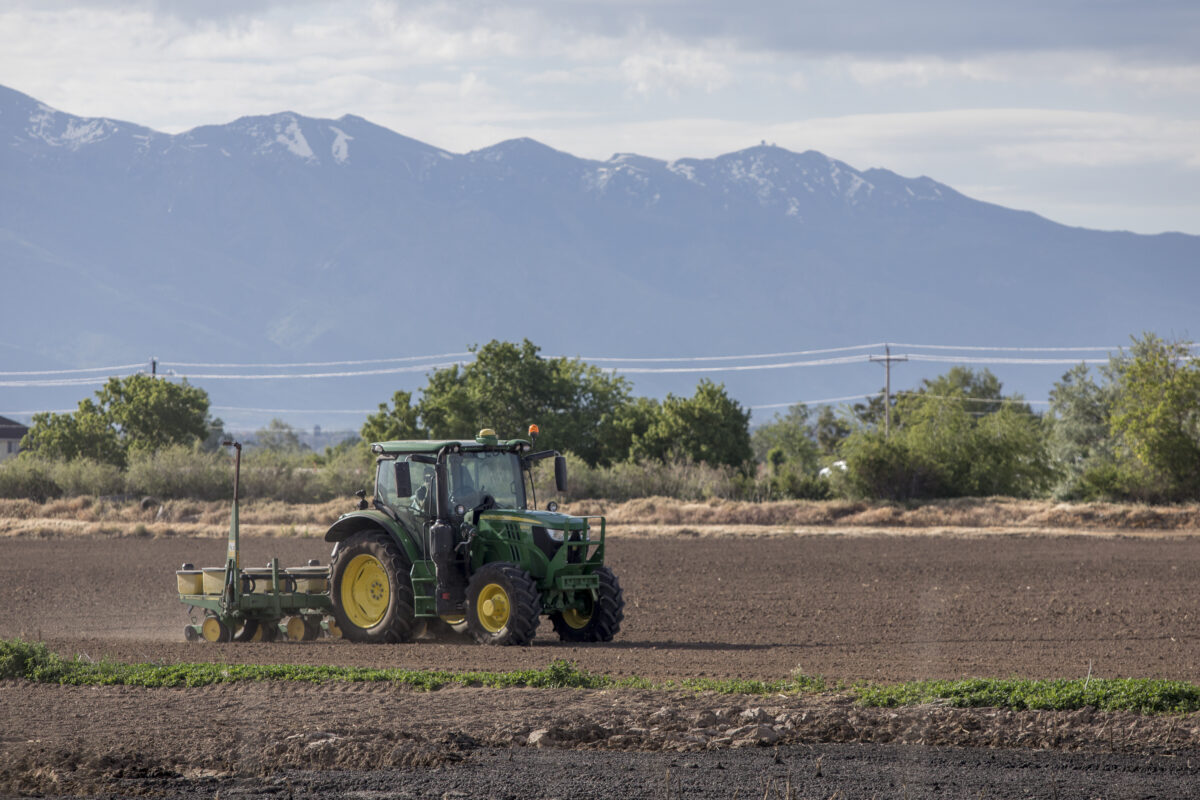
A farmer works a field near Warren in far western Weber County on Tuesday, May 23, 2018. The western edge of the county is still primarily rural, but multiple new housing developments are competed every year.
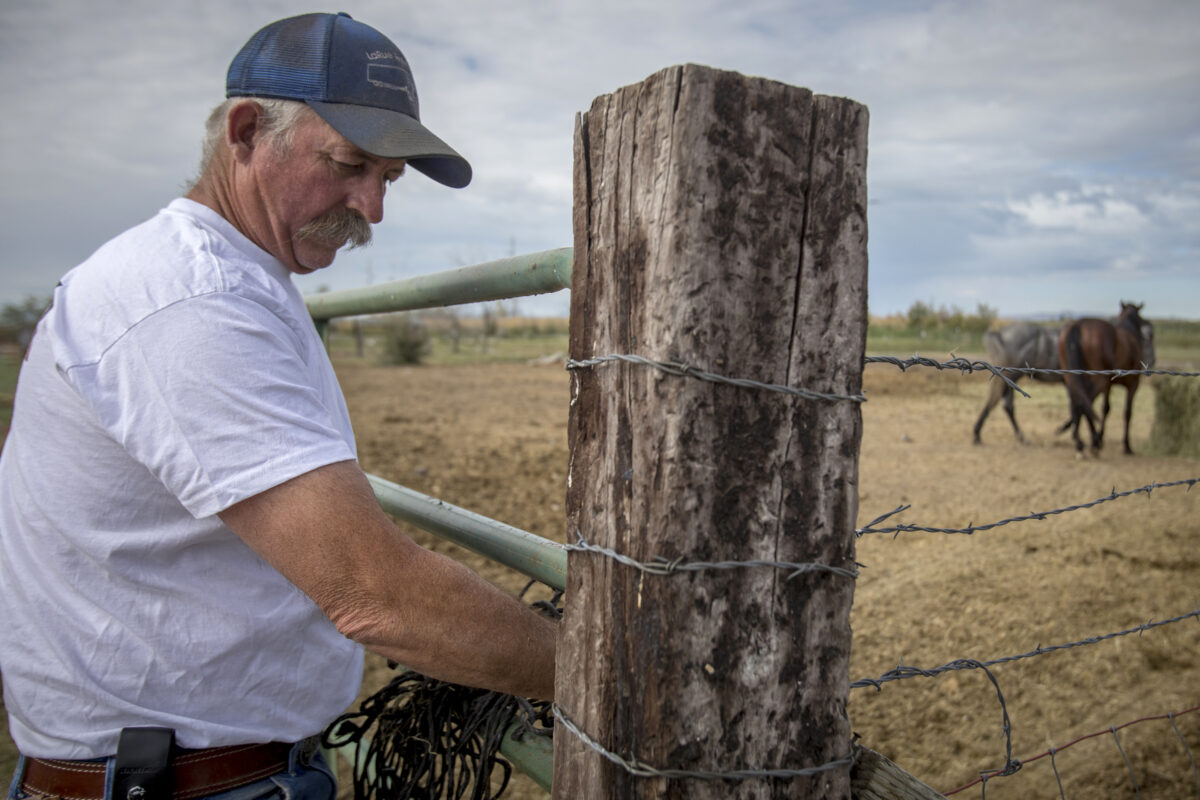
Ron LaRue feeds his family's horses on his property near Warren in far western Weber County on Tuesday, May 23, 2018. LaRue's land is on one of the furthest west streets in the county. There aren't currently any developments near him, but multiple new neighborhoods are being built around western Weber County. "The way things are going, I can see it getting pretty crowded," said LaRue.
WEST WEBER — For longtimers living in the rural expanses of western Weber County, the appeal of the area is simple.
“Country smell, open spaces, sunsets,” Ron Stewart said.
The agriculture roots appeal to his wife, Debie. “I like living among the farmers. It’s nice to see their old-fashioned lifestyle,” she said.
RELATED: Weber County ag boosters tout import of farming even as more development looms
RELATED: Weber Co. leaders consider change to safeguard rural areas from urbanization
With Weber County’s population growing and growing, like communities all up and down the Wasatch Front, developers are gobbling up more and more space that once served as farms to build homes and subdivisions. It’s got people like the Stewarts — who live in the West Weber area off West 1200 South — worried the rural charm of the area will soon go away.
“People all want to come out and that’s OK,” said Sherrie Hunting, who lives on a small farm in the Warren area. “But I want respect. … I would like our community kept intact.”
It’s a standing concern for many, but Weber County planners — mindful of the development pressures — have been working hard to come up with a policy fix that allows for balanced development that preserves the rural feel.
Story continues below photo.
BENJAMIN ZACK/Standard-Examiner
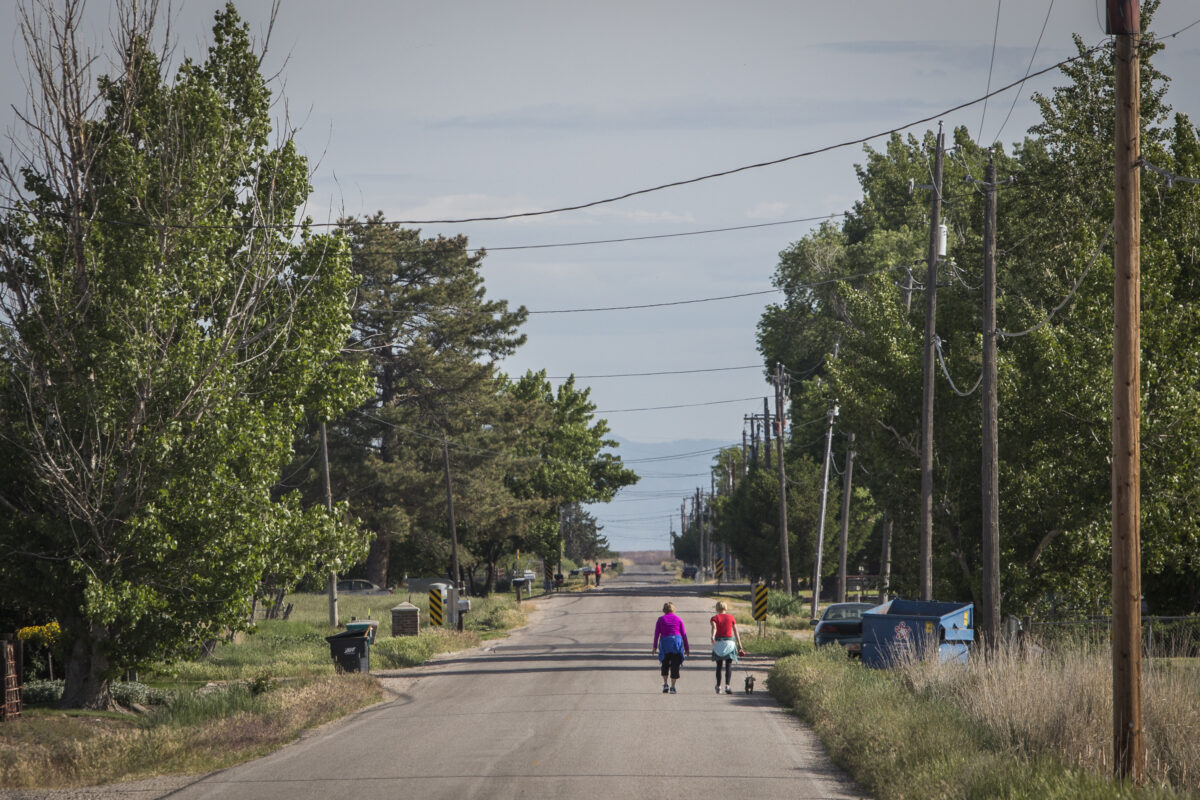
Dog walkers stroll along 5900 West in Warren on Tuesday, May 23, 2018. Weber County planners are trying to come up with guidelines for development in the western part of the county that will help maintain the rural feel while Utah’s population booms.
“I remain optimistic that an agrarian community can still exist in the future — despite imminent population growth,” Charles Ewert, principal planner in the Weber County Planning Division, said in an email.
Ewert’s office has held a series of meetings in the area — including a May 15 gathering at West Weber Elementary, where the Stewarts and Hunting spoke out — gathering input to help county planners in their efforts. Another meeting is set for Tuesday, May 29, as county planners fine-tune the feedback and search for common ground among the many voices.
Initially, the prevailing sentiment seemed to be “no development — keep it rural,” Ewert said in an email.
But many mindful property owners have rights to their land, how it’s developed, and he’s seen an evolution. Those living in the zone, he maintains, are increasingly open to “realistic solutions that might offer predictable rural or semi-rural outcomes whilst also honoring most, if not all, property rights.”
The public gathering Tuesday will be held at the Weber Center, at 2380 Washington Blvd. in Ogden, from 6 to 8 p.m.
FARMERS ‘NEED TO BE PROTECTED'
No doubt about it, changes — more and more homes — are coming to western Weber County, where some of the largest open expanses of land in the county remain, within relatively easy access to the I-15 corridor. Population estimates released just last week by the U.S. Census Bureau show that the highest rates of growth in Weber County are in the cities on the western fringes of the county’s population cluster, adjacent to unincorporated western Weber County.
RELATED: West Haven, western Weber Co. cities register fastest growth, new data shows
Ewert presented figures at the May 15 meeting underscoring the future development potential in the area. Development plans that emerged in 2016 and 2017, he said, would potentially lead to 290 new residential lots and 1,318 more people in unincorporated western Weber County. Plans are in the works to develop perhaps 310 more lots.
If such development occurs, he told the 60 or so people on hand, the population in unincorporated western Weber County could grow from 5,695, the 2015 estimate, to 22,495 in 2065, more than the projections of the Kem C. Gardner Policy Institute at the University of Utah. The institute foresees 60 percent growth in Weber County through 2065, which would result in a more modest population increase in the area, to 9,112, Ewert noted.
Such potential has already been the cause of handwringing and outcries among western Weber County residents.
A group of Taylor-area residents, for instance, petitioned county leaders late last year, hoping to put a check on a 180-housing development near their homes. Their effort failed because zoning rules allowed for the development, but county officials have since tweaked the guidelines, making developers maintain larger swaths of open land in their subdivisions, space for potential agricultural use.
RELATED: Weber County 180-unit housing plan sparks ire, concern about overdevelopment
RELATED: Rural Weber County residents bristle at development, but growth is coming
Farmers “need to be protected and they need to know they’re protected,” Hunting told Ewert. “There needs to be some protections for the farmers through the county, I feel.”
Part of her concern stems from newcomers who move to the area, aware of its agricultural roots, but then try to transform it into suburbia. Farmers “shouldn’t have to change their lifestyles,” Hunting said.
Kattie Nipko, who also lives on a small Warren-area farm, echoed that, speaking after Ewert’s presentation. The manure used to fertilize area fields that sometimes falls from tractors as it’s hauled from one site to another doesn’t even bother her.
“We’re used to the farm tractors, the roads caked with manure,” she said. Her family’s operation may be small, but she’d like to pass it on to her kids.
Story continues below photo.
BENJAMIN ZACK/Standard-Examiner
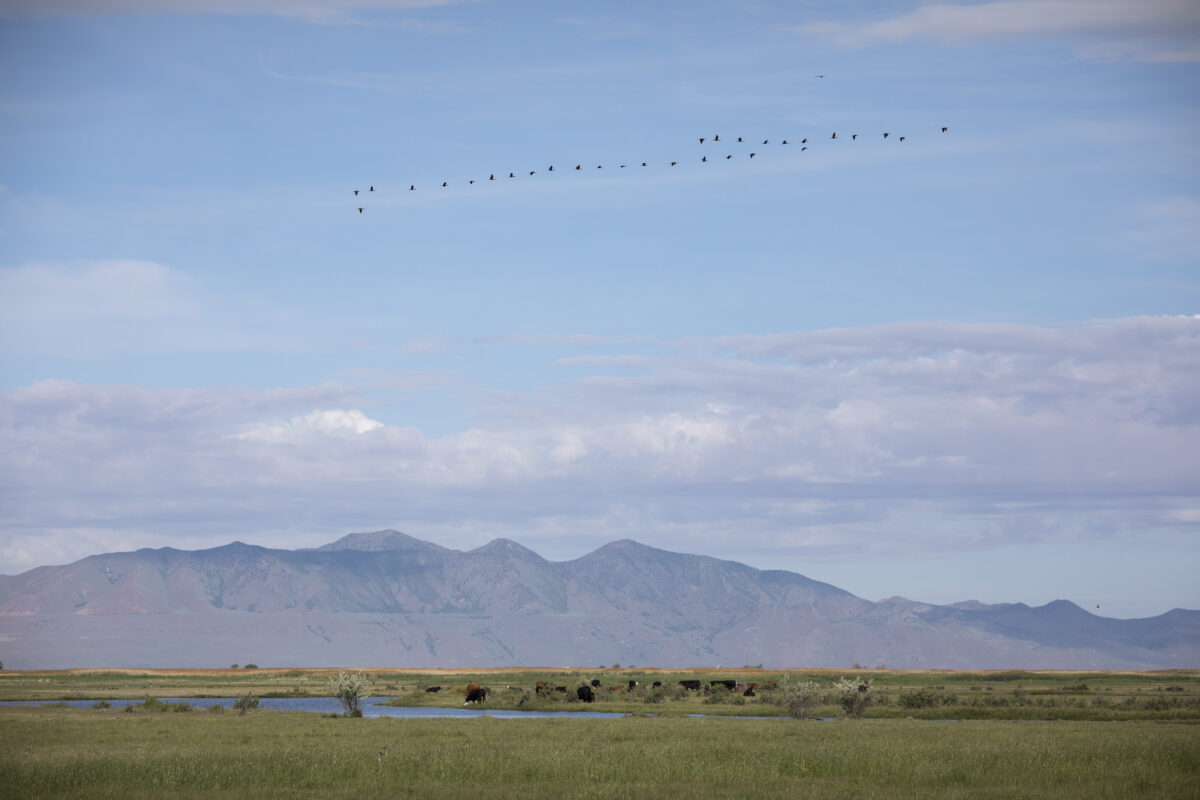
Cattle graze and birds fly by near the northeastern edge of the Great Salt Lake in far western Weber County on Tuesday, May 23, 2018.
For Travis Meyerhoffer, another resident in the zone, the nice thing about western Weber County is the relative solitude. “I like being away from people. … In my opinion, the more people, the more problems,” he said.
Officials haven’t pinpointed a precise timeline for implementation of any policy change. But they seem mindful that the time to act is now.
Development has “happened so quickly and we’re just wanting to make sure we get on top of it,” said Rick Grover, director of the Weber County Planning Division.
Whatever comes of the meetings, though, Ewert said county planners, as they chart forward action, aim to follow the lead of residents in the area.
“We’re here to listen. We’re here to help build your community. We’re not here to build your community for you,” Ewert said.
Contact reporter Tim Vandenack at tvandenack@standard.net, follow him on Twitter at @timvandenack or like him on Facebook at facebook.com/timvandenackreporter.