New organ retrieval technique adding to donation options in Utah
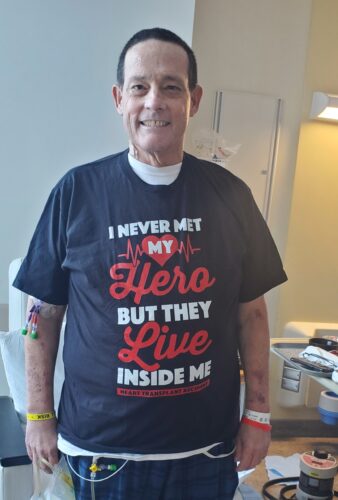
Photo supplied, University of Utah Health
Jim Calentino poses in this undated photo after recovering from a trio of organ donation surgeries to replace his heart, liver and kidney.SALT LAKE CITY — Last December, Jim Calentino of Idaho received a new heart, liver and kidney through a unique way of acquiring donor organs, a step doctors say will help to reduce the shortage in life-saving donations.
Traditionally, organs were retrieved after a patient was declared brain dead. Now, organs can be taken through a process called “donation after circulatory death,” or DCD.
DCD is when a person has suffered irreversible brain an injury and may be near death but does not meet the three criteria of brain death that includes coma, not breathing independently and not responding to certain reflexes, said Dr. Craig Selzman, surgical director of the heart transplant program at University of Utah Health. A person who suffers brain death usually dies a natural death. In the case of DCD, the family agrees to stop all treatment options.
“One of our main problems is that more people need organs than we have organs available, so we have to adapt to the problem. So this is something new that allows us to have more organs made available for patients who need them,” Selzman said.
Calentino started having heart problems in 2000. Last October, after an exam, he was admitted to the hospital and placed on a heart machine that helped relieve some of the stress on the right side of his heart. He was placed on the transplant list, but over the course of six weeks, his liver and kidneys began failing, so the need for a triple transplant — the first in Utah using DCD — was urgent.
“On Dec. 8, we found a donor and I had the surgery for the heart and liver and the next day the kidney,” he said. “It’s truly a remarkable procedure. I am very grateful for this opportunity. One of the biggest struggles I had was knowing that in order for my life to continue someone else would have to lose their life and another family would have to go through sorrow.”
Valentino said he talked a lot with his priest and his family and finally came to grips with the whole process.
“It’s God’s plan,” he said. “It’s still a little unsettling, but I’m grateful for this opportunity and want to live my life to the fullest and make the donor family proud.”
April is National Donate Life Month, and Mark Dixon, director of public education and public relations at Donor Connect, said it’s an opportunity to shine a spotlight on the need for organ, eye and tissue donation.
“There are 100,000 people in need on the list, and in Utah it’s close to 1,000,” he said. “If we can expand just a little bit the number of people who could potentially be organ donors, it could really make a difference.”
Dixon said it’s great to check “yes” on your driver’s license to be designated as a donor, but because renewal takes place every eight years, he encourages people to go to yesutah.org or donorconnect.life and place their name on the list.
“That way you are making your wishes known. And heaven forbid when someone ends up in a devastating situation, that decision has already been made,” he said.