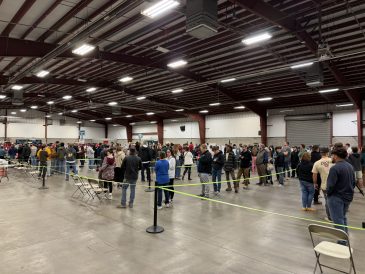
Red Cross reports record need for blood; Utah donors wanted
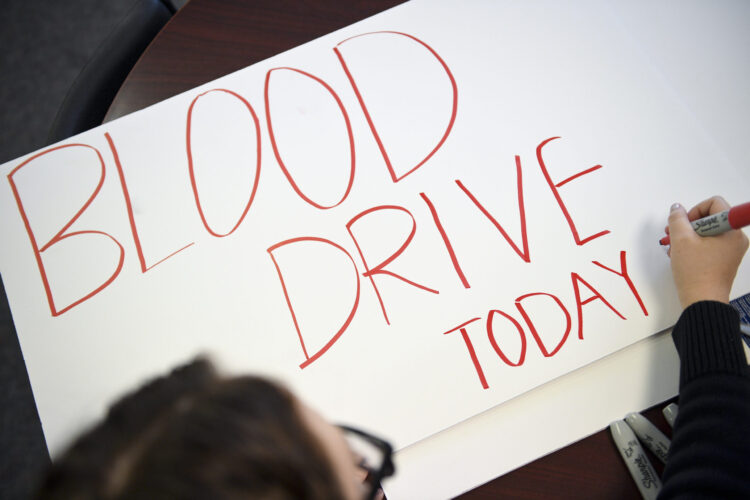
Isaac Hale, Daily Herald file photo
Maeser Prep senior Cathy Gadd begins working on a poster, which she'll use at the blood drive she's organizing, on Thursday, Feb. 1, 2018, at the American Red Cross Blood Donation Center in Orem.A summer dip in giving blood and numerous cancellations of blood drives due to natural disasters has left the American Red Cross needing an additional 10,000 donations — at a minimum — during October to offset a critical shortage.
“A convergence of multiple factors has resulted in this national blood shortage. The only solution is to increase the number of donors,” said Heidi Ruster, chief executive officer of the American Red Cross Utah/Nevada Region, in a press release. “The availability of transfusable blood is vital to saving lives. If more people donate, we can end this blood shortage.”
The last time the Red Cross declared a national blood emergency was in January 2022, which was reported to be the worst blood shortage in over a decade. At present, according to the humanitarian organization, the demand for blood in hospitals is outstripping the rate of incoming donations, resulting in a 25% decrease in the Red Cross’ national blood supply in August alone.
“Our deficit of approximately 30,000 donations last month leaves us struggling to meet the nationwide demand for lifesaving blood products,” Ruster said. “Each week through next month, we need an additional 10,000 people nationwide to visit a local blood drive or donation center and give blood to help those in Utah and across the country.”
Utah Valley Hospital reports that supplies are thin but haven’t impacted patient care to date.
While all blood types are needed, there is a critical need for Type O and platelet donors. Type O-positive is the most frequently transfused blood type, while Type O-negative serves as the universal donor, often used in emergencies when the patient’s blood type cannot be quickly determined.
“Transfusable blood can only be obtained through donations,” said Dr. Walter Kelley, medical director for the Rocky Mountain Division of the American Red Cross. “Despite 62% of the population being eligible to donate, only about 3% does so. We depend on the generosity of donors to ensure blood is available when needed.”
According to Red Cross data, before the COVID-19 pandemic, more than 800,000 blood donations were made at blood drives hosted by businesses. Last year, the Red Cross saw only about 500,000 blood donations at these locations — a nearly 40% drop from pre-pandemic levels.
Utah residents have a number of blood drives coming up. To find dates, available timeslots and donor locations, visit https://rcblood.org/457tosE. Potential donors may also call 1-800-733-2767.
Local News
Celebrating 50 Years: Holy Cross Hospital-Davis invites public to celebrate hospital’s 50th birthday

Senator-elect Tamara Tran submits mayoral resignation letter; interim Kaysville mayor to be appointed next month