Liquid cremation may be coming to Utah
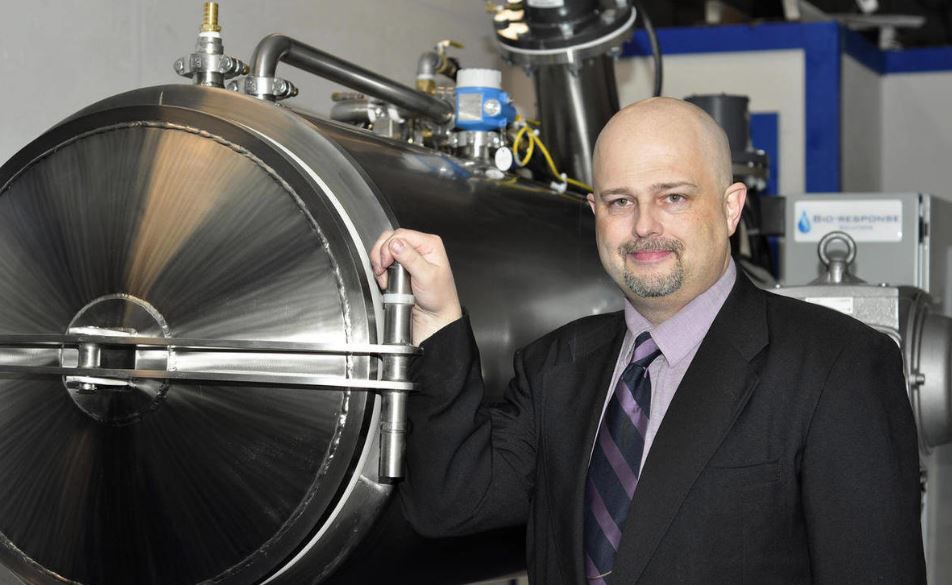
In this Feb. 14, 2011, photo provided by Edwards Funeral Home in Columbus, Ohio, Jeff Edwards stands next to an alkaline hydrolysis machine that uses lye and heat to dissolve a body as an alternative to burial or cremation.
Will you choose burial, cremation or alkaline hydrolysis?
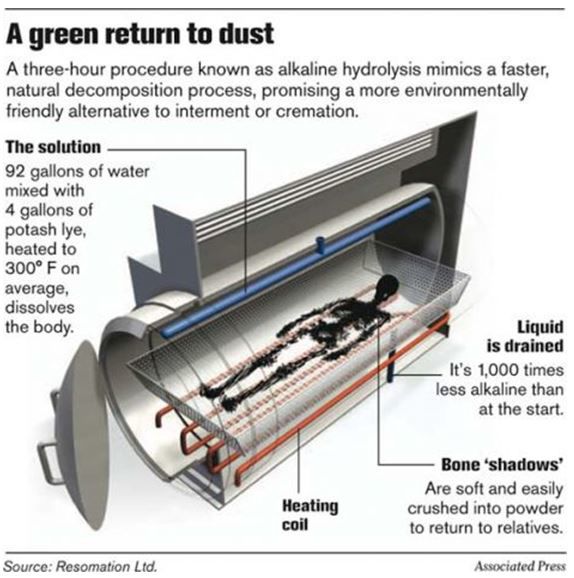
The third option is a process of dissolving human remains inside a sealed tank with lye, water, heat and pressure. Relatives receive an urn of the remains, consisting of powdered bone material.
The liquid left over is disposed of in the sewer system.
RELATED: LDS tradition may hamper cremation scattering service in Utah
More than a dozen states have legalized and set up a regulatory process for the hydrolysis method. The Utah Legislature will consider a bill in 2018 to allow mortuaries to begin offering the service here.
“It is a new, greener way of disposing of human remains,” said Rep. Stephen Handy, R-Layton, who first introduced the bill in the 2017 legislative session.
“It was a hard bill to explain and there was a lot of guffawing and jokes about it, kind of a black humor,” Handy said, adding that lawmakers ran out of time to pass it this year.
The Utah Funeral Directors Association asked Handy to sponsor the bill because a few members are interested in adding the product line, Handy said.
“They want to be sure that it’s in the state code rather than have two guys in their garage do this,” he said.
Story continues below photo.
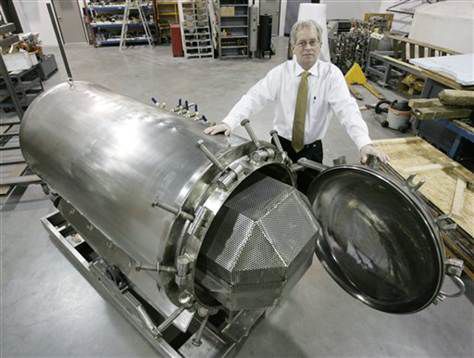
AP/Michael Conroy
In this 2008 photo, BioSafe Engineering President Brad Crain stands behind one of the company’s steel cylinders. The Brownsburg, Indiana, company makes products used in the alkaline hydrolysis process of disposing of human remains.
Alkaline hydrolysis was developed initially as an efficient way to dispose of animal remains and human cadavers used by medical schools, according to documents from the National Center for Biotechnology Information. The process is said to be effective in removing pathogens so the liquid can be safely discarded.
“Someone will say, ‘They’re flushing grandma down the drain,’ but from what I have seen demonstrated, the effluent and the liquid is sterile,” said Joshua Slocum, a consumer watchdog. “This does not make it dangerous or wrong. For people who are put off by this, consider what is happening at the traditional funeral home. They are already flushing blood and bodily fluids down the drain. These are the basic facts.”
Alkaline hydrolysis — also referred to as resomation, bio-cremation, flameless cremation or water cremation — is marketed as a more environmentally conscious process.
Resomation Ltd. of Leeds, England, manufactures hydrolysis machines. It says the devices use less energy, produce less heat and no airborne emissions.
Slocum, executive director of the Burlington, Vermont-based Funeral Consumers Alliance, said the nonprofit organization does not have a formal policy on hydrolysis but has been studying it.
“I’m convinced it’s a good idea,” Slocum said. “I am skeptical of claims of the funeral industry, but I am convinced this is a less energy-intensive and less polluting method of laying the dead to rest.”
Slocum said the group advocates that families should be able to choose whatever funeral process fits their budget, values and tastes.
For the first time, cremation is now more popular than coffin burials nationwide, Slocum said.
Story continues below graphic.
[imageunplugged=Alkaline hydrolysis process explained]
Emotional aversion to hydrolysis when someone first hears about it should not be surprising, Slocum said, noting cremation drew heavy opposition at first.
“The very idea of burning a body was so repugnant and anti-Christian, there were demonstrations outside crematories,” he said.
Slocum said he had no information about cost comparisons between hydrolysis and cremation, especially because the former is not yet widespread.
Handy said he understands a funeral operator in Tooele County wants to branch into hydrolysis. Messages left with the general managers of two major mortuary companies in Ogden, Lindquist and Myers were not immediately returned.
Handy said he expects little controversy when his bill comes up in the Legislature next winter.
“It should sail through, with a lot of laughs,” he said.
You can reach reporter Mark Shenefelt at mshenefelt@standard.net or 801 625-4224. Follow him on Twitter at @mshenefelt and like him on Facebook at facebook.com/SEmarkshenefelt.