Wasatch Integrated Waste Management District receives $3.4 million EPA grant for program expansion

Photo supplied, Wasatch Integrated Waste Management District
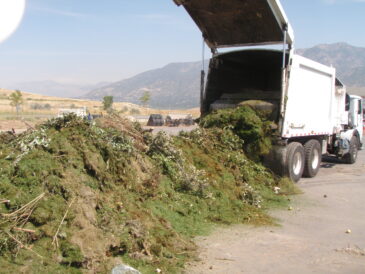
This undated photo shows the delivery of green waste at Wasatch Integrated Waste Management District's composting facility in Davis County. An EPA grant, announced on Monday, Dec. 15, 2025, will allow the facility to be expanded while also expanding the green waste collection program to more cities.DAVIS COUNTY — The Wasatch Integrated Waste Management District’s plans to upgrade its organics collection program got a huge boost this week.
On Monday, an EPA press release announced that the Wasatch Integrated Waste Management District was one of the recipients in the latest round of Solid Waste Infrastructure for Recycling (SWIFR) grants. Wasatch Integrated Waste Management District was awarded a $3.4 million grant.
“I am proud to announce Region 8’s selectees of the Solid Waste Infrastructure for Recycling grants, emphasizing our commitment to fostering local economic growth,” EPA Regional Administrator Cyrus Western said in the press release. “By empowering local governments with the resources they need, we are enhancing recycling infrastructure while creating valuable jobs and proving that environmental protection and economic growth go hand-in-hand.”
Rep. Blake Moore (R-UT-01) said he was also happy to hear the news.
“I am grateful for the EPA’s commitment to empowering local governments like Davis County to lead with innovation in all aspects — even our waste,” he said in the release. “This grant will help the Wasatch Integrated Waste Management District invest in our community through enhanced compost education and collection, and I look forward to seeing this grant’s positive impact throughout Davis County.”
In an email to the Standard-Examiner Tuesday, an EPA Region 8 spokesperson said the SWIFR grants help to invest in local communities.
“SWIFR grants will assist local waste management authorities by supporting improvements to local post-consumer materials management, including municipal recycling programs, and assisting local waste management authorities in making improvements to local waste management systems,” the spokesperson said. “The SWIFR grant program provides a critical opportunity to fund a range of high-impact projects to increase recycling, reduce contamination, and promote a circular economy for materials by making much-needed investments in solid waste management infrastructure. This program is a great example of Cooperative Federalism in action as it empowers local governments with the technical assistance and resources they need to make effective decisions about their waste management programs that are tailored to their unique circumstances.”
Preston Lee, executive director of Wasatch Integrated Waste Management District, told the Standard-Examiner Tuesday they have some big plans for the grant.
“The project that we are planning on taking on is the Wasatch Compost Facility and Program Expansion Project,” he said. “This project has five goals to it — the first is that we are going to expand the aerated static pile composting facility that we have onsite at Davis Landfill. That expansion will allow us to take up to 49,000 tons of organics per year. That is an increase of 20,000 tons per year of operation.”
He said the grant would also be used to expand curbside organics composting services.
“We are hoping that we can expand into new cities that do not have current collections for curbside organics,” he said.
Lee said the third major task is putting together a contamination detection pilot program together.
“Currently, the cities that are located within our district contract with independent haulers to install cameras and A.I. technologies onto those collection trucks to detect contamination in curbside organics receptacles,” he said. “Wasatch will combine the contamination detection technologies with targeted outreach and content that we are planning on distributing to the households that have frequent contamination of their green waste stream.”
He said the grant funds would also go towards outreach and education measures.
“We are going to distribute education and outreach materials to communities where service is introduced or expands as well as to enhance education and outreach in all existing cities that have green waste collection,” he said.
Finally, Lee said they will establish baseline waste diversion rates and material characterization and report their findings back to the EPA.
He said the projects will likely take through sometime in 2028 to fully implement.
“We have been putting in applications for the recycling grants, it seems like, for the last five years,” he said. “We are ecstatic with the results. We’re looking forward to implementing this project. We expect that this project will expand, not only our green waste and diversion programs, but will also help in reducing both ammonia and volatile organic compounds, called VOCs, from emissions into the air.”