Davis County Commissioner John Crofts explains hesitation over ALPR tech-related MOU
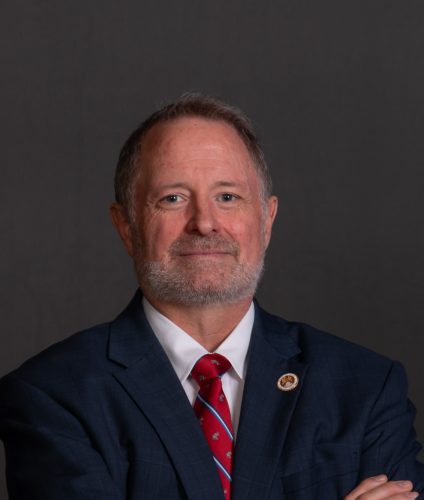
Davis County Commissioner John Crofts. (Photo supplied, Davis County)
FARMINGTON – Following the Davis County Commission meeting Tuesday in which the commission voted 2-1 in favor of a Memorandum of Understanding related to automatic license plate recognition technology, Commissioner John Crofts, who voted against it, elaborated on his decision to the Standard-Examiner.
“I really think that it’s important that we guard everybody’s civil rights properly, and I have additional questions,” he said. “I would have been fine with us tabling it, meaning that we put it off for a week or whatever. I went through it and read everything, and I read the Memorandum of Understanding, and I recognize that we have really good law enforcement in Utah, not just in Davis County, but with other participating agencies. … The tightrope that I want to be careful is that we don’t violate people’s civil rights or that it’s not abused. That was my concern.”
According to the MOU, ALPR systems use cameras to capture images of license plates, which are converted into a text file and compared against a “hot list.”
“This system is only used by law enforcement as authorized by Utah Code § 41-6a-2003, for example, part of an active criminal investigation, to apprehend an individual with an outstanding warrant, to locate a missing or endangered person, or to locate a stolen vehicle,” the MOU reads.
Governmental entities that enter into the MOU, referred to as “Agency Parties,” “seek to share Plate Data and Hot List information with each governmental entity executing a duplicate of this MOU.”
The MOU goes on to say that access to any other agency party’s plate data and hot list information is restricted to “authorized employees who have an approved login and password.”
The full Memorandum of Understanding is included in the agenda packet for Tuesday’s meeting at daviscountyutah.gov.
In explaining why he thought ALPR technology had suddenly surged as a controversial topic, Crofts told the Standard-Examiner he thinks there’s more distrust or concern from the public related to privacy.
“There’s always that question of security and liberty, and so I think that people are concerned about making sure that government doesn’t overstep,” he said.
As far as what it would take for him to get to a yes on such a vote, Crofts said he wanted to learn more about it.
“I’m not the liaison to the sheriff’s office, so when our packet came out on Friday, that was the first I’d heard about it,” he said.
He noted the importance of having “enough guardrails up” so that there aren’t abuses and noted cases of alleged abuse.
“I think that a lot of times government needs to understand things better,” he said. “You just don’t give 100% confidence to people and if they say, ‘Oh, yes, this is OK.’ You still have to verify and research it, and that’s elected leaders’ responsibilities. We’re supposed to do that. We’re supposed to make good decisions.”
During the county commission meeting, Davis County Sheriff Kelly Sparks said the sheriff’s office currently has some license plate reader cameras but they aren’t “deployed statically.” Davis County Sheriff’s Office Chief Deputy Arnold Butcher said there were four.
Crofts said that could change.
“We could increase our cameras significantly,” he said. “So now it doesn’t seem like a big deal, but is this the camel’s nose in the tent?”
Contact Standard-Examiner editor Ryan Comer at rcomer@standard.net.
Local News

WSU, USU collect more than 500 units of blood combined in 23rd annual American Red Cross Blood Battle
Winter is coming: Powder Mountain Ski Resort touts new programming, announces opening date for ’26-’27 ski season