Monument protection a priority for new Davis County Surveyor Jeremiah Cunningham
-
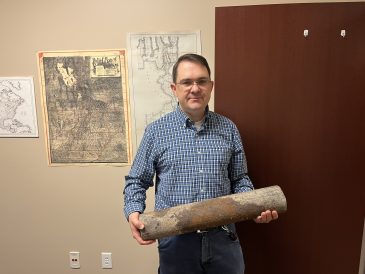
- Davis County Surveyor Jeremiah Cunningham holds a monument in his office at the Davis County Administrative Building on Tuesday, Aug. 25, 2026. (Ryan Comer, Standard-Examiner)
-
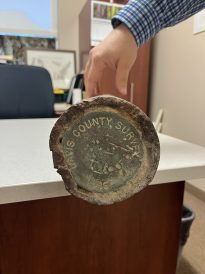
- Davis County Surveyor Jeremiah Cunningham holds a monument in his office at the Davis County Administrative Building on Tuesday, Aug. 25, 2026. (Ryan Comer, Standard-Examiner)
-
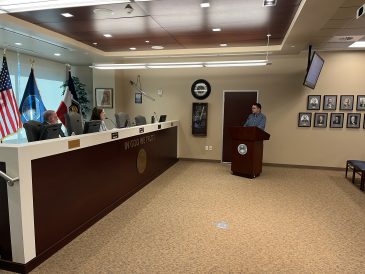
- Davis County Surveyor Jeremiah Cunningham presents to Davis County Commission members Lorene Kamalu and John Crofts at the Davis County Administrative Building on Tuesday, Aug. 25, 2026. (Ryan Comer, Standard-Examiner)
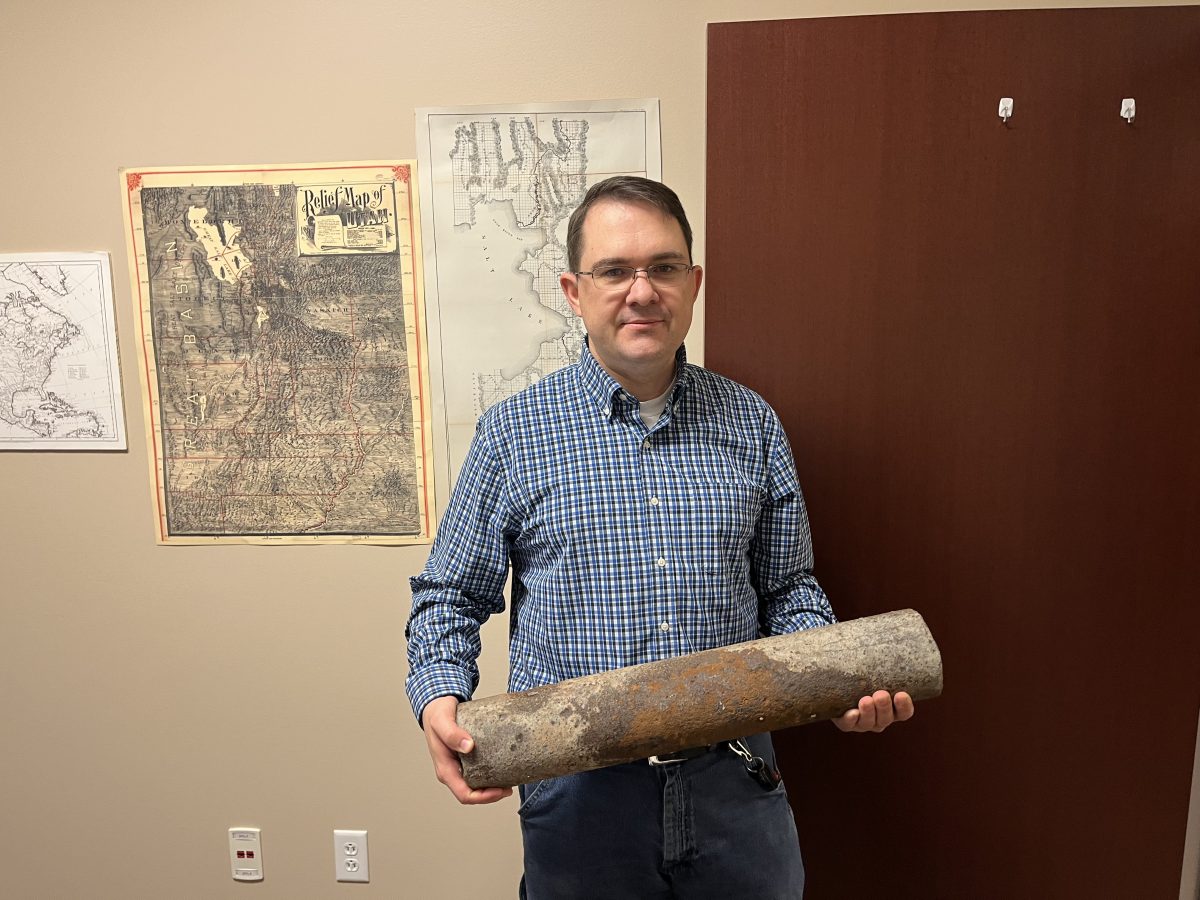
Davis County Surveyor Jeremiah Cunningham holds a monument in his office at the Davis County Administrative Building on Tuesday, Aug. 25, 2026. (Ryan Comer, Standard-Examiner)
FARMINGTON – According to soon-to-be Davis County Surveyor Jeremiah Cunningham, the surveyor’s office found out just last week that there was work being done along Antelope Drive that affected five monuments.
By the time the Surveyor’s Office had been told, the monuments had been torn out.
“How many thousands of people tie their property rights to those five monuments? I can’t tell you,” Cunningham said.
There’s enough information to identify where the monuments need to be replaced, Cunningham noted, but protection of monuments is an issue he takes seriously.
Cunningham called monument protection one of the first charges a county surveyor has.
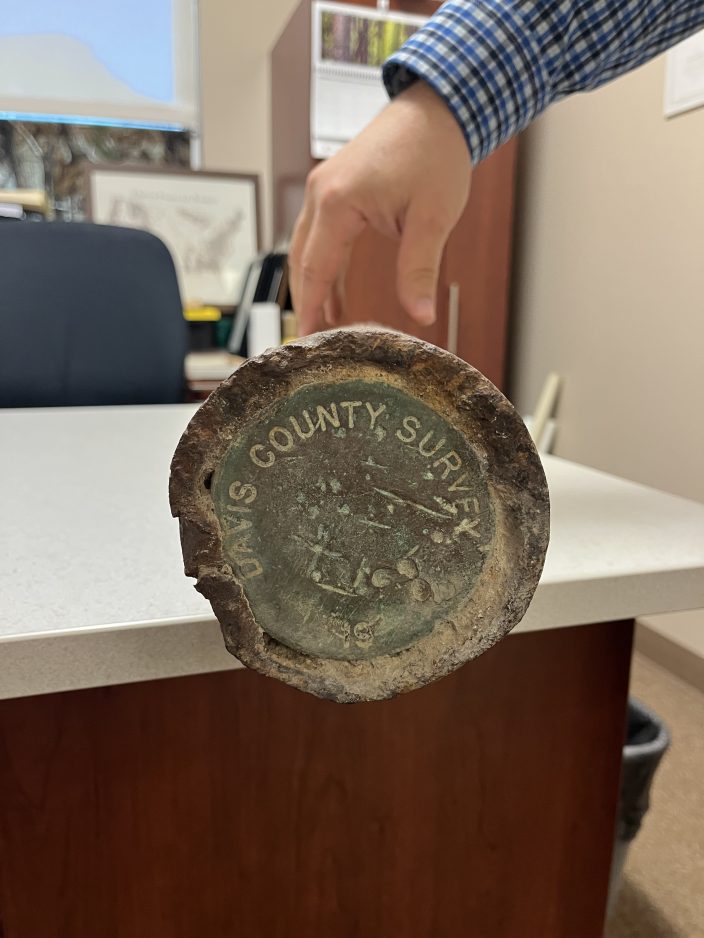
Davis County Surveyor Jeremiah Cunningham holds a monument in his office at the Davis County Administrative Building on Tuesday, Aug. 25, 2026. (Ryan Comer, Standard-Examiner)
To that end, Cunningham said there is help: monument encroachment permits.
“If there is a physical monument representing a corner, and construction is occurring within 30 feet of it … then the person doing the construction has to pull a permit,” he said. “That allows the county surveyor to locate the monument, reference the monument and make sure that if it’s damaged or removed, that it can be replaced in the correct spot.
“You can’t move the monuments. Property rights are tied to those monuments, so moving the monument could cause catastrophe in a subdivision or between two landowners who have descriptions that tie to that monument. It doesn’t allow you to place things correctly if you move it, so we have to keep it in the exact same location it’s been perpetuated in for the last 100 years or so.”
For situations like what happened along Antelope Drive, Cunningham said there are options.
“Because it’s part of the law as a permit process, we now have the teeth if something needs to be fined or there needs to be a penalty, so that the cost of that replacement doesn’t go to the taxpayer; it goes to the person who’s actually committing the act, the person who’s actually doing the construction, the person who should be the responsible party to protect that monument,” he said.
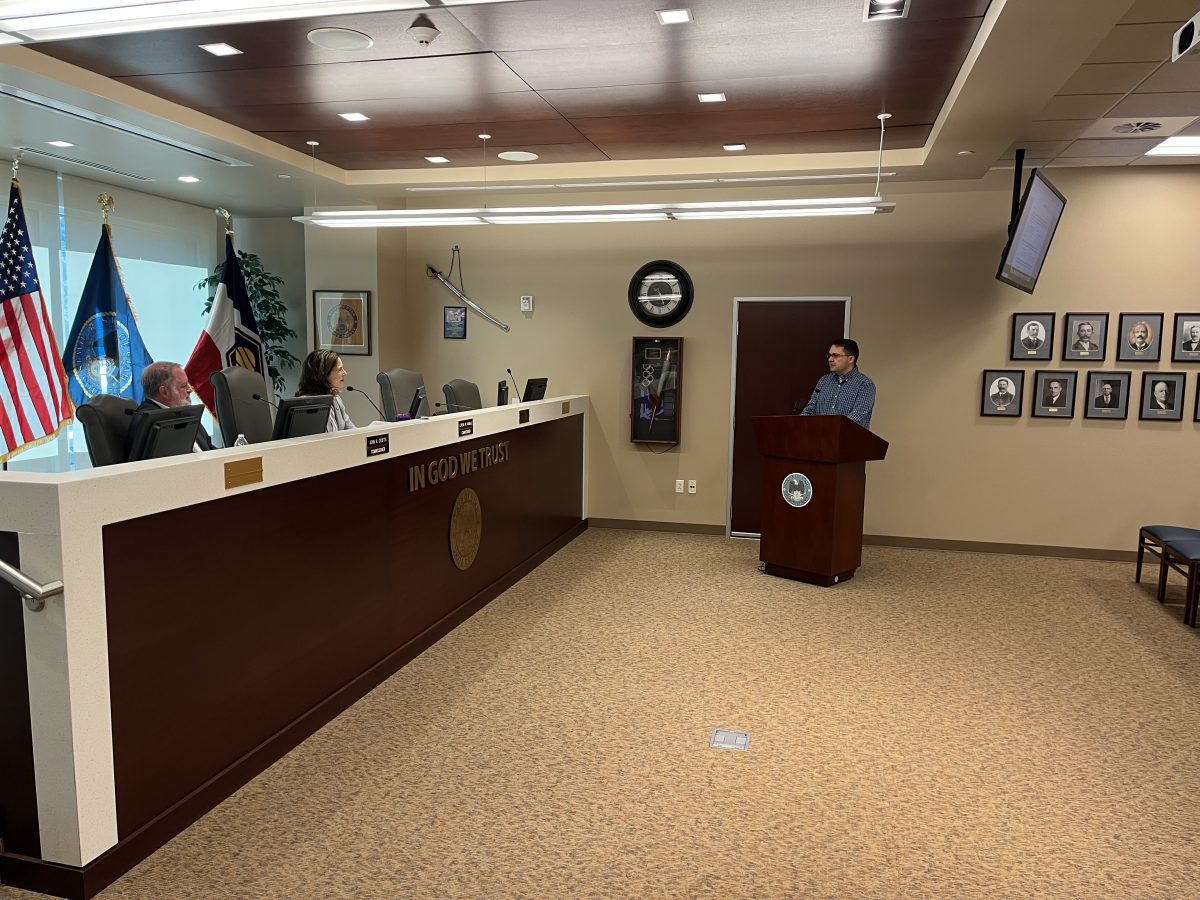
Davis County Surveyor Jeremiah Cunningham presents to Davis County Commission members Lorene Kamalu and John Crofts at the Davis County Administrative Building on Tuesday, Aug. 25, 2026. (Ryan Comer, Standard-Examiner)
Cunningham said there are 913 monuments that the county has numbers for.
“Some of them, we’re never going to get to because they’re in the middle of the Great Salt Lake,” he said. “Some of them are in Forest Service land up on the hillside on the bench, so we’re not responsible for managing those because they’re still federal government. But inside Davis County, you’ve got something between 600 to 700 that we know of.”
Cunningham hopes to modernize the records the county has for monuments to help protect them.
“We’re coming up with an electronic submittal and electronic or a digital way of managing this database so that we can see where (the monuments) are, locate them graphically on a map, do some work that allows us to know from various different directions what is in danger, where it is and what we need to do to protect it,” he said.
Nomination and appointment
Cunningham was nominated to be the Davis County surveyor following the resignation of Max Elliott and after running unopposed in the Republican primary. At Tuesday’s county commission meeting, Commissioners Lorene Kamalu and John Crofts voted in favor of appointing Cunningham. Commissioner Bob Stevenson was not present. Cunningham’s term will officially begin on Sept. 5 and run through the rest of Elliott’s term.
Cunningham said Elliott contacted him in February to ask him to consider being his deputy and taking over for him when he retired.
“I’ve always seen land surveying as a public service, because when I’m hired to do a land survey, I’m not hired to offer my client’s opinion,” Cunningham said. “I’m not offered to go after a preconceived notion. My role is to examine the evidence and issue an opinion that is based in the law and based on the evidence – in this case, evidence being where did they build the road, where did they build their fences, where did they build the house, locating things on the ground. Where are the monuments, the physical markers on the ground, that delineate your property or delineate the street? Those are important questions. And so when someone hires me, I don’t do them a good service unless I am giving them the truth, and that truth serves the public as a whole. So, my role has always been, first, I am going to protect the public with my license, which is what I swore to do anyway.”
Cunningham said there was no official competition for the position, though he said he knew of about five surveyors who expressed interest. He said he was “very open with them” when he became deputy and spoke with almost all of them before the filing period was finished.
“They just chose not to file,” he said. “One of them called me an hour before the filing deadline and told me he wasn’t filing.
“So it’s not that I didn’t have competition. I see this as my community, as land surveyors, are putting their trust in me to do the job right, and if I do the job right, maybe I don’t have competition the next election. … If there’s someone else who feels they can do this position better and serve the county better, then I am all for it because that’s the most important thing is to make sure that these monuments are taken care of, that the public has access to the surveys happening in the area and that these records are protected.”
Family history of surveying
For Cunningham, being a surveyor is in the blood. His father, Walter Cunningham, participated for almost 24 years in the Salt Lake Community College education program, specifically, for land surveying.
Cunningham said when he was a kid, he would go on jobs with his dad all over Utah.
“And I would be the person running the rod, meaning I would be holding the prism on top of a physical rod, holding it as vertical as I could, so he could take measurements from his instrument,” he said. “And that’s what my role was.”
He said he has participated in land surveying actively since 2008.
“It’s a family thing and it turned into a profession for me,” he said.
Education and work history
Cunningham got a two-year degree from Salt Lake Community College in land surveying and mapping, and after obtaining his license, went to Utah Valley University and got his four-year degree in land surveying.
In 2011, a position came open for Hill & Argyle, an engineering firm in Woods Cross, and Cunningham was offered a job as a survey technician. Cunningham said Hill & Argyle merged with Phoenix-based Entellus in 2015 and Cunningham continued to work there, eventually taking over as the surveyor for Morgan County in 2019. Cunningham said Hill & Argyle had a contract with Morgan County to serve as its county surveyor.
Contact Standard-Examiner editor Ryan Comer at rcomer@standard.net.
Local News
MEDIC SOLO first aid courses coming to Ogden next month
Giving back: Ogden Pioneer Days Foundation, school district foundations form partnership to aid Dolly Parton’s Imagination Library