
COMER: Still confused about what Ogden police officer should have done in situation involving ICE
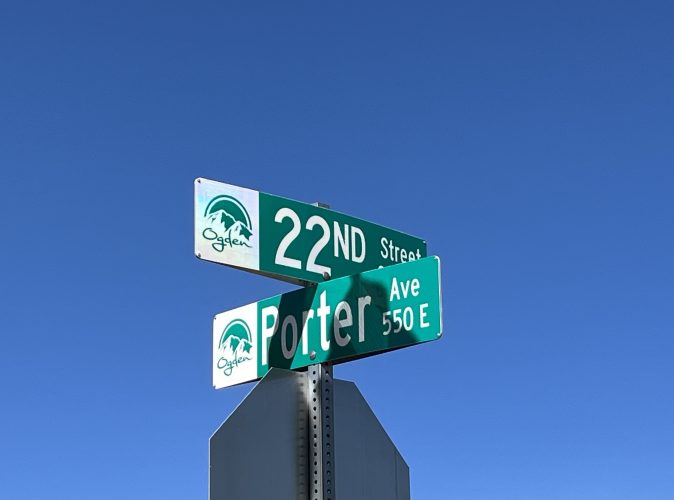
The intersection of 22nd Street and Porter Avenue in Ogden on Saturday, Sept, 5, 2026. (Ryan Comer, Standard-Examiner)
When I went to the Ogden City Council meeting on Tuesday, I had a very specific goal.
I wanted to learn what could have been done differently in the recent situation that involved an Ogden Police Department officer, an Immigrations and Customs Enforcement agent and a resident who was ultimately taken into custody by the ICE agent.
A lot of criticism has been directed at the Ogden Police Department and the officer who was involved, and that criticism has focused on two things.
First, the police officer informed the ICE agent, according to body cam footage that was released by the police department, that the agent could make contact with the resident while the resident was stopped. Second, the police officer told a superior over the phone, also according to the body cam footage, that he wasn’t sure the extent of what he was allowed to do.
These two details have been emphasized to make the case that there needs to be a clearer policy related to how police officers are to comport themselves in situations involving ICE.
What happened prior to those two details in the timeline is important.
According to what the police officer told the superior, he rejected an initial offer from the ICE agent to conduct a traffic stop on the resident.
Unfortunately, that part of this entire situation has been glossed over as if it didn’t even happen or means absolutely nothing.
The police officer wasn’t even in the area to do anything related to ICE (another detail that has been largely omitted or diminished from the popular narrative). According to a post from the Ogden Police Department, the officer was “responding to a report of an aggressive dog near children walking to school.”
After choosing not to assist the ICE agent with his initial request, the ICE agent drove away and the police officer resumed his efforts on the original call, according to the post.
Then, the post stated, the resident did a U-turn and approached the police officer, and the driver told the police officer that he was being followed and he didn’t know what was happening.
Stop right there.
This is the moment where I want to know exactly what the police officer should have done other than what he did do.
Because up until now, I think it would be widely agreed that that the police officer, according to the information that we have, had done everything exactly correctly. If the resident had never approached the police officer and this situation was later reported, I imagine everyone who is now vilifying this police officer would be wanting to pin a medal on him. He rejected ICE! That’s what they want.
Here are the options the police officer had, as I see them:
- The officer could have told the person being followed that he was being followed by ICE. I’ve even heard it said that he should have told the guy to drive off. Both are problematic. First, does informing the person that he is being followed by ICE – much less telling him to drive off – constitute some sort of obstruction of federal law? The people who provided these suggestions didn’t know. This is kind of a crucial detail to not know the answer to though if you are going to say what an officer should have done in a situation.
- The officer could have told the person he didn’t know why he was being followed and just walked away. First of all, that’s a lie. Secondly, how would you feel if you were being followed by someone you didn’t know and were worried and the police officer who you went to for help simply blew you off and walked away? How insane is that? And imagine if the police officer did do that and then the ICE agent approached the resident and the situation got out of control and someone was hurt – or worse, killed. Can you imagine the vitriol that would be directed at that police officer for lying to the person who came to him for help, blowing him off and not being in a position to provide any sort of oversight or safety? That truly seems reckless.
- The officer could have said what he did to the man and approached the ICE agent like he did but said something differently. But what should he have said? “Um, so, he wants to know why you’re following him. I don’t want to be involved, so I don’t want to tell him that you’re an ICE agent, but I have to go back and tell him something, because he’s surely expecting that.” Where does the officer go from there? He must return to the man being followed, but he can’t necessarily tell him it’s because the person following him is ICE.
- The officer could have called his supervisor. This seems like perhaps the wisest choice, and yet, it’s still flawed. The resident just wants to know why he was being followed. There’s no reason that by itself should require a phone call. To a confused resident in this exact situation, a police officer calling someone on the phone would be weird. Think about it. If you’re being followed and you flag down a police officer and want to know why you’re being followed, don’t you want that police officer to find out? Why does that require a phone call? If I was being followed by someone I didn’t know and was confused – even scared – and I told a police officer, I would actually be pretty annoyed if he then got on the phone. Also, this wouldn’t have necessarily been a quick phone call given just how unique the situation was. How long would you wait in that situation as a resident before you got out and started challenging the police officer? What would a police officer be expected to say in that situation to justify why he was making a phone call?
When the police officer later told his superior he was “caught in a weird spot,” weird is a massive understatement. This was truly bizarre. The word that keeps coming to mind when I think of this situation is checkmate. The police officer was trying to avoid being entangled in an ICE operation, but it seems as if he truly just got checkmated. And it’s beyond ironic that the checkmate was delivered by the guy that requested his help.
Sadly, I left the Ogden City Council meeting without any clearer of an idea of what this police officer should have done differently. It’s easy as an activist to say what you don’t want to happen in a certain situation, but it’s much more difficult to say what could and should be done. I hear the call for a clearer policy, but what should that policy be? I want an answer to that which makes sense.
Council woman Flor Lopez said it well during her comments during the City Council meeting. She said she respects the right to advocate but that City Council members have different responsibilities.
“We have to govern,” she said. “Governing means asking questions, listening, investigating and making decisions based on fact. No pressure, no politics, no social media.”
Let’s all do more of that. Let’s ask more questions, listen more and investigate more before reaching conclusions or giving counsel so we know what we’re advocating for is both based on facts and is actually practical.
That’s what the people truly deserve.
Contact Standard-Examiner editor Ryan Comer at rcomer@standard.net.