Guest opinion: The sky is falling — again
I follow with interest articles in this paper and other media about the Great Salt Lake (GSL) dying and may even be gone in five years with resulting catastrophe to those living near. I hear echoes over my life of 73 years of other times hearing the cry the sky is falling. Yet, here we are still.
I remember as a high school student drilling under the desks in response to the atomic bombs coming. Oil was going to run out by the 1980s and our world grind to a halt. We were all going to starve if we didn’t limit ourselves to two children. The ozone hole was going to sunburn us to death. And, yes, the Great Salt Lake was going to flood us all unless we got those pumps in.
Climate change is real but it needs to be determined what effects are natural and what are human caused. How we respond should depend on knowing that. You can draw a straight line from Lake Bonneville and the vast swamps that gave Utah its massive coal deposits to the GSL today. That line is made of natural climate change with the trend to hotter and drier. Also, the many miles of dry salt flats around the GSL are additional proof climate change has been affecting the lake long before a gas powered vehicle drove into the valley. There is nothing new about a smaller lake coming.
Climate change activists need to give us regular folks a reasoned and rational explanation of the issue instead of doom prediction. They really don’t know where the change is headed for the lake. Activists for any cause are myopic, intransigent and closed to any opposition including rational discussion that threatens funding and ego.
A credible discussion would include big picture talk of benefits to climate change. Miami may get flooded but millions of now frozen acres across Canada, Scandinavia and Siberia become available farmland. There may be similar benefits for the GSL but no one looks or talks about that.
The backbone of evolution theory is adaptation of species. We hear polar bears will disappear but no discussion of how they may adapt as may the birds in the wetlands of the GSL. We hear only the sky is falling. If the change is natural, there isn’t much to do beyond wringing hands and moving. Meanwhile, nature may do what it always has done — adapt.
Focusing on Utah, particularly the Wasatch Front, there are three conceptual pies at issue. They are land, water, and air quality. The talk of the GSL running out of water is only partly about climate change. The problem is more about growth. Air quality, land and water are all finite resources. Every time we add a person to the community, we cut another slice of those pies. Some day, the pies will no longer be able to be sliced. The GSL discussion may be telling us we are there for the water pie.
Our leaders don’t seem to want to talk about growth other than to commission some studies that have been largely ignored. They respond by creating a political patronage job of lake czar whose primary duty ironically now is to measure how much the lake has risen. Politicians get their reward from ribbon cutting, not from making hard choices for the future. Meanwhile, residents become bad guys for having a lawn when you could send the kids out to play volleyball in the cactus xeriscaping. Never mind a basic principle of urban planning is green spaces cool social tensions and ambient temperature of the community. As long as we look like Las Vegas or Tucson neighborhoods, we must be making progress.
Conservation has become a thinly disguised word for lowering our standard of living. Meanwhile, the growth dividing the water resource not only continues but is promoted. Utah’s governor announced we will do whatever it takes to save the GSL. That idea is dead on arrival. His own party would have to shift to what they won’t do — control growth and reduce slicing the conceptual pies.
Some of our ancestors came here to make the desert blossom as a rose, not to plant more cactus and sagebrush. Instead of a chorus of falling sky, our leaders should have a rational discussion of how to limit the underlying growth for a new model of reacting to climate change and maintaining our quality of life.
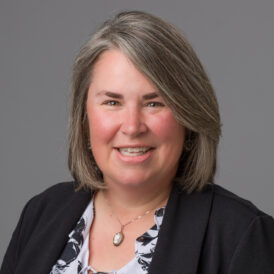
Greg Sanders is a retired attorney who has lived in the Ogden area for 60 years. He now lives in Fruit Heights.