
Guest opinion: Liberty in the United States was expanded by nationalists
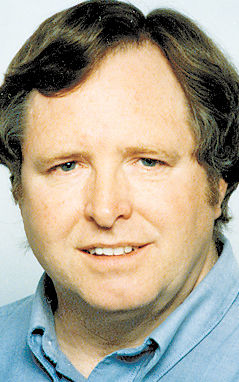
Rick Jones
Prior to Abraham Lincoln’s presidency there was no national Thanksgiving day. The commemoration of Thanksgiving varied from state to state according to the discretion of state leaders. Lincoln’s Secretary of State, William Seward, wanted to increase national power over state power; he was one of the Republican Party’s most farsighted theoreticians. William’s son, Fred recounted the events of one morning in October 1863 when his father called on Lincoln. “They say., Mr. President, that we are stealing away the rights of the States. So I have come today to advise you that there is another State right that I think we ought to steal.” When Lincoln asked what right Seward had in mind, he boldly responded: “The right to name Thanksgiving Day!” He then presented Lincoln with a proclamation that invited citizens “in every part of the United States” at sea, or abroad “to set apart and observe the last Thursday of November” to give thanks to “our beneficent Father.”
Years earlier Seward had maintained that vast improvements in transportation and communications, which occurred after colonial times, necessitated reducing state powers. When the country was being formed in the late 1700s, railroads, canals-such as the Erie Canal- and telegraphs did not only not exist; they were unimagined. He felt like the improvements and changing circumstances necessitated the primacy of the national government over state governments. He saw endless problems if states decided big moral issues. Indeed the purpose of the Republican Party, which he had helped shape, had been to “abolish the twin relics of barbarism: slavery and polygamy.” This objective.could only be accomplished by reducing state power.
Before the Civil War, this nation had a government of the states, by the states, and for the states. States determined voting requirements and in some states they were so steep that military veterans of the American Revolution in the War of 1812 were excluded from voting. States appointed, rather than voted for, senators which comprised the upper chamber of the legislative branch. States also chose the electors which comprise the electoral college. In the early 1800s often states did not hold the elections to determine electors. In the election of 1860, which brought Lincoln to power, nine of the southern states did not have him on their ballot and South Carolina did not even hold an election; it simply appointed pro-slavery electors. The House of Representatives-which was supposed to represent the American people-was generally so manipulated by state officials that it would only poorly represent people.
Lincoln was actuated by the American ideals of our declaration of independence. In the debate over whether our national government or states came first-much like the debate over whether chickens or eggs came first-Lincoln strongly argued that the national government came first. “Four score in seven years ago” identifies our birthdate as 1776-not 1787 when the US Constitution was written. In an 1861 speech, he insisted that with the exception of Texas none of the states comprising the nation at that time had ever been truly sovereign. All of the states owed their existence to the national government since without it, the original 13 colonies would have remained subject to the British crown and other areas of this land which developed would have just been additional colonies for Britain.
Moreover and most importantly, Lincoln understood that an individual could be a devoted constitutionalist seeking the original intent of the constitution’s authors and still be antagonistic to American ideals. Four years before Lincoln’s Presidency, Supreme Court Chief Justice Roger B. Taney-the second longest serving Chief Justice in US history-used the history of our colonial period and the constitution’s framers to claim that Negroes are “beings of an inferior order; and altogether unfit to associate with the white race, either in social or political relations; and so far inferior, that they had no rights which the white men was bound to respect; and that the Negro might justly and lawfully be reduced to slavery for his benefit.” (see Dred Scott v. Sanford). Chief Justice Taney proves that an individual can have the highest level of knowledge about the constitution and simultaneously have zero belief in American ideals. His example suggests that constitutionalists can be overrated. In contrast, Lincoln prioritized America ideals; he even claimed this nation was “dedicated to the proposition that all men are created equal.”
The Constitution, as written, did not create a nation “with liberty and justice for all.” Chief Justice John Marshall, writing for a unanimous court, in Barron versus Baltimore (1833), made it crystal clear that the Bill of Rights limited only the national government and states were free to disregard them. It was exactly a century ago, in 1925 (Gitlow v. New York) that leftist progressive forces first persuaded the court to curtail states rights in favor of individual liberty. Gradually, the federal judiciary created individual rights and liberties that never existed in the first century after the constitution’s adoption. American liberty was expanded by nationalists such as Lincoln and his fellow Republicans; before them, in many states, there were very few individual rights.
Granting states the prerogatives they had in the 1800s would move the nation far from the ideal of “one nation, indivisible.” A century ago, British playwright George Bernard Shaw maintained that the United States had failed to join the League of Nations because “the United States is a league of nations.” A century ago individuals rights and liberties depended on the state a person resided in. States could make attendance at public schools compulsory, and could restrict religious liberties, restrict gun rights, and sterilize women who had given birth to low IQ children.
Without the federal judiciary employing American ideals to reduce state prerogatives this country would be far from the ideal of “one nation, indivisible, with liberty and justice for all.” I believe this nation is best served if its people focus on advancing American ideals rather than making the Constitution operate as it did initially. This Thanksgiving the American people can be grateful that no nation has more lofty ideals than this one.
Rick Jones is a retired adjunct professor of economic history from Weber State University who now lives in West Haven.
Guest Commentary

MADSEN: Every day counts: Why showing up to school shapes Utah’s future

Guest opinion: Utah celebrates recovery. Our systems should recognize it, too.