MURRAY: Autism doesn’t destroy families; it’s time to reject harmful stigmas around disabilities
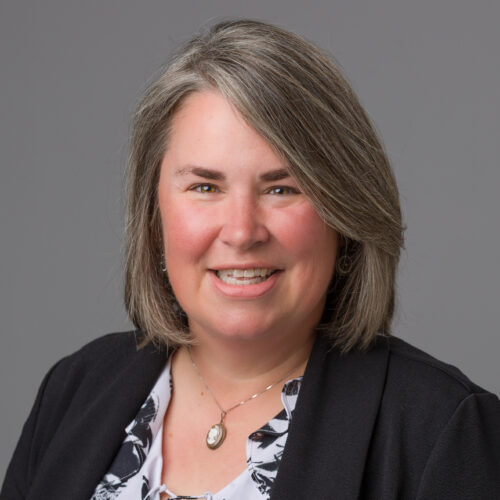
Photo supplied, Weber State University
Leah MurrayThe first victims of the Nazi efforts to kill everyone who disagreed with them were people with disabilities. According to the United States Holocaust Memorial Museum, more than 250,000 people who had physical or mental disabilities were killed. This included 5,000 children. The Nazi government decided what people were not worthy of living by having doctors pour over medical records to see who would be a drain on the German state. Then, according to Holocaust Centre North, they euthanized “life unworthy of life.”
These atrocities happened in my grandparents’ lifetimes, which was not that long ago. When I read this history, I wonder how a government can persuade itself to decide that any life is unworthy of life. I wonder how German citizens could have possibly thought this was a good policy. I wonder how those mothers felt when the Nazis sent them an urn full of ashes of their children. Then I think to myself how lucky I am that I live now, when this would never happen; in America, where this would never happen. I think to myself how lucky my children are, who have an illness that Germany would have said was too expensive to treat, that they live here now. In America, they are safe from the type of discrimination that makes euthanasia a plausible policy choice.
In April, U.S. Department of Health and Human Services Secretary Robert F. Kennedy, Jr. told President Donald Trump that he would discover what caused autism by September. The National Institutes of Health Director Jay Bhattacharya said at his confirmation hearing that figuring out the cause of autism is a “vital public health goal.” This urgency begs the question for the United States government: Why is figuring out what causes autism a “vital public health goal”?
In an April press conference, HHS Secretary Kennedy said, “Autism destroys families, and more importantly, it destroys our greatest resource, which is our children.” He went on to say that people with autism would “never pay taxes…never hold a job…never play baseball…never write a poem…never go out on a date.” There are a number of things wrong with these statements. First, our children are not a resource for the government to use. Second, people with autism pay taxes, hold jobs, play baseball (just ask Tarik El-Abour, who signed a contract with the Kansas City Royals in 2018), write poetry and date. Secretary Kennedy, who definitely never played professional baseball, completely misses the point that baseball would be an excellent sport for someone who has autism, given it demands focus.
As I listen to Secretary Kennedy saying the terrible things he says about people with autism, I realize how Germany persuaded itself that some life was unworthy of life. Leaders would have used this kind of language in their propaganda: People with disabilities are a problem, they are not a resource, they never go out on dates. How long before our leaders decide other disabilities are not a resource? How long before Secretary Kennedy determines that the way to manage people who are not up to his distorted standards is to get rid of them? How long before we persuade ourselves that they are not worthy of life?
In 1941, there was public outcry in Germany, so Hitler officially ended the euthanasia program. But that program became the foundation for the Holocaust. How the Nazis learned to kill so effectively was they decided that people with disabilities were “unworthy of life” and murdered 250,000 of them. To get to the point of euthanasia, Nazi leaders must have started with a belief that disabilities destroyed families.
When I had babies, people were thinking that vaccines caused autism. Like any parent, I was worried about all the many choices we need to make for our children. It is so nerve wracking and every new parent worries. I discussed it with my cousin, who is a psychologist with an expertise in autism, meaning she has diagnosed hundreds of children and then works with parents to map out plans for their care. She said she would rather have a child with autism who hasn’t died from measles. She was absolutely right. Even if it were true that vaccines caused autism (they don’t), that risk would be worth preventing the cost of a possible death by measles.
Let’s begin our public outcry now, before that dehumanizing belief leads to a policy that is wholesale evil. Last week, President Trump and Secretary Kennedy announced that Tylenol causes autism. I don’t mind that they did this, they can announce whatever they want, and I will trust my own doctors for advice on medicine. But I absolutely mind why they are so focused on figuring out that Tylenol causes autism. People with disabilities are worthy of life. In many ways, disabilities bring out the best in humans — they are stronger, more compassionate and the people who care for them are fiercer. And even if none of that were true, people with disabilities are worthy of life.
Leah Murray is a Brady Presidential Distinguished Professor of Political Science and the director of the Olene S. Walker Institute of Politics & Public Service at Weber State University. This commentary is provided through a partnership with Weber State. The views expressed by the author do not necessarily represent the institutional values or positions of the university.
Guest Commentary

MADSEN: Why boys and girls play differently — and why it matters
Guest opinion: A kitchen, a family, and why Utah’s online marketplace act matters more than you think
Most families plan vacations around where they want to go. One family friend plans theirs around a much more basic ...