
WSU guest opinion: Utah’s redistricting could mean rural issues get some much-deserved attention
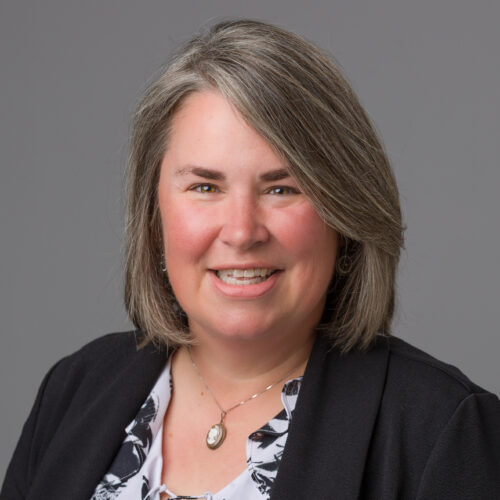
Photo supplied, Weber State University
Leah MurrayOver spring break in March, I traveled down to Southern Utah to spend time with friends in Snow Canyon State Park. We were guided along the Johnson Canyon trail by a lovely young person who taught us all sorts of interesting things about the area.
While there, I wondered about water. How did they have enough water to manage all the growth? There were so many new houses. During that walk, I learned that people in the area were dumping their chlorinated pool water into the canyon. That was a problem I had never heard of, but clearly is a water issue in Utah. I was thinking we probably needed a rule that said if you emptied your pool water into a state park, you had to pay a fine.
That got me thinking about all the rural issues I am not aware of. About 10% of Utah’s residents live in rural areas. Eleven of our 29 counties are considered entirely rural. But the only congressional representative we have from rural Utah is Celeste Maloy.
In 2023, Jason Perry, director of the Hinckley Institute of Politics at the University of Utah, noted that she was the first candidate in a long time who had been raised in rural Utah. During that special election’s convention and primary cycles, Maloy made a compelling argument that it was high time for Utah’s rural counties to have representation.
When she won the primary, Maloy said she had to learn the issues of Davis and Salt Lake counties to get ready for the general election. When you are not from somewhere, you have to do the work to understand. And if no one is talking about these rural issues, how many more have I not noticed?
As a result of recent judicial action, Utah now has a gerrymandered Democratic district. For the first time since 2010, Democrats have a good chance to win a congressional seat. Depending on some numbers I have seen, this new map contains 41% of Utah’s Democrats.
This is a case in point of how you draw a seat to guarantee an outcome. For the record, the United States Supreme Court has ruled it is fine to gerrymander to guarantee a partisan result. We can do this by either cracking a party’s power base or by packing it.
In District 1, we have amplified Democratic power by packing as many Democratic voters into this district as possible. And given who I see filing to run, these candidates are pretty sure they are going to win.
Some are arguing this is what Republicans deserve, given that the Republican-led legislature did not work well with the independent commission required by 2018’s Proposition 4. Others argue this is what they deserved for gerrymandering to help Republicans by cracking the Democratic power base in 2010.
Another line of argument is that the judiciary should never have made this decision in the first place: If the legislature was supposed to follow what Proposition 4 said, shouldn’t the judiciary also do so?
I would like to argue that maybe this will be good for rural Utah.
In the old gerrymander, where we cracked the Democratic power base, all four districts ran through Salt Lake County, perhaps causing rural issues to disappear. The only water issue I have ever heard talked about at length is the Great Salt Lake, and the only time I have heard Lake Powell mentioned was from Representative Maloy.
When people conflate the Republican label with the rural label, they do not take the time to notice uniquely rural issues. There are vast differences in rural America that go unnoticed if you think it is just about being Republican. There is rural outdoor recreational America, and rural ranching America, both of which are very different from rural farming America. Interestingly, Utah has all three of these rural types.
Take Moab and Blanding, for example. They’re very different. Yet neither has a major interest in how the Great Salt Lake is doing. They have that in common, distinct from the urban counties.
Rural Utah’s transportation issues are different, their education issues are different, their growth issues are different, but so much of our conversation is about urban issues. If the entirety of Utah politics goes through the Wasatch Front, how many unique rural issues are obscured from view? How many rural problems are we not all engaged in solving?
Maybe, while we gerrymandered for Democrats, packing all of them into one district so they can get their representation, we also inadvertently gerrymandered for rural Utah, which may lead to more focus off the Wasatch Front.
Leah Murray is a Brady Presidential Distinguished Professor of Political Science and the director of the Olene S. Walker Institute of Politics & Public Service at Weber State University. This commentary is provided through a partnership with Weber State. The views expressed by the author do not necessarily represent the institutional values or positions of the university.
Guest Commentary
WSU guest opinion: Utah’s redistricting could mean rural issues get some much-deserved attention
Guest opinion: Fragmented records of asbestos exposure leave Utah workers and veterans unseen and unprotected
