Guest opinion: Celebrating teaching’s quiet successes at Weber State
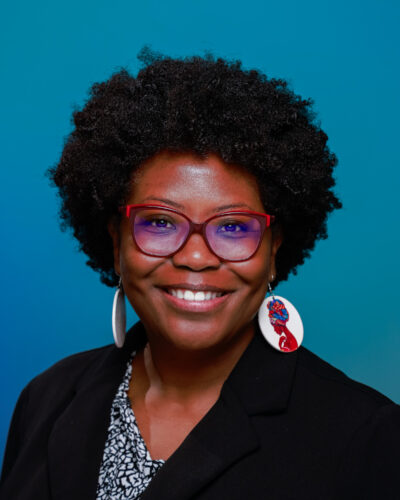
Photo supplied
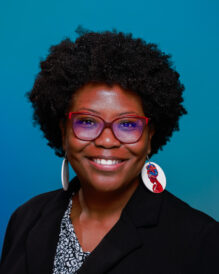
Nicola CorbinExcellent teaching rarely announces itself in big, visible ways.
It happens in intangible and often difficult-to-quantify moments of connection and “aha” in our classrooms and labs. It also happens in emails, in feedback and in the quiet back-and-forth in online spaces where encouragement and guidance are especially critical.
Excellent teaching happens when a student asks a question they might have otherwise kept to themselves — simply because their teacher spent time and care creating a welcoming and productive environment where students feel seen as learners, and as people.
It goes beyond passing on facts and textbook knowledge. Neither is it accidental. Excellent teaching is deliberate, demanding and deeply human work. It is built through preparation, reflection, recalibration and a willingness to try again.
And excellent teaching lives at Weber State University.
This year, we honored 12 of our teachers with the Presidential Teaching Excellence Awards. The recipients are faculty whose work demonstrates what teaching actually looks like when it is done with purpose and with care.
In the more than 200 nominations we received for this award, that care came through again and again. Our students and colleagues described folks who changed how they saw themselves, what they believed was possible, and their support in building communities in which students can thrive. Here is a snapshot of those compelling nominations:
“He reminded me that the right teacher can transform even the most intimidating subjects into something exciting and worthwhile.”
“As I presented [my project], she had a smile on her face. I felt like she was proud of me. I don’t know if she realized what she was doing as I presented, but that gave me the confidence I needed.”
“I have never been one to do very well in groups because I always end up being the one doing all the work and this man got me to understand that if I do everything, I don’t actually trust the others to do their job well. And as someone also working to be a leader, that was an insight I really REALLY needed.”
“I’ve seen her stay after class to offer encouragement, listen to concerns, or share resources to help a student succeed. It’s that compassion and attentiveness that makes her classroom feel like a community.”
“His belief in me has given me the confidence to chase opportunities I would have once avoided.”
These are the moments that rarely show up in data points or dashboards, but they are the moments that define teaching and reinforce the mission of Weber State University as a teaching institution.
We congratulate and celebrate this year’s recipients represented in disciplines across the university:
- Nicole Beatty, Teaching & Information Services
- Barrett Bonella, social work and gerontology
- Jason Francis, Teaching & Information Services
- Adam Johnston, physics and astronomy
- Justin Knighton, manufacturing systems engineering
- Jessie Nixon, teacher education
- Tyandra Perez , nursing
- Mary Anne Reynolds, nursing
- Bryant Thompson, business administration and marketing
- Megan Van Deventer, english language and literature
- Brent Warnock, communication
- Jordan West, health sciences
Their work reflects what we do at Weber State. These awards represent what we value.
We remain deeply grateful to our donors who make these awards possible. Special thanks to Bob and Marcia Harris, whose foundational gift established these awards and continue to champion teaching excellence at Weber State. Their support reflects the powerful belief that investing in teachers is one of the most meaningful ways to invest in students, and that this work should be recognized, sustained and valued.
Visit weber.edu/cetl to read more about our 2026 Presidential Teaching Excellence Award recipients.
Nicola A. Corbin is a professor of communication at Weber State University, where she teaches public relations and mass media courses. She also directs the university’s Center for Excellence in Teaching and Learning. The views expressed by the author do not necessarily represent the institutional values or positions of the university.