WSU guest opinion: Step into our shared science community this week

Photo supplied
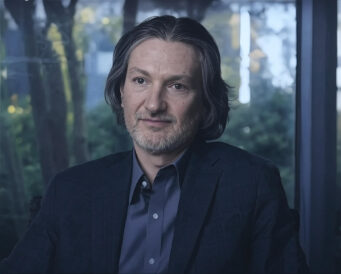
Adam JohnstonI should begin by making sure you know at least this much: The College of Science will host its annual Science Open House this Friday from 6-9 p.m. at Weber State University in the Tracy Hall Science Center. It’s a free event that pools together the marvelous energies of our faculty, staff and students.
In turn, we get a boost of energy back from the community. People of all ages, usually bundled in family groups with kids and grown-ups, roam around our facilities to experience and celebrate science and all the forms it takes.
This year, being right before Valentine’s Day and also on a Friday the 13th, we’ll dig into themes of both superstition and love, mysteries all around. I hope I get a chance to see you and yours at the event, maybe in between a visit to the planetarium, or peering through microscopes, or digging into some fossils and solving a puzzle in a chemistry lab. I’ll be swinging a bowling ball from the ceiling and delivering some music via a laser beam.
It’s great that I have a space here to tell you about the event. But I think it’s even more important to tell you about why we think it’s a good celebration to share with our community.
First, the work is joyful. The good humans I’m employed with here in the sciences study the origins of life and the death of stars. They try to figure out things you might imagine should have been resolved centuries ago but we still fuss about, like gravity. They stand DNA up on end and they smear rainbows across a screen or some filter paper. They’ll geek out about prime numbers, the direction of time, matter we can’t see that pervades our universe and the energy churning its expansion — as well as why you should care about any of this.
If you catch one of these teachers/researchers and give them any inkling of a prompt, there’s a good chance you’ll witness their joy firsthand. A stereotype of a scientist might be of a withdrawn and deep-in-thought body shielded by a lab coat.
And yet, this doesn’t at all describe the passionate and effervescent scientists I know, especially those here at Weber State. Part of scientific practice is active questioning and wondering, and we’ll happily do this right alongside you. And then we’ll get to share what we do know and how we come to know it, and what questions that all leads to.
Some of what we’re doing gets to the heart of who we all are. There are literal hearts, the organs within us and the study of how all of these fit together and the advancement of medical science. There are the guts of our planet, its long-baked furnace that drives volcanic activity and shifting plates. There’s the firing of our star, an ultimate source of life for all that we depend upon. We work to understand this because we’re working to understand ourselves, how we got here and how we make sure that we remain.
A lot of this leads to very practical matters for our community. How are the particulates in our air trapped by temperature inversions, and where does this grit come from? What’s the Great Salt Lake’s current level, how is it changing seasonally and over the past century, and what should we do about it? What does excess light do to our night skies, our study of astronomy or the migration of birds? Scientists right down the hall from me are working on these very practical problems.
But ultimately, I think the reason you should come meet and interact with some of these scientists — and I include both the people who are paid to do this work as well as the students who work closely with these scholars — is so that you can be a part of this great mix of our humanity and its work.
Sure, it’s partly funded by your tax dollars, and you might want to take a look at what you’re getting for your investment. More importantly, I hope you can visit and see what we, together as humans, can figure out and celebrate when we put our minds and energies into it.
These days, we see a lot of the worst of what people can do. I’m looking forward to sharing with you some of the very best of what we do, right here in your own backyard.
Adam Johnston is a professor of physics and director of the Center for Science and Mathematics Education at Weber State University, where he helps prepare future teachers and supports educators throughout Utah. This commentary is provided through a partnership with Weber State. The views expressed by the author do not necessarily represent the institutional values or positions of the university.