Guest opinion: The persecution of Mark Kelly and the pattern behind it
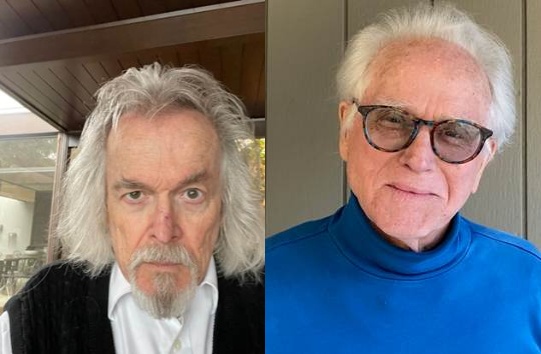
Photos supplied
Clifton Jolley and Robert ReesThe Trump administration’s move to strip Senator Mark Kelly of his military rank and retirement benefits is not an isolated bureaucratic dispute. It is part of a broader, deeply familiar pattern: the use of falsehoods, distortions, and punitive measures against those who challenge Donald Trump’s narratives or resist his demands. What is happening to Kelly now echoes the tactics Trump used before, during, and after the January 6 attack on the U.S. Capitol–tactics rooted in the same impulse to punish dissent and rewrite reality to suit his needs.
At the center of the current controversy is a simple, verifiable fact: Kelly, along with other members of Congress, urged military personnel to follow only lawful orders, not unlawful ones. This is not only permissible; it is a foundational principle of military ethics. Service members are obligated to refuse illegal commands. Yet Trump is attempting to invert this reality by accusing Kelly of doing the opposite–of encouraging troops to ignore lawful orders. This is typical of Trump’s methodology we saw at work regarding the January 6th anniversary we just celebrated: he denies even those realities of which we all are witness!
This inversion of truth is not new. It is a hallmark of Trump’s political method. When confronted with criticism, legal constraints, or institutional resistance, he often responds not by engaging with the substance but by fabricating a counter‒narrative that casts his critics as the real offenders. In Kelly’s case, the administration’s attempt to strip him of rank and benefits is a punitive act built on a false premise. It is also a warning to others: challenge Trump, and you may find yourself targeted.
The parallels to January 6 are impossible to ignore. In the lead‒up to the attack, Trump repeatedly told his supporters that the election had been stolen, despite courts, state officials, and his own Justice Department finding no evidence to support that claim. He insisted that he was the victim of a vast conspiracy and that those who contradicted him were enemies–traitors, weaklings, or part of the “deep state.” When he urged his followers to march to the Capitol, many interpreted his words as a call to action, even as the orders themselves were unlawful. After the violence unfolded, Trump attempted to distance himself from the consequences while continuing to attack those who criticized him.
In both the January 6 episode and the current targeting of Kelly, Trump has used accusations as a political weapon. During and after the insurrection, he attacked officials who upheld the law–state election administrators, members of Congress, even his own vice president. He publicly pressured them, spread falsehoods about them, and encouraged supporters to view them as adversaries. Some received threats. Others saw their careers derailed. The goal was not merely to dispute their actions but to delegitimize them entirely.
Kelly’s case fits neatly into this framework. By accusing him of urging troops to disobey lawful orders, Trump is attempting to recast a lawful, ethical act as misconduct. The punishment he seeks–stripping a retired Navy captain and astronaut of his rank and benefits–is not just severe; it is symbolic. It signals that loyalty to Trump, not loyalty to the Constitution, is what matters.
The attempt to punish Kelly also reflects a broader strategy: rewriting the narrative of January 6 by punishing those who warned against unlawful orders. If Kelly can be portrayed as the one encouraging disobedience, then Trump can position himself as the defender of lawful authority. It is a rhetorical sleight of hand, but one that has been used repeatedly.
Ultimately, the issue is not just about Mark Kelly’s rank or retirement benefits. It is about whether political leaders can weaponize falsehoods to punish critics and reshape reality. And whether we will let them.
The attack on Kelly is not an isolated dispute. It is part of a larger, ongoing effort to punish dissent, rewrite history, and reward loyalty over legality. The country has seen this pattern before. It saw it on January 6. And unless it is confronted, it will see it again.
Clifton Jolley is an Ogden, UT, essayist and poet who has published in the New York Times, Utah Historical Quarterly, Journal of American Folklore, Dialogue, and others. Robert Rees is an independent scholar and co-founder and President of FastForward for the Planet, a non-profit Utah Foundation working to save the Great Salt Lake.
Guest Commentary

FISCHER: Truth is more valuable than fantasies in home sales
Guest opinion: How to make the Utah workforce AI ready
Around the country, colleges and universities have been making game plans for how to respond to the artificial ...