WSU guest opinion: An ode to teaching

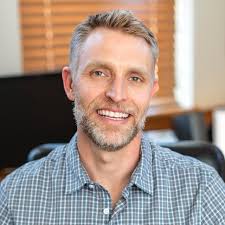
Photo supplied
Adam JohnstonI don’t know what it is, and perhaps there’s a diagnosis hidden somewhere in this admission, but I have close to zero focus these days. This condition continually gets worse, my attention eroding with each passing year. My office is an assembly of stacked papers and books on the desk, orbited by carts of physics demonstrations that I’m now having to weave around to get to my chair. The computer screen flaunts windows of information and tasks overlapping and fighting like continental plates setting up mountain ranges. Even writing this piece is an act of herding my consciousness of scattered sheep and organizing a team of kitten task managers. I can’t settle my mind and stay on target.
Except when I’m teaching. That’s when everything falls into place.
In a classroom, I’m fundamentally me to my core, but transformed. If you know me in the day-to-day, an interaction in the hall or dinner conversation, I’m reserved, even withdrawn. But there’s a metamorphosis when I walk into a classroom: same person, no cocoon. Walking in at the last minute with a stack of notes, handouts and a laptop, maybe some bottle of goo and a cart with some spring-loaded mechanism. Students are there, buzzing about this and that. I count down or ease into the intro to class. And then it begins.
There’s chalk which I love, there’s the physics that I’m astounded by and there could be fun examples or problems or tasks. There’s the space where we’re working out conservation of energy. Do you mean that butter and coal have the same energy? Look at the curve of this relationship. We are made of and accountable to dead stars. There is no such direction as “down” and the universe is infinite and still limited in what it contains. And yet, those are just the facts.
The height of this experience is in the interactions in a unique space and moment. For me, teaching is not an action or job but transcendence. People talk about being in a zone, drifting, skimming, floating on some other plane or otherwise being in some state of enlightenment when they’re doing art. Maybe there’s sports, perhaps something else that evokes their passions. It’s rare. I’ll dump my energy and best self out into a classroom and bring my shriveled shell home. I’ll stay in on Friday because my social existence was depleted on Thursday in class. This full-body slam into my teaching is perhaps the reason why other pieces of my job can often feel like a strain.
The thing about teaching and learning is that it is a braiding of existences, students’ and mine. It is this amalgam of problem solving and human connection and rich understanding of something. I learn about physics when I teach at levels deeper each time. I learn something about others and how they learn and see the world. And, it’s great that I’m here for learners and I’m doing something that we consider to be a noble, public serving profession. I’m helping students contemplate the nature of the universe. Perhaps they’ll get into medical school and save lives. Maybe they’ll teach. That’s wonderful, but it’s secondary. Most important to my role as a teacher is what it does for me. I’m a better person when I’m teaching.
I’ve realized that when I’m in this focused mode, the rest of the world falls away. I’m not thinking about the washing machine repair or worrying about how my kids will afford a place to live or how I’ll someday have to endure the death of my parents. The fate of the country or the world or my own mortality fade to the background. A few years ago, when I was worried I might have a heart condition, my symptoms would all vanish once class started. I taught on 9/11 as the Twin Towers were falling as an act of self-preservation; I’ve hosted class after crushing news as a grasp at rebirth, walking into a classroom as a respite, a metaphorical morphine drip. In a classroom, I’m born again, finding, making and reconstructing meaning with students.
In my university role, my job is to promote teaching and teachers. I’ll happily spotlight how teachers improve the lives of students, our citizenry, the economy and society at large. That’s fine and all true. But between you, me and this private journal entry, I admit that this act of teaching is selfish, my salve and salvation. Facing a world that often erodes joy, teaching is self-preservation.
Adam Johnston is a professor of physics and director of the Center for Science and Mathematics Education at Weber State University, where he helps prepare future teachers and supports educators throughout Utah. This commentary is provided through a partnership with Weber State. The views expressed by the author do not necessarily represent the institutional values or positions of the university.
Guest Commentary

FISCHER: Truth is more valuable than fantasies in home sales
Guest opinion: How to make the Utah workforce AI ready
Around the country, colleges and universities have been making game plans for how to respond to the artificial ...