WSU guest opinion: Modern censorship and its ancient roots

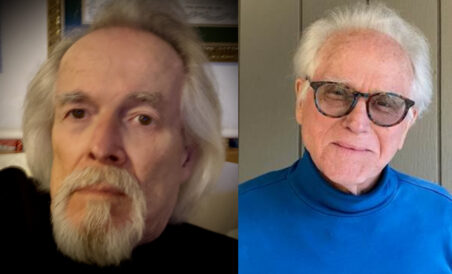
Photo supplied, Weber State University
Hal CrimmelCensorship is a common and exasperating aspect of everyday life. Many people seem determined to prevent others from reading, watching or saying certain things. Whether in the context of politics, universities, K-12 schools, books, music, or ideas in general, attempts to muzzle individuals or groups never seem to end. Yet censorious folks are often outraged when someone seeks to limit their freedom of expression.
To solve the problem of censorship, the solution is actually simple: Censor those who want to censor others.
Just kidding!
Censorship makes its presence felt early in our lives. Children quickly discover there are off-limits expressions, and consequences for uttering them. The pioneering 1971 rock opera “Jesus Christ Superstar,” still performed today, was controversial back then, in part because it challenged many traditional aspects of theology. My best friend’s parents, deeply religious, owned a copy of the album on vinyl. They felt the song “Superstar” was blasphemous, however, and scratched a series of “Xs” across the track, so the needle on the turntable would not be able to play the song.
This forbidden fruit was available on the radio, however, and one afternoon my friend sang his improvised chorus, substituting “Jesus Christ Superstar” with “Jesus Christ Stink-y Star.” As 7-year-olds, we thought this hilarious. But his mother overheard, marched in, and washed out his mouth with soap. I was not unfamiliar with the practice, due to my own verbal transgressions at home.
Decades later, I related the story to a woman whose son attended a children’s music class with my daughter. The mother nodded her head in approval. But soap really isn’t strong enough, she declared. When her children uttered something inappropriate, she said, they got their mouths washed out with Tabasco sauce.
At the risk of sounding censorious, I’m hoping your parents stuck to the intended culinary uses of Tabasco sauce. It’s hot stuff.
How and where did the practice of censorship originate? It’s tempting to think of censorship as suppression practiced fairly recently and only by the bad guys: mothers, fathers, other family members, Soviet KGB, far-left Democrats, MAGA supporters, long-haired beer-drinking pot-smoking hippies, wholesome clean-cut youth, etc. Anyone different than you.
But the history of censorship goes back much further.
During the Classical Antiquity Era, texts that formed the “basis for modern philosophy and science” along with other heretical books were destroyed by Christian authorities, theologians and ideologues. Only 1% of these writings survived, according to historian Dirk Rohmann. Further, in 450 B.C., Roman law prescribed the death penalty for persons who “had sung or composed a song such as effecting slander or insult on another person,” noted classicist and ancient historian Vasily Rudich. Exactly what constituted an “insult” was subject to interpretation.
Five centuries later, the erotic writings of the Roman poet Ovid angered Emperor Augustus. Augustus had made it his mission to staunch the alleged decline in morals among the general population, despite his own dalliances with multiple mistresses. Ovid, widely recognized as one of classical antiquity’s great writers, avoided execution. But he was forced into exile and his books were removed from all Roman public libraries. If not for the copies held in private collections, this talented poet’s work would not have survived to influence future artists and writers such as Michelangelo and Shakespeare.
So there’s a long, long history of censorship, particularly as it pertains to the written word and the banning of books, which continues even in the United States. In the 2024-25 school year, there were 6,870 instances of books being banned in K-12 schools across the nation. Florida alone accounted for 2,034 of these! In Utah, as of this writing, 27 books have been removed from all K-12 public schools, including four this month.
Many of these banned books are certainly not about rainbows and butterflies. But many students’ lives are not filled with rainbows and butterflies. Books that may seem “objective sensitive material” in the words of the law may help students navigate their own imperfect worlds. As a child of divorced parents, I can say from firsthand experience many children face adult problems at an early age, dilemmas that make the wash-out-your-mouth-with-soap treatment seem like sipping sweet nectar. Reading about characters navigating similar challenges can alleviate suffering in silence.
In light of the millennia-long history of censorship, I doubt the impulse to silence others will ever vanish. Some will continue to insist that certain ideas are “non-negotiable,” not even up for discussion. And yet ideas that are one person’s kryptonite might be treasured by another. Hearing them can be painful but there’s value in listening — sometimes there’s a reward in the most controversial ideas. I might not love religious-themed rock opera, but appreciate its existence.
I feel fortunate to even discuss the very question of censorship, and am grateful to live in an era and country where controversial ideas circulate. The freedom to discuss, critique, argue, or satirize without getting our mouths washed out with soap, so to speak, is precious.
In turn, if you hear someone belting out “Stink-y Star,” maybe let it go. There are plenty of other ways to deploy a bar of Ivory soap.
Hal Crimmel is a Brady Presidential Distinguished Professor of English who served for nine years as chair of the English department at Weber State University. This commentary is provided through a partnership with Weber State. The views expressed by the author do not necessarily represent the institutional values or positions of the university.