WSU guest opinion: Does it matter that I’m here? Why student involvement alone isn’t enough.
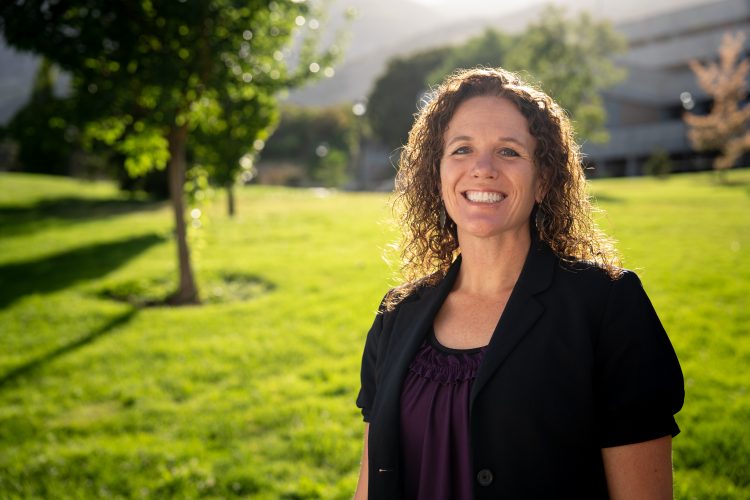
Photo supplied
Ali Threet, Dean of Students at Weber State University, poses for a photo on August 1, 2025. (photo supplied)I recently read an article about the importance of students having a “sense of mattering,” and that phrase has really stuck with me. In higher education, we talk a lot about belonging. We want students to feel connected to their university, their classes, their professors and each other. But mattering puts a different spin on it. It’s not just, “Do I belong here?” It’s, “Does it matter that I’m here?”
As I was thinking about that, I immediately thought about my son. He was well into his sophomore year of college when he was promoted to a manager at Barnes & Noble, and I watched something change in him. He had real responsibility, and people counted on him. His coworkers knew him and needed him to show up. For the first time, I could see that he understood his absence would actually matter to someone.
As his mom, I loved watching it. But I have also found myself thinking a lot about the timing. He was already well into his sophomore year. That means he had gone through his entire freshman year without really feeling like he mattered anywhere. And the crazy thing was, he was involved in college. He participated in esports, which he genuinely enjoyed, and at the time I was really happy about that. I thought, “Good, he found something. He’s getting involved.” But most of it happened from his bedroom. The students didn’t even use their real names. They knew each other by gamer names, played together, and then logged off. He enjoyed it, but I’m not sure he ever really felt known.
It is strange to realize, especially since my job is all about student support and success, that I probably would have looked at my own son and said he was engaged. He was going to school. He was progressing. He was involved in an activity. We could have checked all the boxes. But as his mom, I knew something was missing.
Then he became a manager at Barnes & Noble and suddenly people were counting on him. He had a place where people knew his name, expected him to be there, and trusted him with something important. It wasn’t a university program that finally gave him that feeling. It was his job.
That doesn’t mean the things we do to help students get involved aren’t important. They absolutely are. But it has made me wonder if we sometimes put too much emphasis on whether students are participating and not enough on what happens after they show up. Universities can count attendance, club participation, and use of campus services. What those numbers don’t tell us is whether anyone would notice if that student stopped showing up.
I think about that when I look at students who don’t return to college. In higher education, we track this using metrics like retention or persistence (which looks at whether or not a student stays enrolled at an institution and finishes their degree). There are so many reasons students leave. Money gets tight. Work gets in the way. Family responsibilities change. Classes are difficult. Sometimes, life just happens. But I also wonder about the students who are quietly going through the motions without feeling like anyone would really notice if they stopped. Maybe they go to class and immediately leave campus. Maybe they work between classes or take most of their courses online. Maybe they are participating from a bedroom, like my son was. Then they miss a class. They don’t register for the next semester. Eventually, they show up in reports we review, and we start trying to figure out what happened.
That’s the part I keep thinking about. What happened before they became a number on that report?
Was there a point when someone could have noticed? Would it have mattered if a professor said, “I missed you in class,” or an academic advisor reached out because they hadn’t registered? What about a supervisor who trusted them with something important, or another student who simply knew them well enough to realize they weren’t around?
I don’t know exactly how we create a sense of mattering for every student. I’m not sure we can. And I definitely don’t think the answer is another program. But I do think we can get better at noticing who might be missing it.
And really, this isn’t just about college students. We all have people around us who show up every day without necessarily knowing whether their presence makes a difference. Reading about mattering gave me language for something I had already watched happen in my son’s life. I’m incredibly grateful he found a place where people knew him, trusted him and counted on him. I just wish it hadn’t taken until his sophomore year for him to find it.
And now I can’t stop thinking about the students who are still waiting to find theirs.
Ali Threet is the Vice President of Student Access, Success & Enrollment Management at Weber State University, where she leads student recruitment, retention, and support initiatives for more than 33,000 students. This commentary is provided through a partnership with Weber State. The views expressed by the author do not necessarily represent the institutional values or positions of the university.
Guest Commentary
Guest opinion: A mother’s plea for compassion and an end to mandatory minimums
Recently, my son was sentenced to 20 years in federal prison for a fentanyl-related overdose death. That day, I ...

Guest opinion: Bending over and other dangerous stunts