WSU guest opinion: When disaster strikes, Weber State nursing faculty answer the call

Courtesy photo
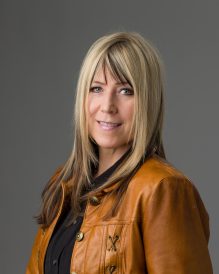
Dr. London Draper LoweAt 12:33 p.m. on a sweltering Tuesday in June, a text pinged on Nancy Weston’s phone. The Weber-Morgan Medical Reserve Corps needed help fast. The Iron Fire was burning through Juab and Tooele counties, forcing community evacuation and activation of an American Red Cross shelter. The request sought one to two licensed medical volunteers to provide basic first aid and medical assessments for Disaster Health Services.
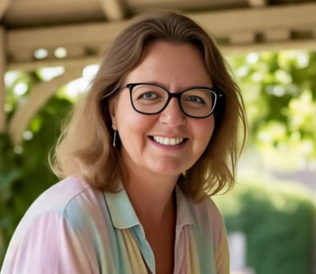
Weston, an advanced practice nurse and nursing assistant professor at Weber State University, answered the call.
Later, as she approached the emergency shelter, she witnessed the intimidating sight of an entire mountainside on fire. Roads in the area were closed, and displaced neighbors were arriving at the shelter for support and supplies. Though stepping into the chaos felt daunting, Weston’s clinical nursing background and disaster training immediately took over.
Alongside her husband, who took time off work to drive her and provide nonmedical assistance, Weston spent her four-hour shift working directly alongside the shelter manager, joining calls with outside leaders to advocate for evacuees with special needs by explaining the clinical urgency and navigating a solution.
For WSU nursing faculty, responding to a crisis isn’t just a clinical duty — it is an act of community devotion. “Beyond the medical response, witnessing the strength of that community was deeply moving,” Weston recalled.
When disaster strikes along the Wasatch Front, the immediate question is rarely about policy or logistics. It is intensely, painfully human: Who is coming to help us? For many in our region, the answer lies in this quietly powerful partnership between the faculty in WSU’s Annie Taylor Dee School of Nursing and the Weber-Morgan Medical Reserve Corps, or WMMRC, which is a nationwide community-based volunteer program overseen by the Weber-Morgan Health Department.
In higher education, faculty are often imagined in lecture halls or guiding students through controlled clinical simulations. But for the nursing educators at Weber State, expertise is not a commodity reserved for the classroom — it’s a civic promise. When emergencies overwhelm local healthcare systems, these educators step out of academia and directly onto the front lines as credentialed MRC volunteers.
Disasters do not give fair warning. Whether responding to wildfires or public health emergencies, the WMMRC relies on dedicated personnel ready to deploy at a moment’s notice.
WSU nursing faculty bring an advantage to these deployments. They have advanced clinical skills in triage, trauma, and acute care. They also bring calm, decisive clarity that comes from years of teaching others how to navigate chaos.
This service flows both ways, enriching our region while deeply transforming the education delivered at Weber State. When educators like Weston deploy, they bring raw, real-time disaster response insights straight back to their classrooms. They teach tomorrow’s nurses not from hypothetical textbooks, but from lived experience. This allows them to demonstrate what adaptability, patient advocacy, and leadership look like when the pressure is on.
Yet, beyond the clinical metrics and emergency logistics, there is a deeper emotional reality to this work. At its core, nursing is an act of radical presence. It is the choice to walk toward someone else’s worst day and say, “I am here, and you are not alone.”
When WSU faculty answer urgent deployment alerts, stand in crowded evacuation centers, and donate their expertise, they do so because Ogden and its surrounding communities are both our workplace and our home.
Disaster preparedness is not solely the responsibility of government agencies or first responders. A truly resilient community is built on the willingness of its citizens to step up for one another. That is where the WMMRC comes in. There are many roles to fill within the organization, and individuals with and without medical training can make a difference by volunteering.
The collaboration between Weber State’s nursing faculty and the WMMRC shows what’s possible when academic excellence meets grassroots service.
The next time a crisis tests our region, rest assured that Weber State nursing faculty will be there, answering the call as educators, neighbors, and healers when Utah needs them most.
Dr. London Lowe is a Weber State University nursing professor who has volunteered with the Weber County Medical Reserve Corps for the past 20 years. She is a board-certified National Healthcare Disaster Professional who teaches disaster nursing to baccalaureate students. This commentary is provided through a partnership with Weber State. The views expressed by the author do not necessarily represent the institutional values or positions of the university.