
Dangerous probation violators an ongoing challenge for Utah AP&P agents
-
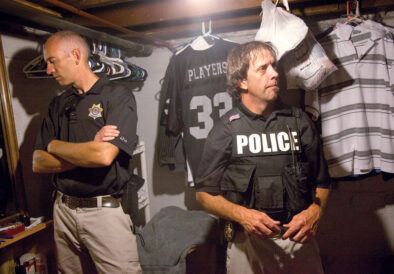
- In this undated file photo, Adult Probation and Parole Officer Stuart Carver and fellow AP&P Officer Todd Kirk, right, perform a home visit in Ogden.
-
-

BENJAMIN ZACK, Standard-Examiner file photo
In this undated file photo, Adult Probation and Parole Officer Stuart Carver and fellow AP&P Officer Todd Kirk, right, perform a home visit in Ogden.
Delgado
As police and probation officers are on the lookout for a fugitive who was convicted in an Ogden drive-by shooting, the state’s top probation official says his agency continues to refine how convicted offenders are supervised.
Last September, Alberto Delgado, 29, was reported to 2nd District Court for dropping out of contact with his probation officer, five months after he received a three-year probationary term. Judge Reuben Renstrom in Ogden had accepted a plea bargain between Delgado’s attorney and Weber County prosecutors in which three prison sentences of up to five years were suspended.
As of Thursday, Delgado remained free, subject to an arrest warrant issued by Renstrom.
Ogden police said Delgado was a passenger in a pickup truck who fired seven shots at a house in the 2000 block of Madison Avenue at about 1:40 a.m. on Dec. 6, 2020. No one was hit by the gunfire. During a chase, Delgado allegedly disposed of two handguns. The pickup jumped a curb and destroyed a power box, knocking out power to 6,600 people for several hours.
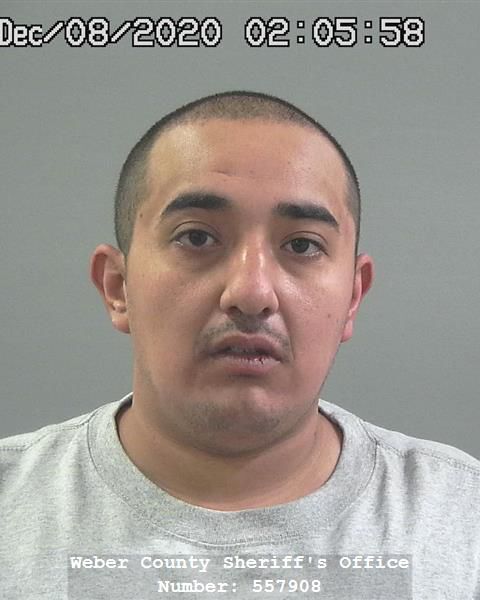
Photo supplied, Weber County
Delgado
Delgado admitted to three charges of third-degree felony discharge of a firearm and a class A misdemeanor charge of failing to stop for police. In return, the Weber County Attorney’s Office dropped six other charges, including four more firearms discharge counts and two counts of third-degree felony obstruction of justice.
If Delgado is arrested, Renstrom could order him to prison for violating his probation.
Delgado’s case may be emblematic of challenges faced by Utah Adult Probation and Parole, a division of the Utah Department of Corrections. Probation officers are responsible for keeping track of released offenders, but ultimately the success of a given case is up to the person being supervised, said Dan Blanchard, AP&P director.
The worst-case scenario is when someone on probation commits a violent crime. “We first of all know that anytime somebody does something to victimize someone or hurt someone in the community, it hurts all of us, even though the one on probation is personally responsible,” Blanchard said in an interview Wednesday.
He said AP&P reviews cases that are high-profile or serious offenses committed while the subject is on probation. “We look at how we did during the supervision, were standards applied,” he said. “We generally find our agents were following our best practices. It’s just unfortunate that some people on supervision are still connected to that hard-to-change circle of associates and decide to go do something and inflict harm.”
In recent years, overall AP&P caseloads may have dropped, but the workload hasn’t. Blanchard said that is because more low-risk, nonviolent offenders go back to the community without supervision while supervision has been increased on high-risk people.
When a probationer such as Delgado does abscond, AP&P first tries to track down the person, then goes to the case judge for an arrest warrant if the offender is elusive, “and our agents continue to try to locate them,” Blanchard said. Warrants empower all police agencies to be on the lookout for and arrest the absconder.
In cases of high-risk offenders with violent, gun-carrying histories, fugitive task forces of state and federal agents are alerted.
Blanchard said the Utah Legislature has funded the hiring of more civilian AP&P staff members to conduct presentence investigations. Those investigations assess a convicted person’s risk levels based on Utah Sentencing Commission matrixes. This has freed probation agents, who are sworn law enforcement officers, to do direct supervisory case work.
All people on probation are required to do basic things, such as stay in regular contact with their probation officer, notify AP&P of any address or phone number changes, and not leave the state without permission.
Some have higher supervision, such as ankle monitors. “But ankle monitors can then be cut off,” Blanchard said. “They’re the ones responsible to keep checking in.”
At Delgado’s sentencing in April 2021, his defense attorney, Danny Quintana, said Delgado “surrounded himself with the wrong people. He has learned an expensive lesson from this. He has accepted responsibility and straight up admitted his behavior. Fortunately, no one was injured or hurt by this.”
Delgado is from Salt Lake City.