Newer Swiss team emerging as contender at World Curling Championship in Ogden
-
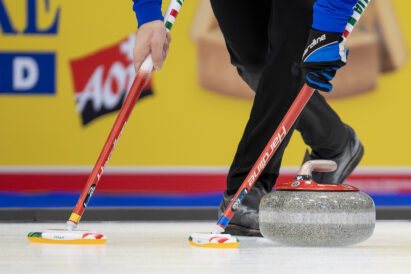
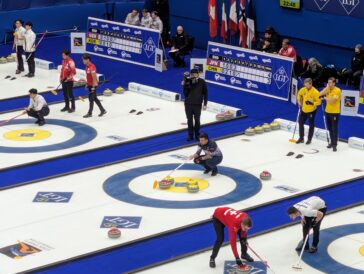
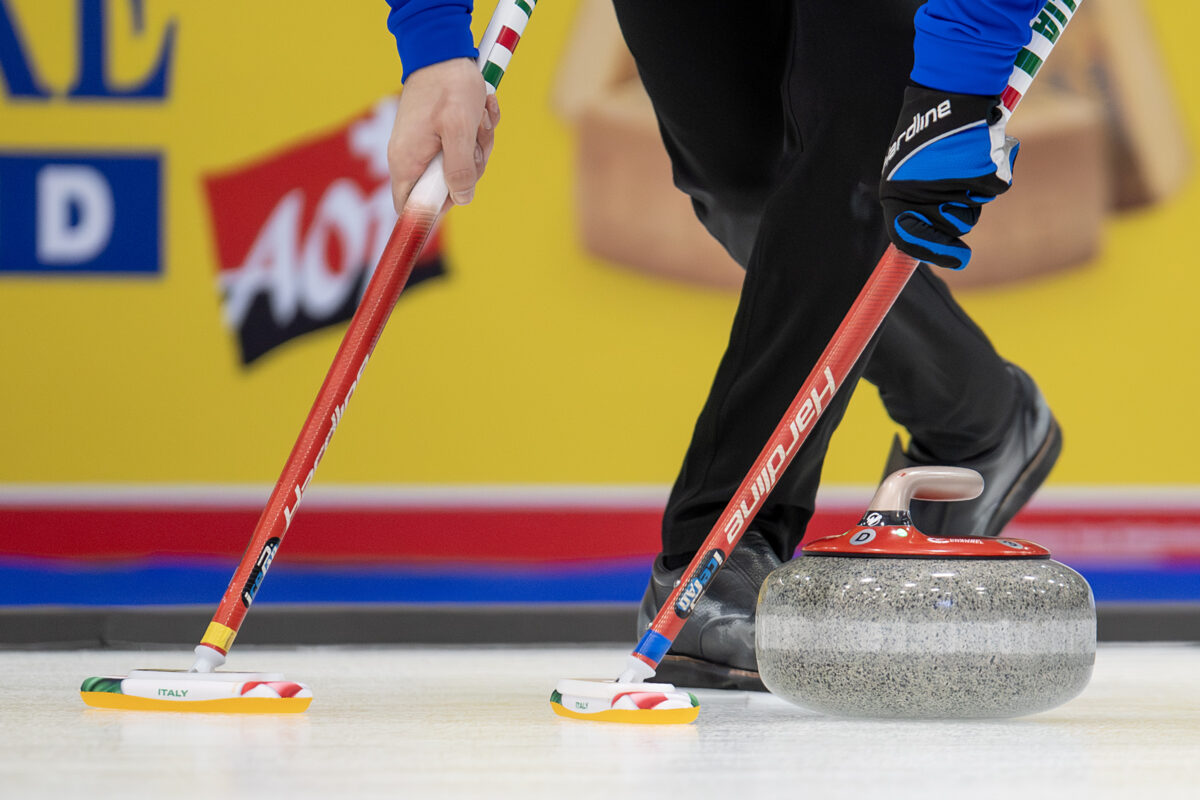
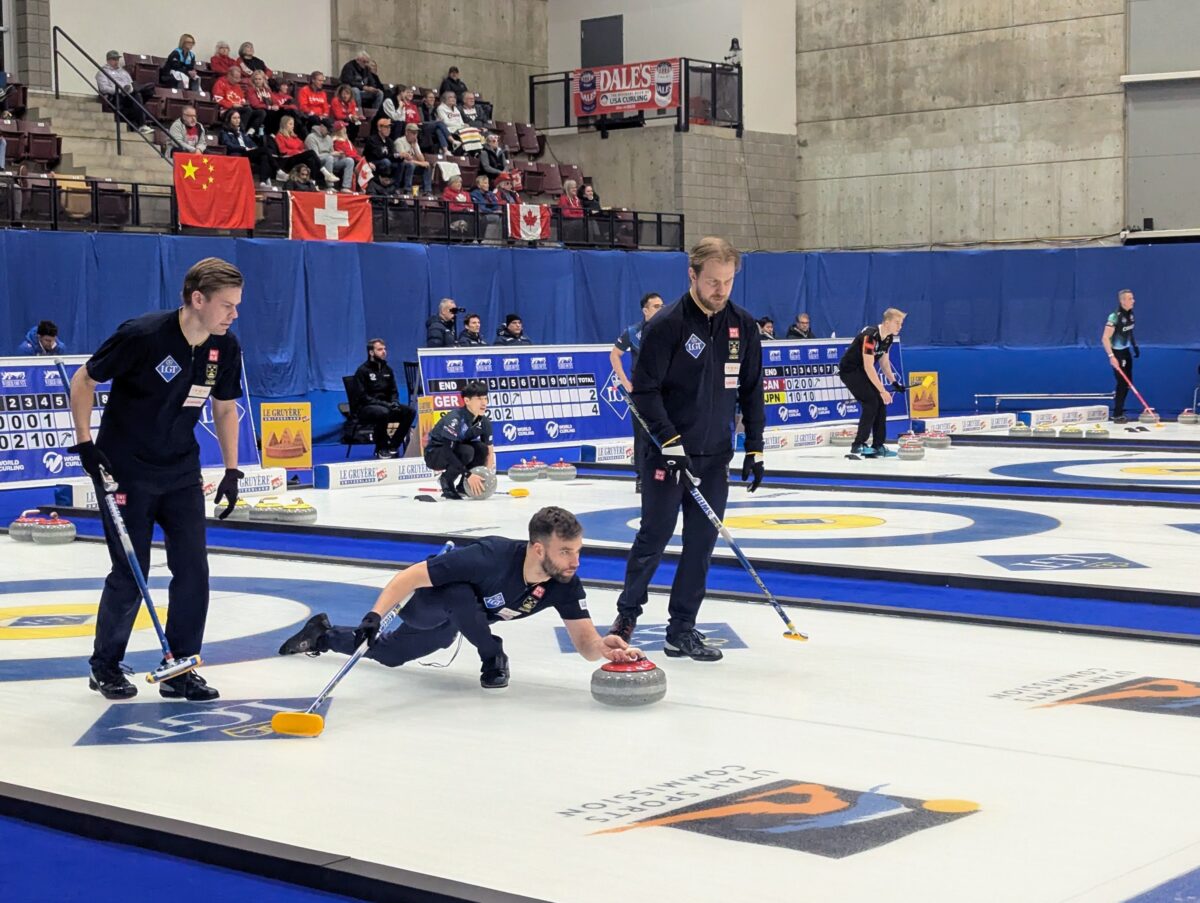
- Players sweep in front of a stone at the World Men’s Curling Championship on Friday, March 27, 2026, at the Ice Sheet in Ogden.
-
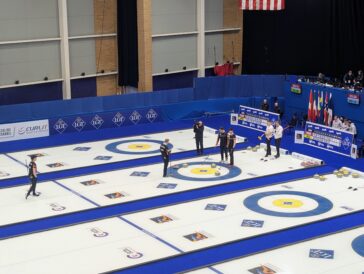
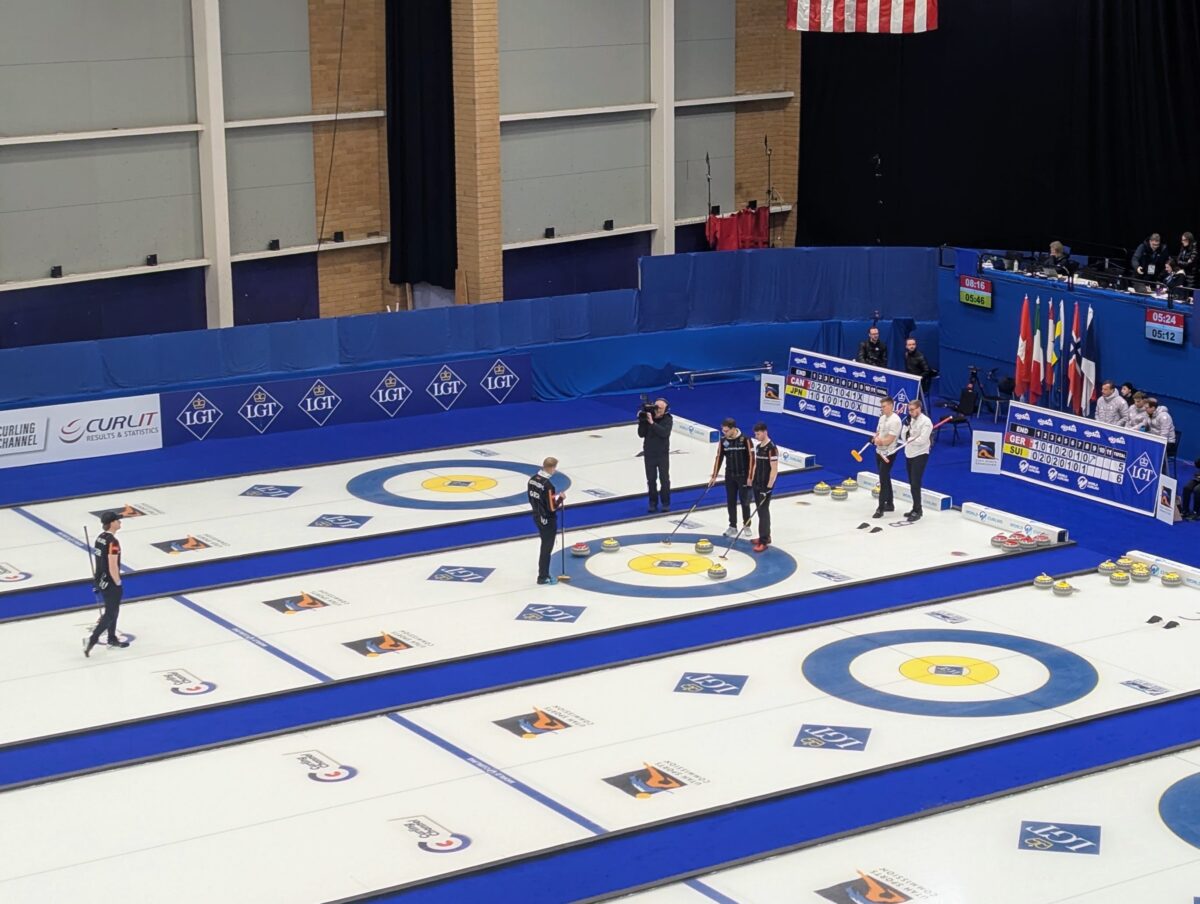
- German curlers discuss a shot around the house during the ninth end of a game against Switzerland on the 2026 World Men’s Curling Championship on Monday, March 31, 2026, at the Weber County Ice Sheet in Ogden, Utah. (Ryan Olson, Standard-Examiner)
-
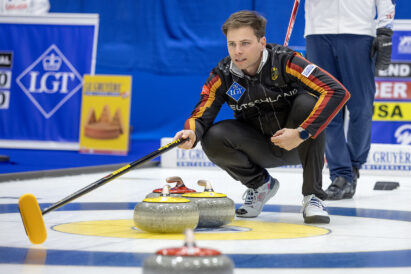
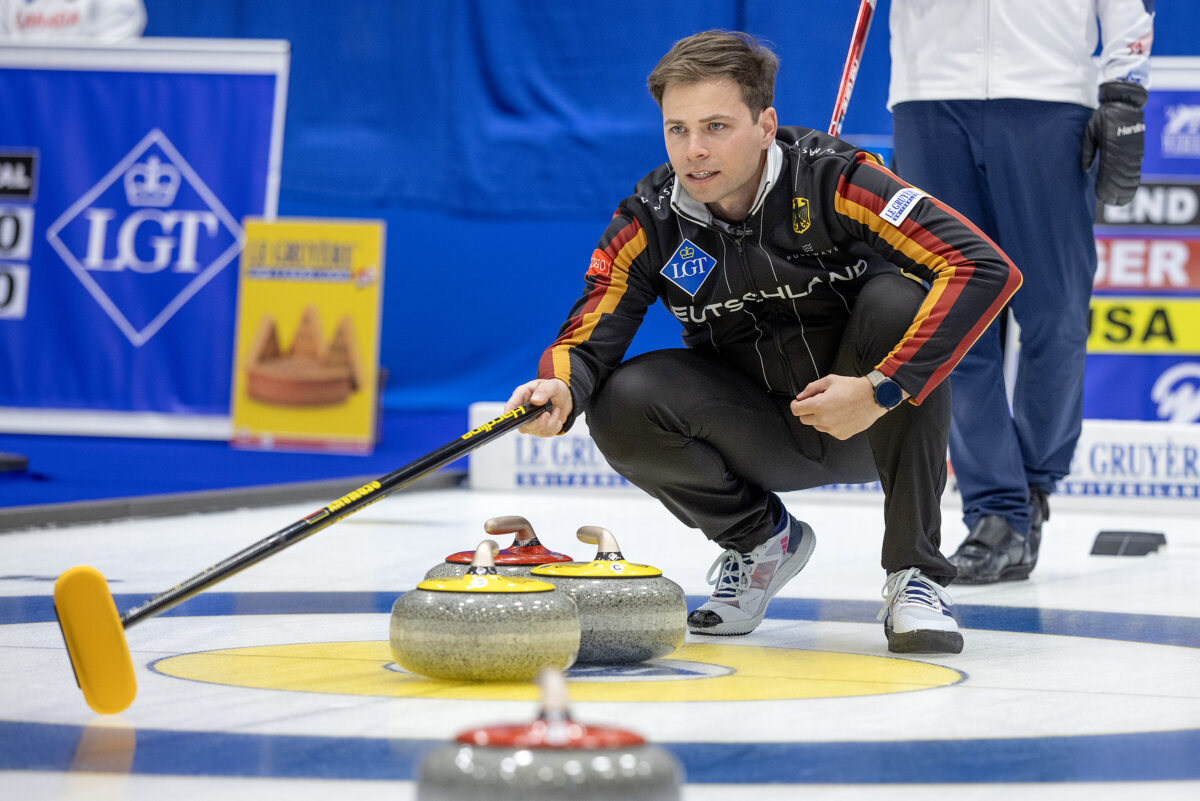
- Mario Trevisol of Germany watches the trajectory of a stone nearing the house during the World Men’s Curling Championship on Friday, March 27, 2026, at the Ice Sheet in Ogden.
-
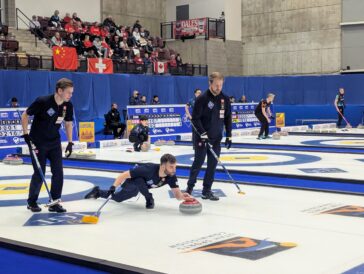
- Swedish third Oskar Eriksson delivers the rock during a game against Norway at the 2026 World Men’s Curling Championship at the Weber County Ice Sheet in Ogden, Utah, on Monday, March 30, 2026. (Ryan Olson, Standard-Examiner)
-
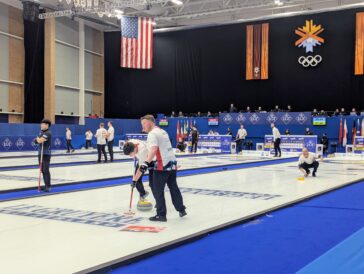
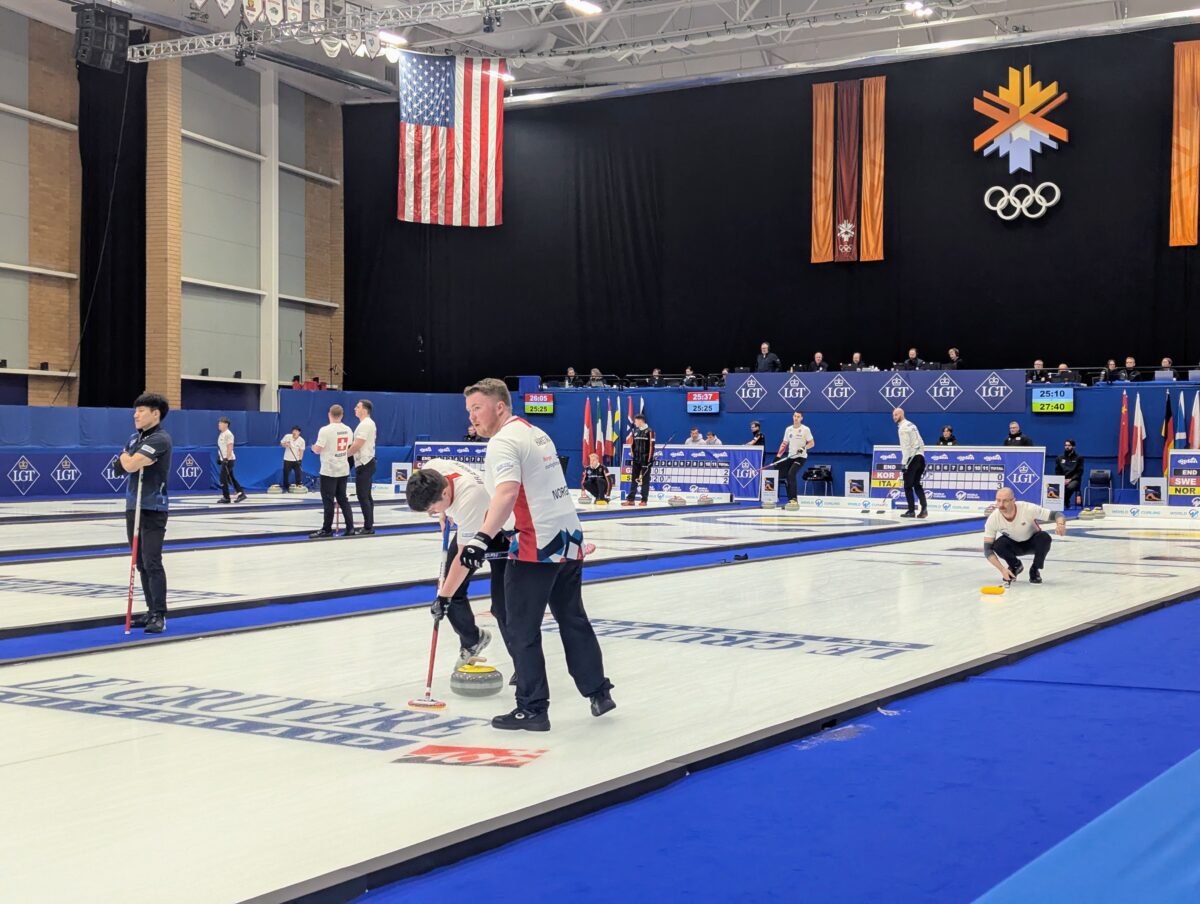
- Norwegian curlers sweep the stone delivered by vice skip Wilhelm Naess, right, during a game against Sweden at the 2026 World Men’s Curling Championship at the Weber County Ice Sheet in Ogden, Utah, on Monday, March 30, 2026. (Ryan Olson, Standard-Examiner)
-
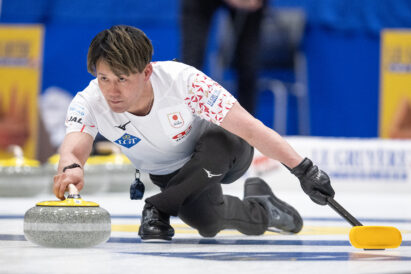
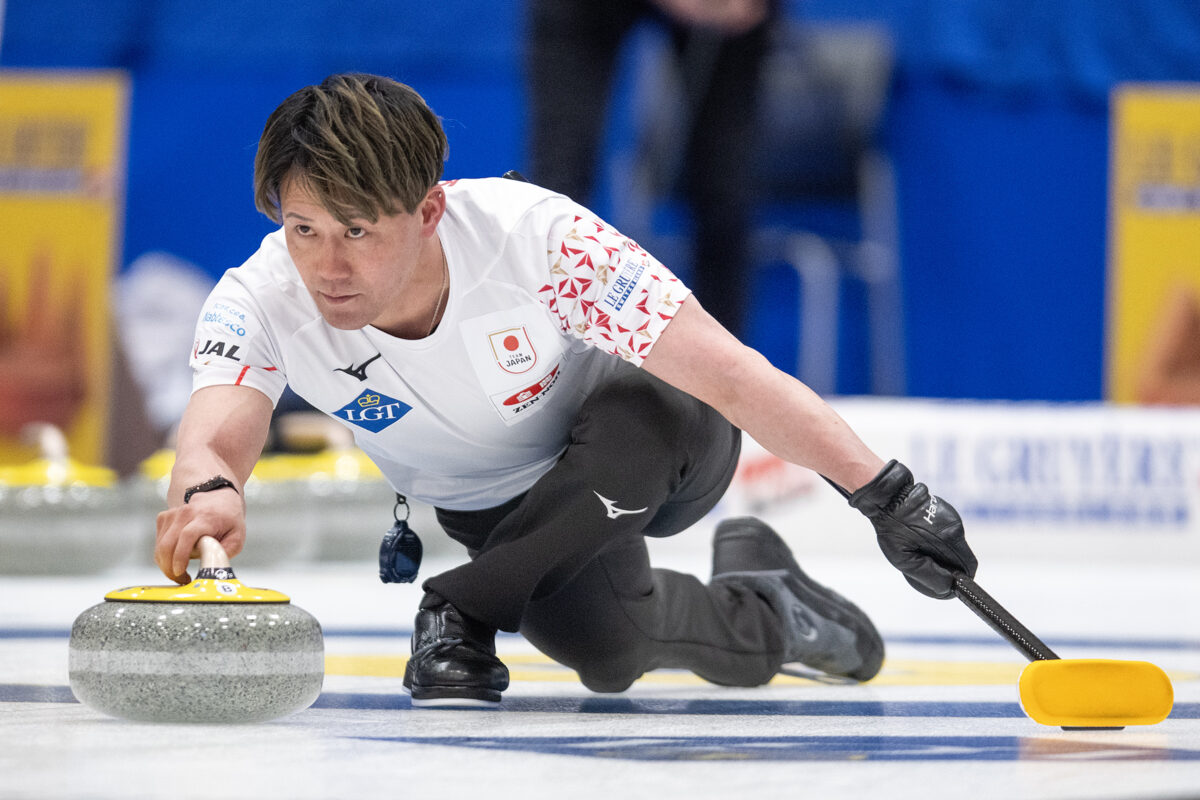
- Koizumi Satoshi of Japan slides to deliver a stone for his team at the World Men’s Curling Championship on Friday, March 27, 2026, at the Ice Sheet in Ogden.
ODGEN — Marco Hoesli and his team from Switzerland are making their mark in their first tournament appearance at the 2026 World Men’s Curling Championship, held this week at the Weber County Ice Sheet.
After Monday night, the Swiss stood alone in second place following a tight, 7-6 victory over Germany and skip Marc Muskatewitz. The Swiss were one game behind Sweden and Niklas Edin, which remained undefeated at 7-0 after the day concluded.
Hoesli and his team didn’t win the right to represent Switzerland until Feb. 28, when they defeated the Swiss Olympic team led by Yannick Schwaller at the Swiss Curling Championships.
One month later, Hoesli and the Swiss have stepped onto the world stage and quickly established themselves as contenders after notching wins against China, Czechia, Germany, Japan, Norway and Poland. The lone Swiss loss through Monday was to Italy.
Hoesli told the Standard-Examiner following Monday night’s game that they had hoped to fare well at the tournament, but didn’t necessarily expect to be.
“It’s gone great,” he said. “And we’re just happy to be here, and that we can enjoy the atmosphere and everything. We’ll try to keep it up.”
The Swiss game against Germany was a back-and-forth affair that came down to the 10th end where both teams were tied at 6.
Throughout the 10th, Muskatewitz worked to put up guards for Germany to eventually draw around. The Swiss, including Hoesli, who throws third in order, did an efficient job of clearing the stones in front of the house.
With his last rock, Muskatewitz drew to sit shot on the button. Philipp Hoesli, Marco’s brother, hit out the German stone with the hammer to stick the winning shot.
With five games to go, the Swiss have yet to face four of the top teams in the field — Sweden, Canada, Scotland and the United States.
If Switzerland advances to the playoffs, the team might draw inspiration from the Swiss women skipped by Xenia Schwaller. Schwaller and Switzerland defeated Canada and Kerri Einarson in the final to win the World Women’s Curling Championship in their first-ever appearance in that tournament.
“They showed it’s possible to win the first worlds,” Marco Hoesli said. “And I don’t want to talk too much about winning, but we knew we can give a good performance and maybe get a good result at the end of the week.”
United States .500 at midway point
The United States entered Monday with a 2-3 record following a weekend of marquee games that saw the John Shuster rink dropping close games to Scotland and Sweden, and winning decisively against Canada.
The Stars and Stripes drew back to .500 after dismantling Japan 9-2 in its lone Monday game.
The biggest end in the game was the fifth, which started with the U.S. leading 3-2. With the hammer, Shuster hit the inside of one of the U.S. stones in the house and rolled to take out a lone Japanese stone on the back button. That resulted in a score of 4 points and Japan shook hands after giving up a steal of 2 points in the sixth end.
Shuster and the U.S. were set to face Czechia on Tuesday morning before taking on China in the afternoon. On Wednesday, the U.S. will face Poland and Norway.
Making moves
Sometimes at curling events, people and event organizers refer to “Moving Day,” where a day’s games either have teams on course to make the playoffs or are headed toward elimination.
Curling commentator Kevin Martin, a 2010 Vancouver gold medalist for Canada, explained Moving Day may not be a single day of competition.
Coming into the event, Martin said most teams would like to finish the 12-game round robin with an 8-4 or 7-5 record to likely make the playoffs. Teams aiming for a mark more like 10-2 would likely secure one of the top two playoff spots and an automatic bye into the semifinals.
“You never know what’s going to do it, but that’s something to put in your mind,” Martin said. “And then that way you have a goal that you want.”
A team’s schedule may affect when they appear to make a move. Martin pointed to the United States, which needed to fare well against higher-ranked teams earlier in the round robin but now have mostly lower-ranked teams remaining.
“They’re being in 3-3, they’re actually looking pretty good,” Martin said.
He pointed out that other teams might be at 3-3 but might run into trouble if they haven’t yet faced the stronger teams.
Team rankings don’t tell a complete picture; nearly all of the teams at the event have shown they can take on the others. Martin singled out newcomers Poland, which had one victory thus far but also fell just short of Switzerland in an 11-9 slugfest.
“They’ve just really impressed me,” Martin said of Poland. “I did not expect that they would go toe-to-toe with all these really good teams.”
Martin is also known for observing that “the cream rises to the top,” meaning that better teams will begin to separate themselves from the rest of the field over the course of a tournament. He said that’s something that’s happening here in Ogden.
“All the teams get used to the ice conditions,” he said. “The really good teams get used to the ice and just get better and better.”
Ryan Olson is lead designer for the Daily Herald and Standard-Examiner. He is also a part-time curling instructor for event organizers, the Utah Olympic Legacy Foundation, but was not involved in the event aside from teaching schoolchildren. Ryan can be reached at rolson@standard.net or on Bluesky at bsky.app/profile/quesoguapo.com.
Sports in Utah

Next up in Logan: Utah State introduces ‘program-builder’ Ben Jacobson as men’s basketball coach
Newer Swiss team emerging as contender at World Curling Championship in Ogden