
Federal court rejects GOP-led Utah Legislature’s latest try to block House map that helps Democrats
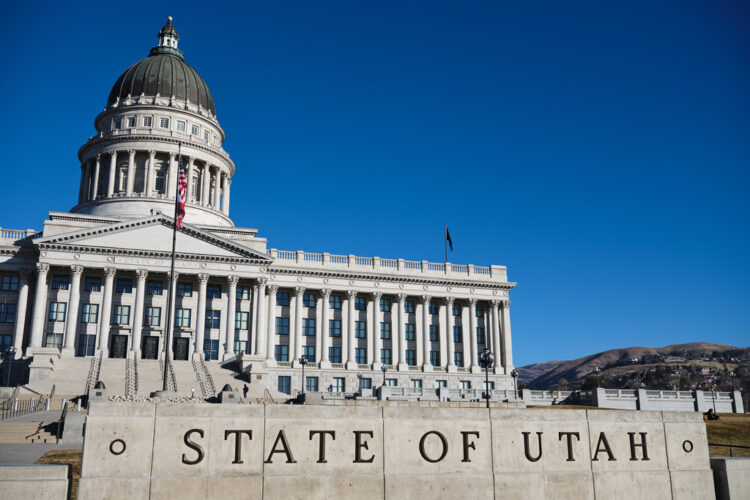
FILE - Flags fly at the Utah State Capitol, Jan. 18, 2026, in Salt Lake City. (AP Photo/Sydney Schaefer, File)
New Utah voting districts that give Democrats an improved shot at winning a U.S. House seat can be used in this year’s election, a federal court ruled Monday while turning aside a Republican request to block the new map.
The ruling marked the second setback in recent days for Republicans, who also lost an appeal at Utah’s state Supreme Court.
A Utah judge imposed the new districts last November after striking down the congressional districts that the Republican-led Legislature had adopted after the 2020 census. The judge ruled that the Legislature had circumvented anti-gerrymandering standards passed by voters.
The ruling thrust Utah into a national redistricting battle being waged among states ahead of the midterm elections. President Donald Trump has pressed Republican-led states such as Texas, Missouri and North Carolina to redraw their districts to give the GOP an advantage in the November elections, prompting Democratic-led states such as California and Virginia to respond with their own redistricting plans.
Republicans currently hold all four of Utah’s U.S. House seats. The new map imposed last fall by Judge Dianna Gibson keeps Salt Lake County almost entirely within one district, instead of dividing the heavily Democratic population center among all four districts, as was previously the case. It was submitted by the lawsuit’s plaintiffs, the League of Women Voters of Utah and Mormon Women for Ethical Government.
Republicans have argued the judge did not have legal authority to enact a map that wasn’t approved by the Legislature.
But a panel of three district court judges denied the Republicans’ request for a preliminary injunction against using the new map in this year’s election. The federal court said Republicans weren’t likely to prevail in their argument, and said it was too late for judges to intervene in the election.
The filing period for Utah’s congressional candidates opens March 9, party caucus are scheduled for March 17, and state party conventions are to be held April 25. Some candidates already are campaigning, the court noted.
“An active primary is ongoing, and the election has drawn too close for the court to get involved,” the court wrote while adding: “The possibility of voter confusion is a considerable risk were the panel to enjoin the current election map.”