
What to know about World Cup tiebreakers and how teams can advance to the knockout phase
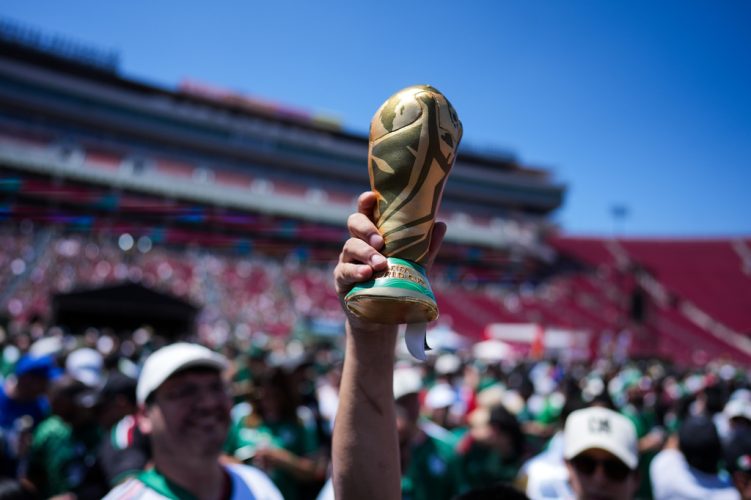
A fan holds up a replica of the World Cup trophy at a fan festival at the Los Angeles Memorial Coliseum in Los Angeles, Thursday, June 11, 2026, during a live broadcast of the World Cup soccer match between Mexico and South Africa. (AP Photo/Jae C. Hong)
ATLANTA (AP) — The World Cup has reached that stage when mental gymnastics come into play to determine who’s in, who’s out and what’s needed to advance to the next round.
This year’s supersized tournament, up from 32 teams to 48, has changed the format of the competition and how teams are separated by tiebreakers in the group phase.
For instance, there’s an extra knockout round of 32 teams, where as previously the group phase was immediately followed by a round of 16.
There are also lifelines for teams to advance if they miss out on the top two places in their respective groups.
Here’s what to know about qualification for the round of 32.
How to advance from the group phase
The expanded tournament means there are more groups and more games than ever before at a World Cup. By the time the group phase is completed 72 matches will have been played to eliminate 16 teams.
The top two in each of the 12 groups advance automatically and then there are places for the eight best third-placed teams.
It is the first time since 1994, when only 24 teams competed, that there has been a lifeline for third-placed teams.
Head-to-head results before goal difference
For the first time at a World Cup, FIFA will prioritize head-to-head results if two or more teams are tied on points.
The steps to determine the final placings if a tiebreaker is needed will be deployed in the following order:
— Head-to-head results between the teams concerned.
— Goal difference in the games between the teams concerned.
— Highest number of goals scored in those games.
— Overall goal difference in all group games.
— Overall highest number of goals scored in the group.
— The fewest number of red or yellow cards (including team officials) received during the group phase.
— FIFA ranking.
Making the final cut
Coaches, players and fans will be assessing what’s required to make the cut as one of the eight best third-placed teams. This is where goal difference is likely to be crucial.
For instance, Scotland’s chances of advancing from the group stage for the first time in its history may depend on it avoiding a heavy loss against Brazil. It won its first match against Haiti and was then beaten by Morocco.
The third-placed teams with the highest number of points advance, but if teams are level on points, goal difference is the primary tiebreaker, followed by goals scored, disciplinary record (red and yellow cards) and finally FIFA ranking.